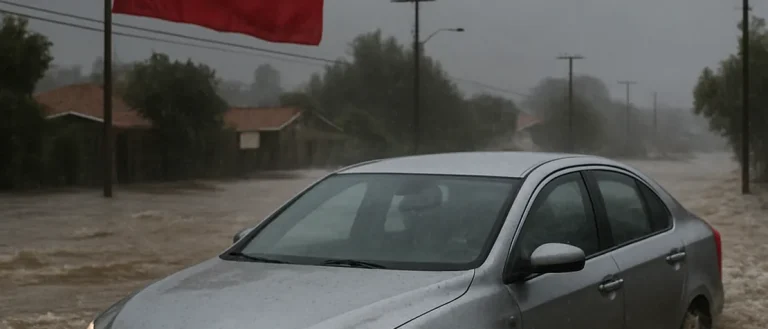


Air strikes shook the Yemeni capital Sanaa around midnight on Tuesday, unsettling a city that has largely avoided bombardment since a 2023 truce between the internationally recognised government and the Houthis. The raids follow an offensive recently announced by Rashid al-Alimi, head of the Presidential Leadership Council.
Named Operation Dawn of Yemen, the campaign aims to wrest control of Sanaa from the Houthis, who have held the city since September 2014. Residents, most of whom do not live near the front lines, fear the capital will once again become a war zone.
Government offensive stalls on the ground
Government ground forces are still hundreds of miles from Sanaa, locked in fighting with the Houthis on Yemen’s west coast and around Taiz. That leaves aerial attacks as the only way to reach Houthi positions inside the capital, and those attacks have caused civilian deaths.
On Monday, a strike in the Sa’wan area of Sanaa governorate killed a child and wounded seven other civilians. Since the offensive began, dozens of strikes have hit the capital, including one on Sanaa’s international airport that killed two workers. Those operations were aimed at Houthi sites, and the government has vowed to keep attacking until it achieves its goals, chiefly retaking Sanaa.
Residents recall 2015 and fear displacement
Many in the city still remember Operation Decisive Storm, the Saudi-led coalition campaign launched against the Houthis in March 2015, which killed hundreds of civilians in Sanaa through air strikes.
Ghamadan Abood, a 30-year-old courier, said the latest wave of attacks has deepened fear among residents. He said that after hearing about the new operation on Sunday, he felt far less secure, and that civilians could be hit at any moment.
On Monday, Abood was riding his bike only two kilometres from Sa’wan when the strikes landed there. He said Houthi military facilities are believed to be in the city, but the government sometimes hits residential areas, and that strikes on launch pads or equipment could endanger nearby homes, farms and roads.
Saleh Ayidh, a 50-year-old father of five, worries the raids could push families out of their homes in the north. He said Sanaa had seemed a safe distance from the fighting, but that he now sees no safe place in Yemen. In 2015, his family moved to the countryside and stayed there for six months. Ayidh said that “without safety, life is hard.”
Shoppers stock up as prices and supply worries mount
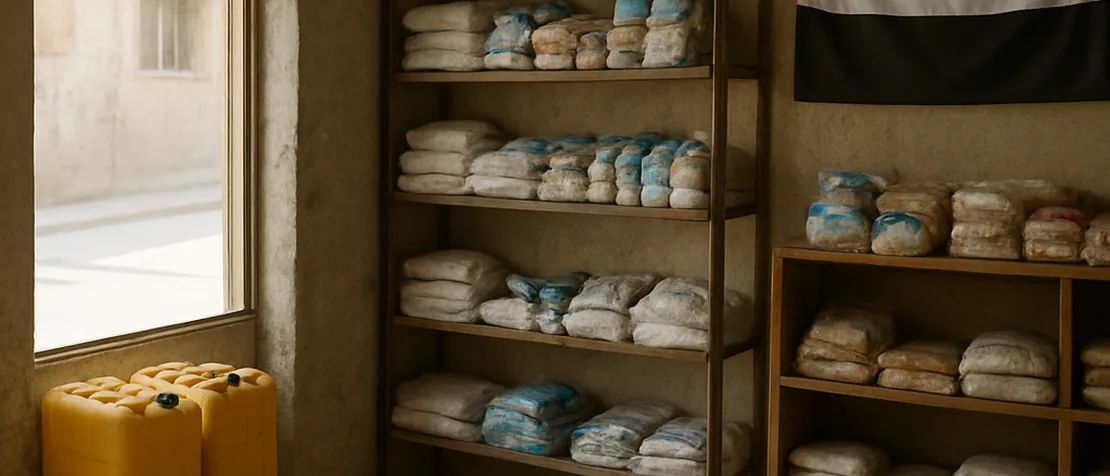
Residents are stockpiling food and fuel, a pattern that mirrors what happened when Decisive Storm began in 2015. Back then, the cost of goods and fuel climbed amid logistical disruption and panic buying, and similar trends are visible again in Sanaa.
Nashwan, a 24-year-old grocery owner, has increased his stock of rice, cheese, milk, biscuits, cooking oil and sugar before these items become hard to find. He has also bought 100 litres of petrol for his minibus in case a fuel shortage hits. He said these goods could become more expensive in the coming days and that he hopes to avoid feeling the war’s effects right away.
Any road closures or drop in imports caused by the fighting, along with a Saudi naval siege on Houthi areas, would pose serious problems for civilians. Wafiq Saleh, executive director of the Taiz Centre for Yemeni-Gulf Studies, told that rising food and fuel prices are a major worry for the whole population and will worsen the humanitarian situation.
Last week, the UN World Food Programme warned that three-quarters of families in parts of Yemen were going hungry. Fears are growing that a wider escalation will deepen an already severe food crisis across the country.
Doubts over recapture and Saudi missile threat
Saudi Arabia, which backs the Yemeni government, has also faced repeated Houthi missile attacks, including two strikes on King Khalid International Airport in Riyadh. The most recent, on Saturday, killed 12 people.
On Tuesday, the Saudi-led coalition said Sanaa, Saada and Amran were among the main sources of Houthi missile threats, and that its ongoing operations are meant to limit the group’s capacity to fire missiles at the kingdom.
The International Organization for Migration says more than 200,000 people have been displaced since fighting escalated in recent weeks. Most have come from Taiz governorate in southwestern Yemen, where the heaviest ground combat between government and Houthi forces has occurred.
Despite the government’s optimism when it announced the offensive, few in Sanaa believe it can retake the capital soon. Raiman al-Hamdani, a London-based Yemen analyst, told last week that government forces look strong on paper but are spread across several fronts and use outdated equipment. He said they can hold their positions but cannot dislodge the Houthis from their mountain strongholds.
Fuad Ali, a 40-year-old university graduate in Sanaa, said the Saudi-backed government has lost public trust, particularly over its claim that it could take the capital after a string of embarrassing defeats on the coast. He pointed out that the government has not seized the coastal Hodeidah province or Al-Jawf desert province, and questioned how it could take mountainous Sanaa. Ali expects the operation to bring more destruction and civilian casualties, but he said he is still hopeful it will not damage Sanaa the way Decisive Storm did.