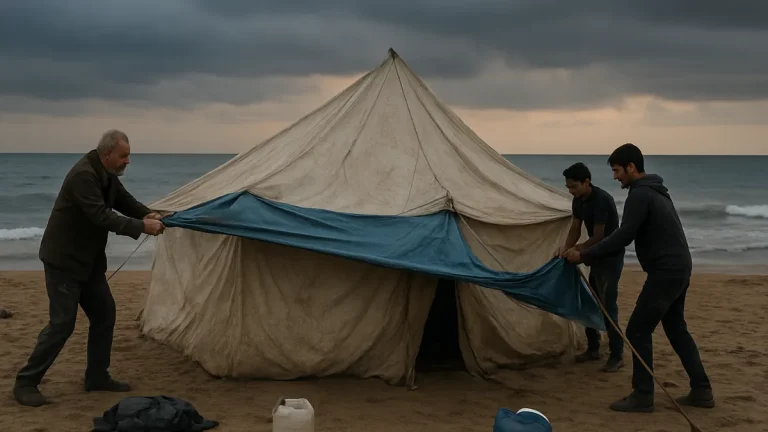
A severe sandstorm recently swept across the city of Homs in Syria, enveloping the area in a thick, eerie orange haze. This natural phenomenon significantly reduced visibility, complicating transportation and daily activities for residents. Sandstorms are common in arid regions like Syria, especially during transitional seasons when strong winds pick up loose desert sand.
Historically, sandstorms in the Middle East have posed challenges not only to public health but also to infrastructure and agriculture. The fine dust particles can exacerbate respiratory conditions and contaminate water supplies, while the abrasive sand can damage buildings and vehicles. In Syria, ongoing conflict has already strained resources, making the impact of such environmental events even more critical.
In a significant development, local authorities and humanitarian organizations often have to coordinate emergency responses during these storms to protect vulnerable populations. The sandstorm in Homs highlights the broader environmental challenges facing the region, including desertification and climate change, which contribute to the frequency and intensity of such events. Efforts to mitigate these effects remain essential for the safety and well-being of communities in Syria and beyond.