Jamaat-e-Islami (JI) leader Hafiz Naeemur Rehman declared on Thursday that the party’s ongoing nationwide sit-ins and demonstrations would persist even as discussions with a government delegation took place. The talks focused on exploring measures to alleviate the impact of inflation and the high petroleum levy on the public.
The announcement followed a meeting in Lahore’s Mansoora area between Naeem and other JI officials and a government team including Planning Minister Ahsan Iqbal, Prime Minister’s Political Affairs Adviser Rana Sanaullah, and former federal minister Khawaja Saad Rafique.
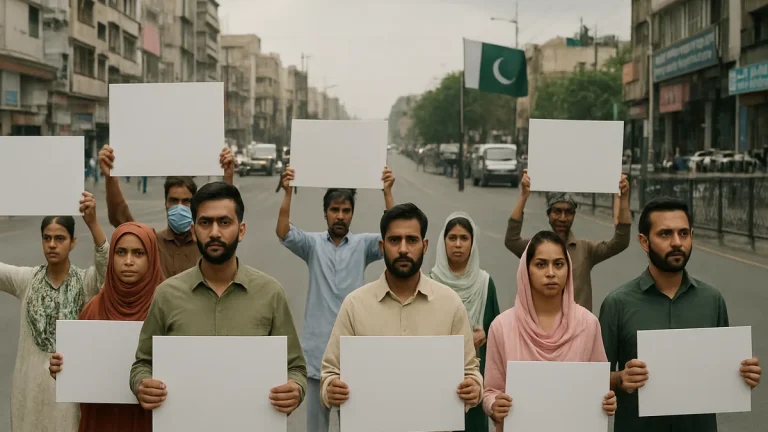
Naeem highlighted that the protests had reached their 19th day and expanded from initially three cities to between 15 and 20 locations across Pakistan. He emphasized that continuing the sit-ins would make the dialogue more productive.
Meanwhile, the government representatives expressed willingness to consider JI’s proposals aimed at providing relief to ordinary citizens. They planned to hold further consultations involving officials from the Finance Ministry, Federal Board of Revenue, and Petroleum Ministry to evaluate these suggestions.
Ahsan Iqbal stressed the government’s desire to avoid any unrest that could be exploited by adversaries, especially given the ongoing fight against terrorism. He appreciated the JI leadership for listening to the government’s perspective and noted their assurance to avoid demands that might harm national interests or burden the public.
Rana Sanaullah pointed out that the government was focused on easing the strain on citizens caused by rising petroleum prices amid the Iran-US tensions. He welcomed JI’s relief proposals and confirmed readiness to engage with the party through relevant officials to assess their feasibility.
Sanaullah also recalled previous consultations with JI that had led to improvements in the electricity sector, expressing hope that similar cooperation could be renewed.
Despite the talks, Naeem reaffirmed that JI’s demands remained firm. The party was protesting against inflation, steep petroleum prices, the petroleum levy, and costly electricity, arguing that the economic hardships disproportionately affected ordinary people.
He clarified that the protests were aimed at reducing inflation and providing relief to the common citizen, stressing that the movement was not politically motivated or intended to gain electoral advantage.
Naeem cited government and international reports to highlight that 90 to 95 percent of Pakistan’s population struggled to meet basic needs, with over 40 percent living below the poverty line.
He sharply criticized the petroleum levy, questioning why consumers continued to bear heavy taxes despite the government’s earlier stated goals of using the funds to enhance refinery capacity and fuel storage. He noted that approximately Rs8 trillion had been collected through this levy since its inception, yet the consumer burden kept increasing amid economic and geopolitical challenges.
Additionally, Naeem condemned capacity payments to independent power producers (IPPs), arguing that consumers were paying for electricity not actually generated. He called for renegotiating IPP contracts and adjusting LNG regasification terminal agreements to link payments to actual usage rather than capacity.
The JI chief outlined four principal demands: abolishing the petroleum levy, lowering petroleum prices, renegotiating IPP agreements to reduce electricity costs, and implementing measures to decrease flour and bread prices.
He stressed the need for the government to ensure basic food affordability for low-income families and acknowledged that while diesel prices had been reduced earlier, further action was necessary to bring down fuel costs.
Naeem expressed gratitude to traders and citizens supporting the nationwide strike and affirmed that the party would continue its campaign until its demands were met.
This government engagement with JI occurs as the protest movement has gained momentum across the country. JI had declared a nationwide shutter-down strike for September 3 and warned that if relief was not provided, the campaign might escalate to Islamabad.