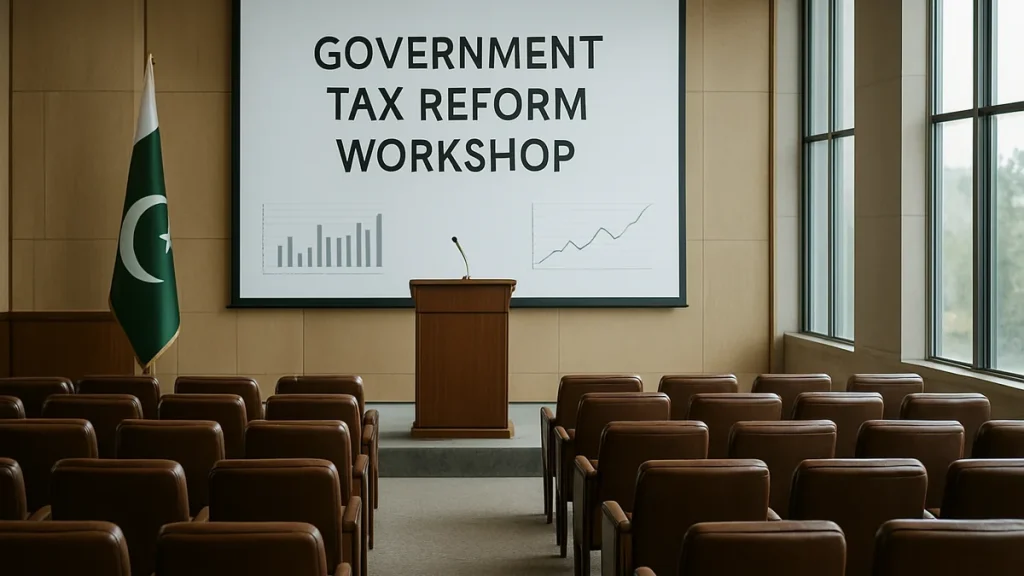

Federal Minister for Finance and Revenue Senator Muhammad Aurangzeb on Tuesday pledged to rebuild public trust in the Federal Board of Revenue (FBR). He said taxpayer confidence, predictable policies and tougher enforcement were vital for a modern, growth-friendly tax system.
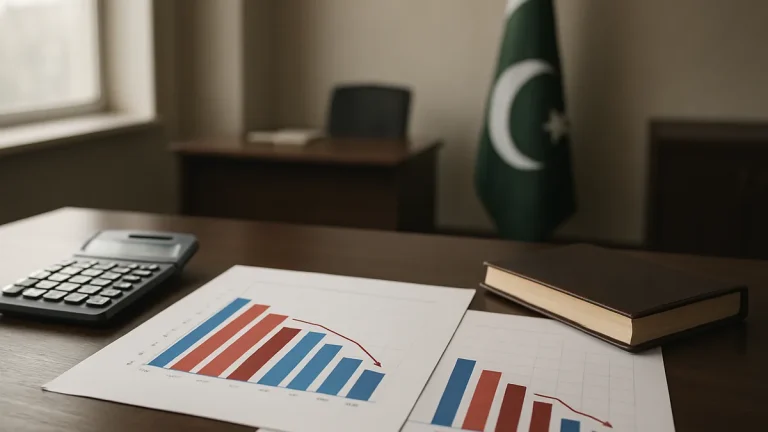
He was speaking at a two-day high-level workshop in Islamabad, organised by the Ministry of Finance with the International Monetary Fund (IMF). Aurangzeb said ongoing reforms had lifted the FBR’s tax-to-GDP ratio from 8.8 per cent to 10.3 per cent.
Enforcement and new policies drive higher tax revenue
Aurangzeb said tax revenues had risen by 40 per cent over the last two fiscal years, which he credited to stronger enforcement and new policy steps. Breaking down the 1.5-percentage-point rise in the tax-to-GDP ratio, he said 0.9 points came from enforcement and the remaining 0.6 points from new policy initiatives.
“We stopped leakage, theft and corruption,” Aurangzeb said, adding that deeper enforcement would play a growing role in the next phase of reforms. He said the government would keep strengthening the system, widening the tax base and improving collection to support stability and sustainable growth.
Policy continuity seen as key to private investment
Stressing the need for a predictable business environment, the minister said private companies required policy continuity to plan long-term investments. “We cannot continue to give surprises to private-sector investment at every single budget,” he said, arguing that consistent policies were essential to attracting investment.
He named political consensus, stronger institutions and taxpayer trust as key enablers of lasting tax reform, and stressed cooperation between federal and provincial governments. Among the top priorities, he said, was “Bringing trust and credibility back into the tax authority”, which would mean improving relations between taxpayers and the tax administration.
Workshop agenda and participants
The workshop brought together senior government officials, representatives of the IMF and the World Bank, international tax experts, academics and private-sector leaders. They discussed priorities for modernising the tax system and strengthening its contribution to growth. The programme has six sessions:
- Taxation and economic growth
- Modernisation of Pakistan’s tax system
- A unified sales tax regime across the federation and provinces
- A simpler and more neutral income tax system
- Tax administration, digitalisation and taxpayer trust
- Fiscal federalism and provincial tax revenues
Aurangzeb gave the opening remarks alongside Jihad Azour, Director of the IMF’s Middle East and Central Asia Department, and Rodrigo Valdés, Director of the IMF’s Fiscal Affairs Department.