A Kenyan court has sentenced Paul Mackenzie, the leader of a doomsday cult, to 200 years in prison. He was convicted of murdering 191 people, all but one of them children. He had been found guilty in October along with 28 others.
Prosecutors said Mackenzie instructed his followers to starve their children so that they could “meet Jesus”. Justice Diana Mochache said he carried the “primary criminal culpability” for ordering followers to fast to death, which she described as one of the deadliest episodes of cult activity in the world.
How the court divided the 200-year term
The judge handed Mackenzie 100 years for homicide and another 100 years for offences linked to starvation. Sentences within each category will run at the same time, but the two categories will run one after the other, which brings the total to 200 years.
Mackenzie also faces separate manslaughter and terrorism charges. He denies them. Mackenzie and his co-accused had asked the court for leniency, and all of them had pleaded not guilty before their conviction on 19 October.
Prosecutors had asked for the death penalty, arguing that the scale and circumstances of the killings justified the harshest punishment. Justice Mochache said the case met the threshold for considering it, but she declined to impose it. She said capital punishment would rule out any chance of rehabilitation, and she noted that Kenya has not carried out a death sentence since 1987.

Co-accused sentenced and the Shakahola killings
Twenty-eight accomplices were tried alongside Mackenzie, including guards who enforced the fasting orders and gravediggers who concealed the bodies in mass graves. They received prison terms of up to 160 years.
Justice Mochache described the killings as “cold and calculated” and said the perpetrators had shown no remorse. Some had even declared that they were willing to fast to death themselves. She said Mackenzie’s followers believed he was “Jesus’s mouthpiece”.
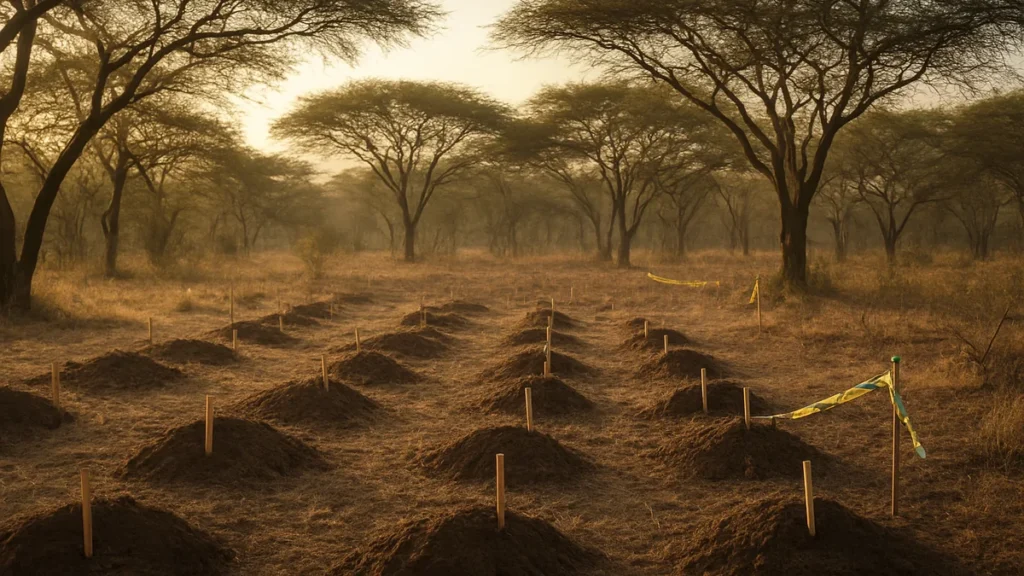
According to the judge, people who opposed Mackenzie’s teachings were beaten to death. One co-accused said Mackenzie had told followers that anyone who resisted the fasting order should be forced into heaven through kicks and blows. Burials in the forest were called “weddings”, and the dead were said to have married Jesus.
Post-mortem results showed that starvation caused most of the deaths. Others died from suffocation, strangulation or head injuries. In some cases the cause could not be determined because the bodies had decomposed, while other people died soon after rescue because they were severely emaciated.
Francis Wanje, who lost eight relatives, including two grandchildren, in Shakahola forest, told the ‘s Newsday programme before the hearing that he hoped for a sentence that would match Mackenzie’s deeds in the forest.
Questions over police inaction and religious oversight
The Shakahola deaths have raised questions about how rogue religious activity was allowed to continue for so long. An investigation by the state-funded Kenya National Commission on Human Rights found that local administration and law enforcement officials had repeatedly ignored the cult’s activities.
Wanje said he reported the case to police in March 2023 and expected officers to move quickly to rescue the remaining members. He said a relative in the police force and a former cult member helped save his grandson, who then showed officers the grave of his siblings.
Mackenzie had been arrested before and later released for lack of evidence. He founded Good News International Ministries in 2003, and over the next 16 years the church grew in popularity, drawing thousands of followers to branches across Kenya. Its television station, Times TV, broadcast his sermons from the church in Malindi.
The main church shut down in 2019, and Mackenzie moved to Shakahola forest, urging his followers to join him. While the convictions may bring a sense of justice to the victims and their families, they cover only 191 victims, while more than 400 bodies were exhumed from the forest.