Iran has stepped up its diplomatic efforts as United States President Donald Trump suggested Washington could resume full-scale strikes on the Islamic republic. Tehran’s push includes a new nuclear and peace proposal sent through Qatari mediators, a visit to Moscow by its top security official and a series of calls with Gulf foreign ministers.
On Thursday, Trump told reporters the US may have to “destroy” the rest of Iran, and said people would “know soon enough” if he acts. A US official said US Central Command was preparing to resume major military operations in Iran and was only waiting for orders from Washington. The moves follow Iran’s downing of two US reconnaissance drones near Qeshm island in the Strait of Hormuz, an area the US had struck earlier this week.
Trump’s threats and the US military build-up
Trump has refused to rule out further strikes, even though his Republican Party suffered a heavy defeat in this week’s midterm elections. Public anger over the war on Iran and higher energy prices were largely blamed for that result. Earlier, the US said it had carried out “defensive strikes” on Qeshm island and Bandar Lengeh in the Strait of Hormuz.
Also read: Iran warns of wider war if US attacks after Trump losses
Iranian officials have repeatedly warned that any state helping the US target the country would become a “legitimate target” if American attacks resume. Tehran has also said that cables, data centres and artificial intelligence facilities across the Gulf could be attacked if war with the US erupts again. It has further warned it would retaliate on a wider scale than before and that talks would become unfeasible.
Former Iranian diplomat Hadi Afghahi said Tehran could ease the path to a settlement if Washington also showed flexibility. He argued that Trump does not want another war because it would cost him more, though he cautioned that the president is still surrounded by hawks, including the energy and treasury secretaries. Observers say Trump’s next move is hard to predict.
Iran’s seven demands and the new proposal
On Thursday, Iran offered Washington a new nuclear and peace proposal through Qatari mediators. A senior Iranian official said the proposal would be discussed only after the US meets Tehran’s seven demands. The US is reportedly examining the offer.
Iran has made those demands a condition for reopening the Strait of Hormuz and restarting peace talks, including talks on its nuclear programme. The demands include:
- lifting sanctions on Iran
- unfreezing Iranian assets
- ending the US naval blockade of its ports in and around the Strait of Hormuz
Washington, for its part, has insisted that a deal on Iran’s nuclear capacity must be part of any ceasefire agreement before wider peace talks can restart. Qatar’s Emir, Sheikh Tamim bin Hamad Al Thani, discussed diplomatic efforts to ease regional tensions with Trump in a phone call on Friday, according to the Qatari Emiri Diwan. The Diwan said the leaders reviewed Doha-led mediation efforts aimed at reaching “a comprehensive agreement that puts an end to the crisis”.
Moscow visit and Russian ties
Mohsen Rezaei, Iran’s top security official, travelled to Moscow for talks on Thursday. He said: “On the issue of diplomacy, we have announced seven conditions to the Americans. As long as they do not execute our seven conditions, we will neither open the Strait of Hormuz nor have negotiations.”
The same day, Rezaei met Russian President Vladimir Putin at the Kremlin to deliver a message from Supreme Leader Mojtaba Khamenei. Iranian state media did not elaborate on the contents. Rezaei called the exchange “an extremely important exchange” in remarks reported by the Iranian embassy, but gave no further details.
A Financial Times report said Russia had previously agreed to supply Iran with 90 helicopter-mounted launchers for precision-guided missiles, despite needing its own weapons for the war in Ukraine. The newspaper cited a Russian defence manufacturer’s production schedule for 2024 and 2025 and said the order was assigned a code used to refer to Iran in Russian defence documents. Nicole Grajewski, a non-resident scholar at the Carnegie Endowment for International Peace, told the newspaper that this showed Russia’s willingness to keep supplying Iran “despite its own wartime demands and with far less concern about Western objections than in the past”.
Images released by the Kremlin showed foreign affairs adviser Yuri Ushakov and Igor Kostyukov, chief of Russian military intelligence, attending the meeting alongside Putin. Rezaei also said the talks covered the construction of gas pipelines from Russia to Iran, according to Iranian state TV. He said the pipelines would address Iran’s gas shortages and help sell Russian energy to neighbouring countries. Separately, Russia’s Foreign Ministry advised citizens against travel to Iran, citing the remaining risks of a new escalation.
Gulf outreach and shipping risks in Hormuz
On Thursday, Iran’s Foreign Minister Abbas Araghchi held phone calls with several Gulf leaders. These included the UAE foreign minister, Sheikh Abdullah bin Zayed Al Nahyan, and they discussed regional developments and diplomatic efforts for stability, according to Araghchi’s Telegram channel. The Saudi foreign ministry said Araghchi spoke with Saudi Foreign Minister Faisal bin Farhan Al Saud about improving security and stability in the region.
Araghchi also discussed de-escalation with the foreign ministers of Kuwait and Turkiye. In a separate call, Qatar’s Prime Minister and Foreign Minister, Sheikh Mohammed bin Abdulrahman bin Jassim Al Thani, discussed coordinating to reduce tensions, the Qatari foreign ministry said. Sheikh Mohammed stressed support for efforts to secure freedom of maritime navigation. Oman’s foreign ministry said the safety of passage through the Strait of Hormuz was a main topic of its call with Araghchi.
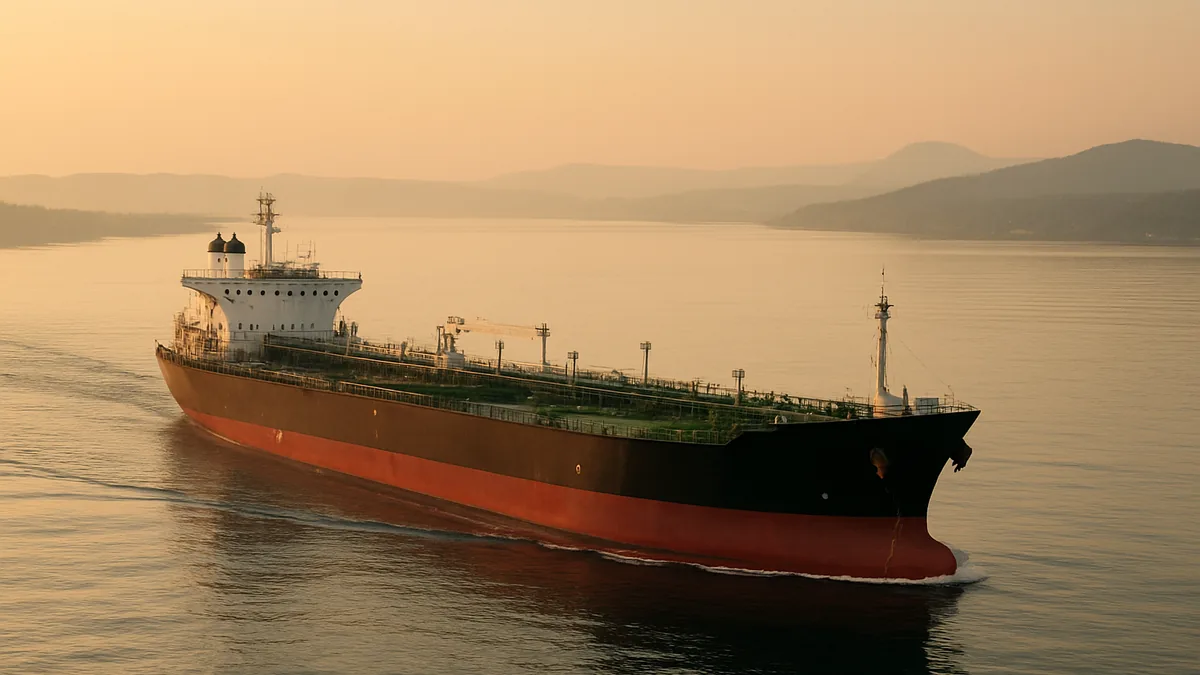
Iran continues to tightly control shipping through the strait, where several ships have been damaged in recent days. It has granted exemptions to shipping restrictions for Iraq, Qatar, India and China. Iran’s Revolutionary Guard Corps navy said at least seven tankers had caught fire after sailing into mines while using “unauthorised routes” near Oman this week. The IRGC also said two oil tankers were brought to a stop after hitting mines on Friday, and maritime organisations have not confirmed the latest incidents.