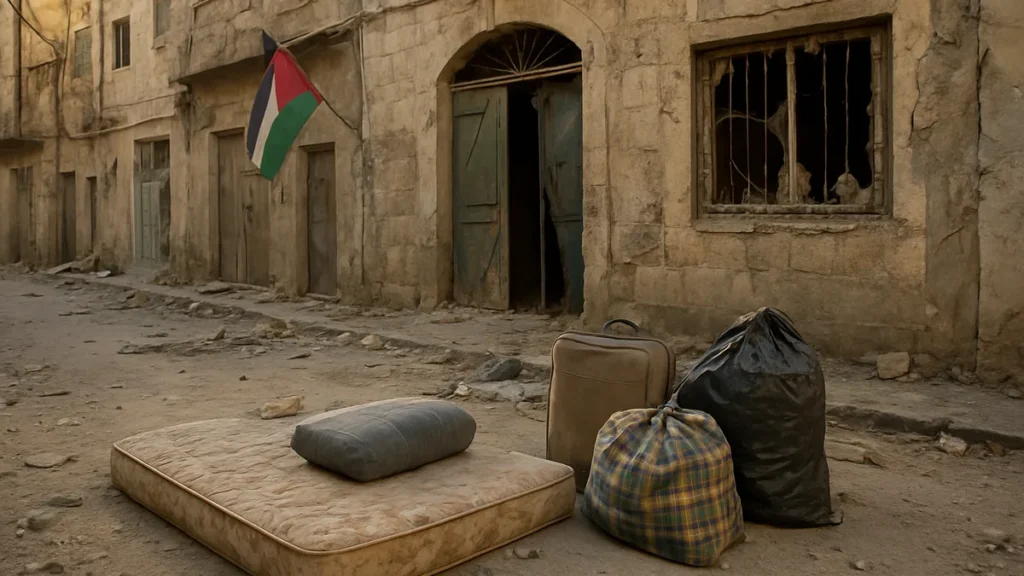
About 3,300 Palestinians have gone back to their homes in Hebron, in the occupied West Bank, after more than a week of forced displacement. Many now face a difficult cleanup after Israeli forces pulled out and left damage across houses and neighbourhoods.
The Ein Deir Bahha and al-Jalda neighbourhoods were hit by a harsh 10-day operation that followed the shooting deaths of two Israeli soldiers in the city on October 23. Two Palestinian suspects were also killed. Hundreds of families were pushed from their homes with only a few belongings, and Israeli forces barred residents from returning.
Families return to demolished and vandalised streets
On Monday morning, Hebron Governor Khaled Dodin said families could finally reach their properties now that the soldiers had withdrawn. Those who came back, however, found demolitions, vandalism and other tampering spread across their neighbourhoods.
Also read: Israeli attacks kill at least eight Palestinians in Gaza
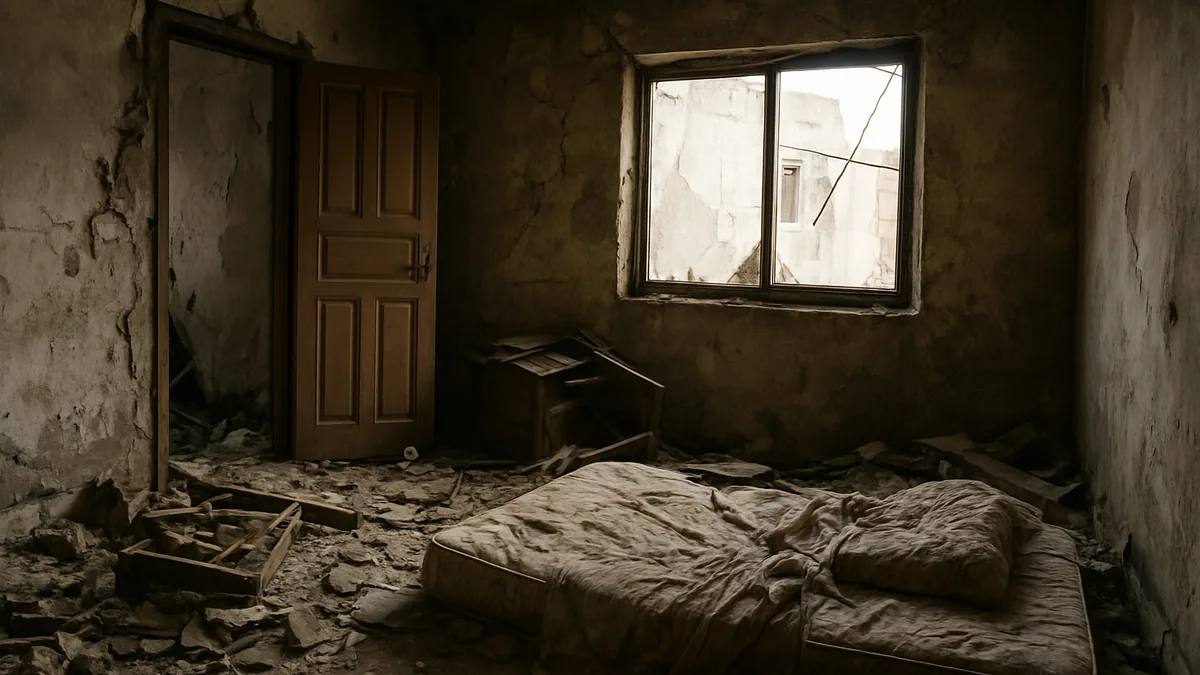
The displacement scattered local families widely. Fahd Ahmaro and his relatives were split across four Hebron neighbourhoods after leaving their home in the Khallet al-Maghariba area. Some homes near his were destroyed, while others had their doors torn from the hinges and their contents smashed, he said.
Residents recall ultimatums and sudden expulsion
Ahmaro described the experience in strong terms. “We were driven out of our homes and houses. Words cannot describe what happened,” he said, adding that everything hit them without warning and without any right. He also said, “Praise be to God … that he returned us to our paradise.”
Samer Mujahid, a resident of the al-Jalda roundabout area, said soldiers raided his home and gave him 10 minutes to take his children and leave for 18 days. When he asked for more time to pack enough clothing for his family, the army issued an ultimatum. “If I return to you after 10 minutes and you have not left, I will break your legs,” a soldier told him.
Hebron faces repair costs, outages and lost schooling
Residents and civil groups now face the task of repairing the damage. The Support and Relief Committee has formed a field team to assess harm to public and private property. Hebron municipal council member Muammar al-Awiwi said the targeted zones are also suffering from power cuts and irregular water supplies.
The military operation led to the demolition of 15 facilities, including three homes, two of which belonged to suspects in the attack that killed the two Israeli soldiers. At least 327 shops have been shut, and about 80,000 students were denied education during the 10-day displacement. The Hebron municipality estimated direct economic losses from the siege at more than 12 million shekels a day ($3.8m). Damage to infrastructure exceeded 6 million shekels ($1.9m), while the health and environmental sectors lost 500,000 shekels ($158,146).
Al-Awiwi said some residents had returned but could not live in their damaged homes, which he linked to bombing or deliberate sabotage by the occupation army. “The tragedy is great. Some residents returned and cannot live in their damaged homes as a result of the bombing or deliberate sabotage by the occupation army, such as destroying furniture, bedrooms and bathrooms,” he said.