
King Mohammed VI of Morocco on October 16 appointed a new government headed by Prime Minister Fatima Zohra Al Mansouri. She is the first woman to lead the government in Morocco’s history, a milestone that drew wide coverage in international media.
Inside Morocco, the more significant detail is her party affiliation. Al Mansouri belongs to the Authenticity and Modernity Party (PAM), which won the most seats in the parliamentary elections held in September. The party was founded by Ali Himma, a close associate and adviser to the king. PAM has formed a coalition with three other parties and dominates the new cabinet, a structure that analysts in the source article read as continuity rather than change.
How PAM moved from origins to power
The party was established in 2008 to counter the rise of political Islam, particularly the Justice and Development Party (PJD). The Arab Spring, which brought mass protests across the country, opened more room for forces such as the PJD and, to some extent, reduced the influence of the establishment known as the Makhzen.
In 2011, Himma stepped back from the party and became an adviser to the king. Other political groups, however, continued to see PAM as tied to the Makhzen. For years the party carried the stigma of its origins while it sought wider acceptance.
In the 2016 elections, PAM challenged the PJD and won the second-largest number of votes, which the article says established it as a legitimate political force. It still could not lead the government. The party then renewed its ranks and gained experience in public affairs as a coalition partner in the 2021 government. In the latest elections, it finally came first.
Low turnout and questions over the vote
The article says the election result must be viewed in context. According to the figures it cites, 62 percent of eligible voters stayed away from the polls, and on election day the authorities had to urge people to vote.
Suspicions of irregularities also surrounded the vote. Because official election records were not released in some cases, observers and political parties could not obtain concrete evidence to test those suspicions. The article notes that the claims remain unproven on the record.
The analysis also points to a familiar pattern of influential figures joining parties at the last minute to improve their electoral prospects. Two months before the vote, Faouzi Laaqjea, president of the Royal Moroccan Football Federation, whose popularity rests on the success of Moroccan football, officially joined PAM.
To secure a parliamentary majority, PAM had to ally with forces that had previously questioned its legitimacy. The article argues that while the alliance boosts PAM’s standing, the partner parties and their leaders may now lose credibility. The new government has also kept more than half of its predecessor’s members, including the so-called sovereign ministries, which fall directly within the king’s reserved powers. Some Moroccans are already asking what the elections achieved if the same people are returning to government.
Economic pressure and a difficult external backdrop
The government has an ambitious programme aimed at growing domestic pressure as the cost-of-living crisis deepens. At the first Council of Ministers meeting, chaired by the king on October 17, a 2027 Finance Bill was presented with a stronger focus on social issues, citizens’ purchasing power and youth inclusion.
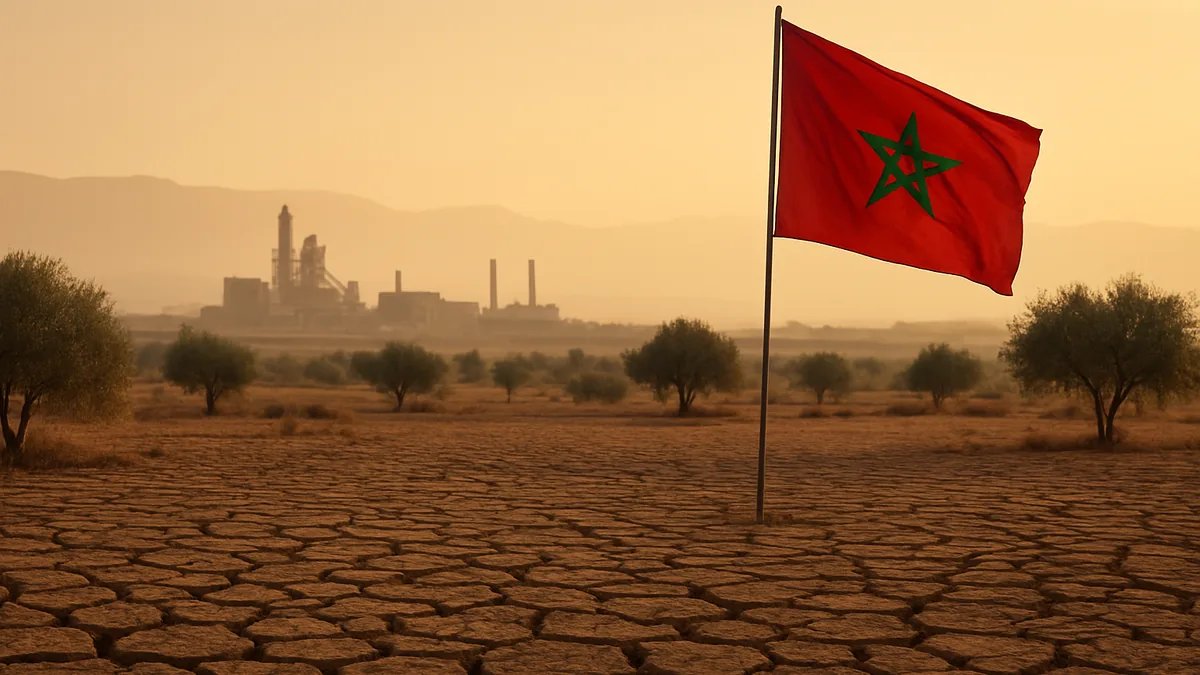
The article says this agenda faces an unfavourable international economic and financial environment. Rising energy prices and higher input costs are hitting some of Morocco’s leading sectors, including phosphate production. The state-owned OCP Group, which handles phosphate extraction and the industrial processing of phosphate derivatives, is one of the country’s principal sources of wealth and is now going through difficult times.
Further concerns centre on El Nino, which could bring more dry weather and threaten food security in a country that has just endured seven consecutive years of drought. Tourism, another major source of revenue, could also suffer from a global slowdown in travel, higher transport costs and uncertainty linked to tensions in the Gulf and Europe. The article concludes that public opinion appears broadly sceptical about the government’s prospects.
The government will also face an experienced and outspoken opposition, represented by both the Islamist PJD and the radical left. Even ministers holding sovereign portfolios face serious tests, according to the article:
- The foreign minister must contend with public opposition to the normalisation of relations with Israel.
- The interior minister has to address allegations of electoral manipulation.
- The minister of religious affairs is dealing with the fallout from controversial remarks that described Morocco as a secular country and referred to Ceuta, known in Morocco as Sebta, during a religious ceremony. Those comments were poorly received by the Spanish authorities.
Taken together, the article suggests the new government has an ambitious agenda, but its tenure will be shaped by difficult conditions at home and abroad that are largely beyond its control.