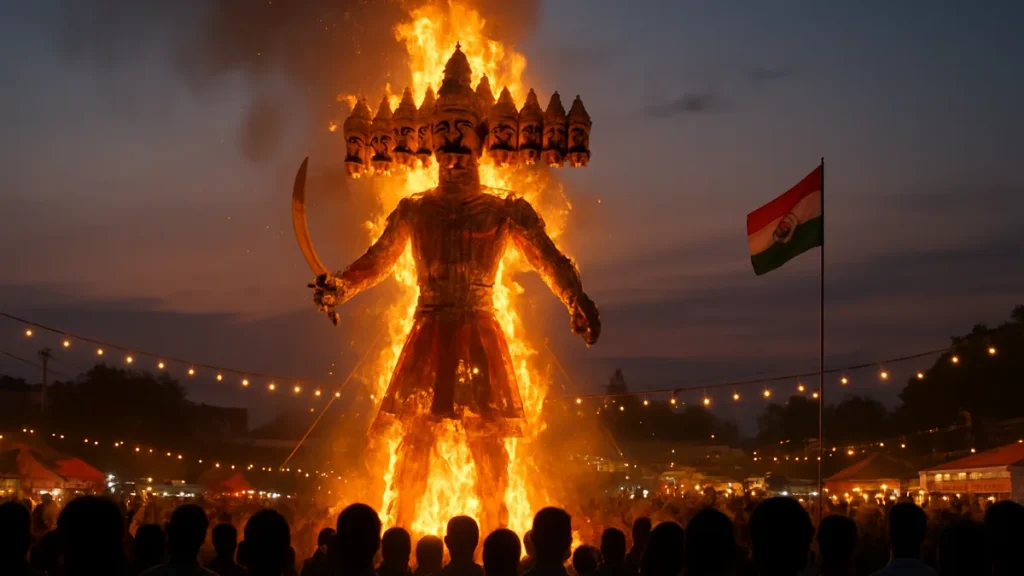

Millions of people across India are observing Dussehra, one of the country’s most widely celebrated Hindu festivals. Processions, prayers and the ceremonial burning of giant effigies mark the day, which is meant to represent the triumph of good over evil.
Rituals and traditions differ from one region to another, but the celebrations are large-scale wherever they take place.
Lord Ram’s victory over Ravan and the effigy burnings
The festival commonly marks the victory of Lord Ram over the mythological 10-headed king Ravan. In eastern, southern and other parts of India, it coincides with Vijayadashami, which honours goddess Durga’s slaying of the buffalo demon Mahishasura.
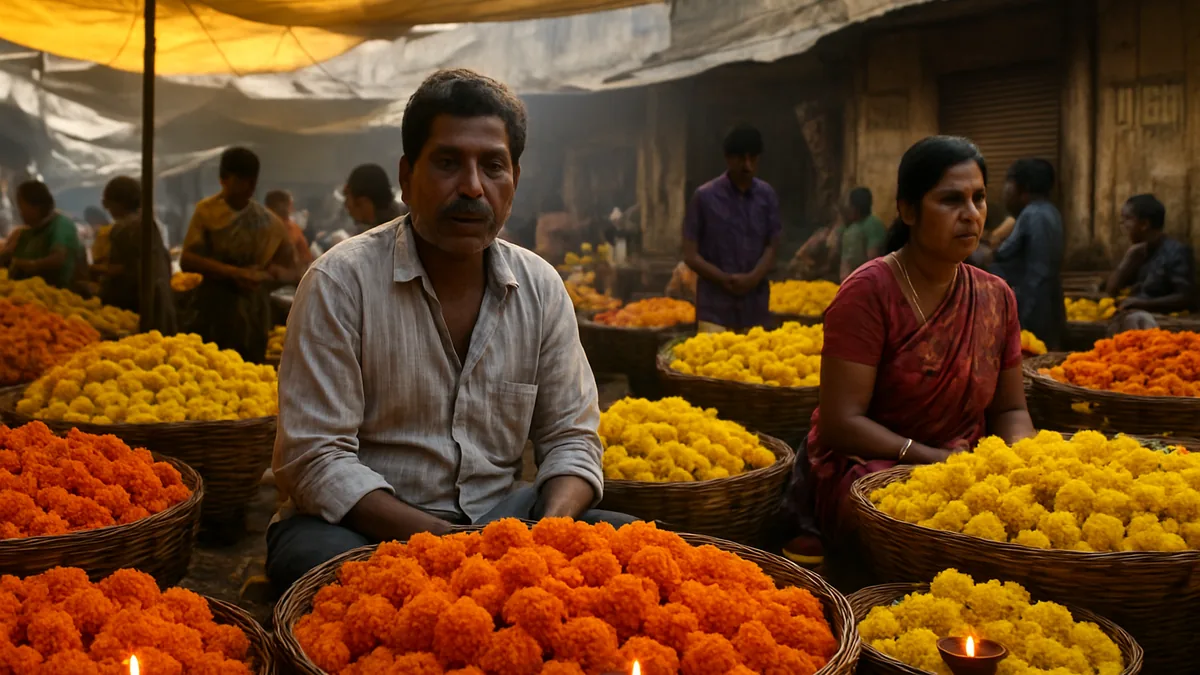
In Ahmedabad, giant Ravan effigies were brought out and burnt as part of the festivities. Smaller versions are a common sight at markets beforehand, such as in Delhi. In Bengaluru, people were buying flowers at a market ahead of the holiday, while marigolds, harvested across the country, are linked to the celebrations as a symbol of good over evil.
Ramlila performances and festive fairs in northern India
In the days before Dussehra in northern India, performers don elaborate costumes and make-up to stage Ramlila. The production retells the ancient Hindu epic Ramayana, following Lord Ram’s exile and the abduction of his wife Sita by Ravan. It builds to the battle that represents good overcoming evil.
The final act is followed by the ritual burning of effigies of Ravan, his brother Kumbhkaran and his son Meghnath. The performances usually come with a carnival-like atmosphere, with food stalls, rides and smaller shows. In Noida, Ramlila was pictured alongside similar family-friendly events.
Durga Puja in the east and Kolkata’s pandals
In the east and some other parts of the country, as well as among Hindus in Bangladesh, the festival takes the form of Durga Puja, a time when devotees worship the divine feminine power. Temporary tents housing idols of Goddess Durga and other deities are set up across cities and towns. Known as pandals, these structures attract visitors, and Durga is often shown slaying Mahishasura inside them.
In Kolkata, which is famous for its Durga Puja celebrations, tent decorations often reflect current affairs. Artisans spend weeks preparing the idols before the event. During Sandhi Puja, described as an auspicious moment of Durga Puja, devotees light oil lamps. Traditional dances such as Gujarat’s Garba also form a key part of community celebrations.
Dussehra’s place in the lunar calendar and Diwali
Hindus follow a lunar calendar, and Dussehra falls on the 10th day after Navratri, a nine-night festival of worship and celebrations. The day also marks the start of preparations for Diwali, the festival of lights, which is held 20 days later.