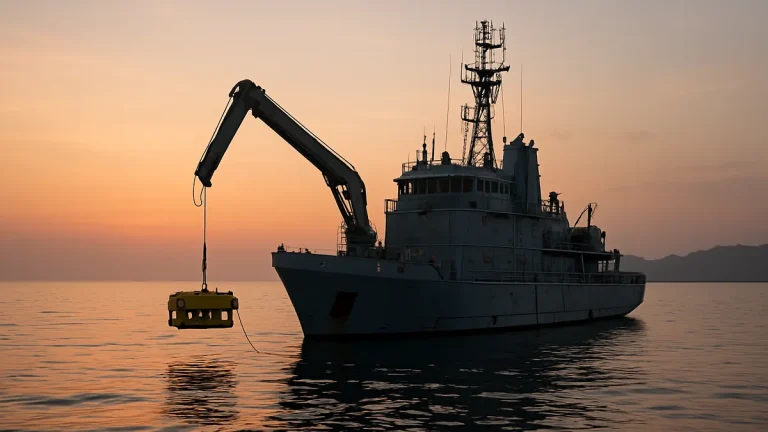

Researchers have restarted the hunt for the wreckage of Amelia Earhart’s plane on Nikumaroro Island, part of Kiribati in the Pacific Ocean, after severe weather forced a pause of several days. The expedition team travelled to the uninhabited atoll to examine the so-called Taraia Object, a feature spotted in the lagoon in aerial imagery, in the hope of resolving the mystery of the aviator’s disappearance.
Earhart vanished in 1937 while attempting to fly around the globe, and the case has generated decades of speculation about what became of her. Rough seas and strong winds kept the team aboard its research vessel for three days, until conditions improved on Sunday. Sirisha Bandla, a technology specialist taking part in the expedition, described the moment in a video update from the deck of the Marin Mainiku, saying: “We are finally getting off the ship and able to land on Nikumaroro.”
Expedition resumes fieldwork after the storm delay
The researchers reached the atoll last week and began an underwater survey of the area they are focused on. The weather, which the expedition linked to strong El Niño conditions in the Pacific, has so far stopped them from starting the second of three planned phases. That stage involves probing underwater objects to determine their depth and dredging sediment.
Bandla said the team was working to finish as much as it could that day. “We’re working to get everything done today if we can,” she said, adding: “The crew’s really excited.”
Reaching the lagoon requires a boat to pass through a narrow opening in the reef that was cut by the British in 1963, the last time the island was inhabited. Purdue University said wind gusts of up to 27 knots, or 31mph, around the island until Sunday meant the transport boat risked being thrown into the reef by breaking waves. Because of the three-day hold, the team has extended the length of the expedition so it can complete its fieldwork, and it has not yet said whether it has found any promising evidence of Earhart’s aircraft.
Rick Pettigrew, director of the Archaeological Legacy Institute, said the team understood the wide international interest in the work and would share its findings “as soon as we are able”. Before the bad weather arrived, Purdue had suggested that it could identify the Taraia Object within a matter of days.
Historic images and the wreck of the Norwich City
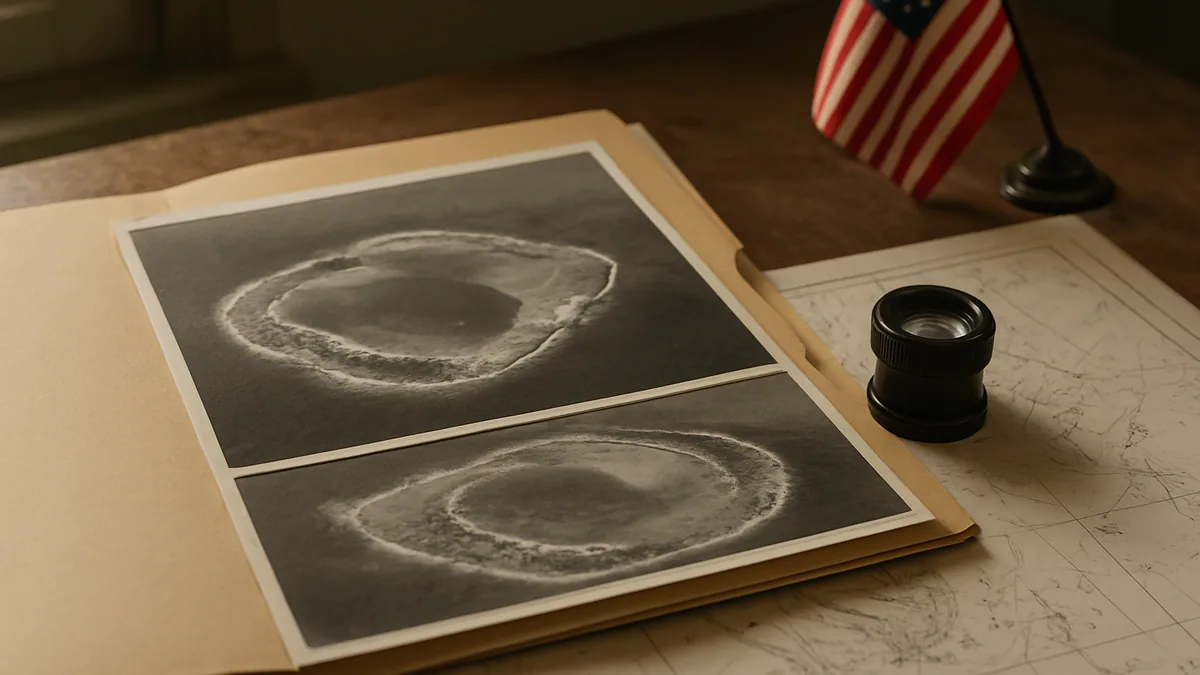
Purdue, which is leading the expedition alongside the US-based Archaeological Legacy Institute, said images of the Taraia Object dating back to 1938 appear to show what could be the remains of a small aircraft lying in shallow water. Other explorers, however, remain doubtful about that interpretation.
Earlier this week, New Zealand’s Air Force Museum published previously unseen reconnaissance images of Nikumaroro, which it released on Friday. The black-and-white pictures were taken from a seaplane in 1938. The Taraia Object is not clearly visible in them, but they do show the beached wreck of the SS Norwich City, a British merchant vessel that ran aground on the island during a storm in 1929. Eleven people died in that incident.
Purdue said the disaster showed the dangers surrounding the island. It also argued that the Norwich City wreck may lend support to the researchers’ theory. According to Purdue, a 15-year-old in Florida reported hearing Earhart’s voice repeating “New York City” over her father’s shortwave radio shortly after she disappeared. Supporters of the castaway theory contend that this may have been a misunderstanding, with Earhart in fact giving her position as near the Norwich City.
Earlier searches and competing explanations
One theory holds that Earhart unintentionally flew to Nikumaroro, where she ditched her plane and died as a castaway. She had been trying to reach Howland Island, a remote and uninhabited coral island near Nikumaroro, to refuel when her plane disappeared without a trace. Researchers have previously found signs of a human presence on the island around the time she vanished, but some sceptics think the Taraia Object may simply be a tree that fell from the atoll into the lagoon.
Earlier efforts to locate her Electra have also failed. In 2024, a group of researchers said sonar imaging suggested the aircraft could be lying around 4,877m (16,000ft) below the surface near Howland Island. That finding was later confirmed to be a rock formation. Similarly, a 2019 expedition sent to examine a photograph that may have shown landing gear sticking out of the water near Nikumaroro also found nothing.