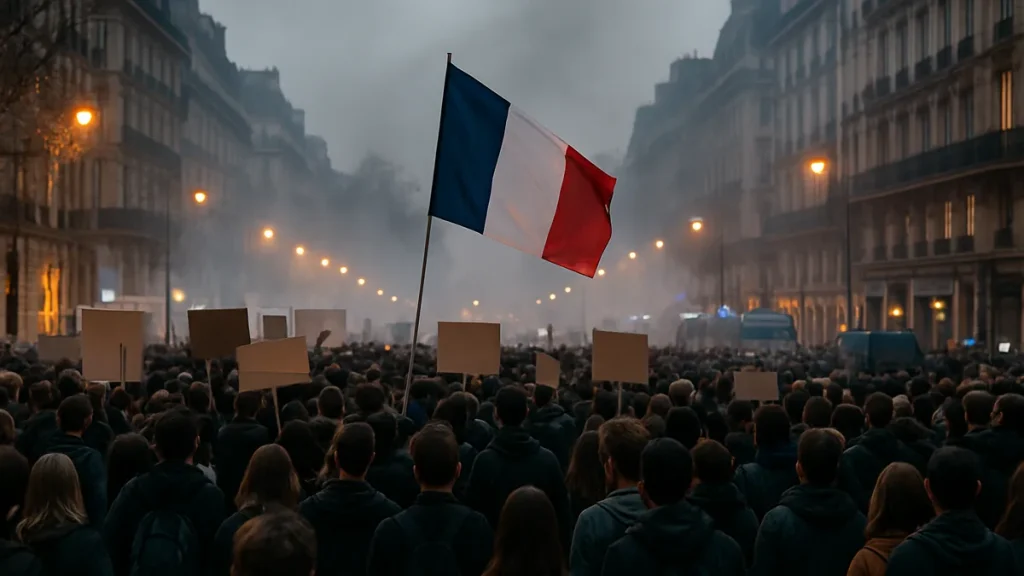

Demonstrations are spreading across France, where anger over conditions in schools has merged with frustration at the cost of living and a government that critics say has done little to fix people’s problems. The Interior Ministry said about 550,000 people took part nationwide on Saturday. Most marched peacefully, but a small minority attacked buildings, looted shops and clashed with police, who fired tear gas and charged at protesters.
Prime Minister Sebastien Lecornu said 1,200 people had been arrested and 150 police officers had been injured. Analysts see the unrest as a political crisis rooted in frustration over declining public services and strained household budgets. They also point to a belief that the country’s political system offers little prospect of real change.
How school blockades grew into a nationwide movement
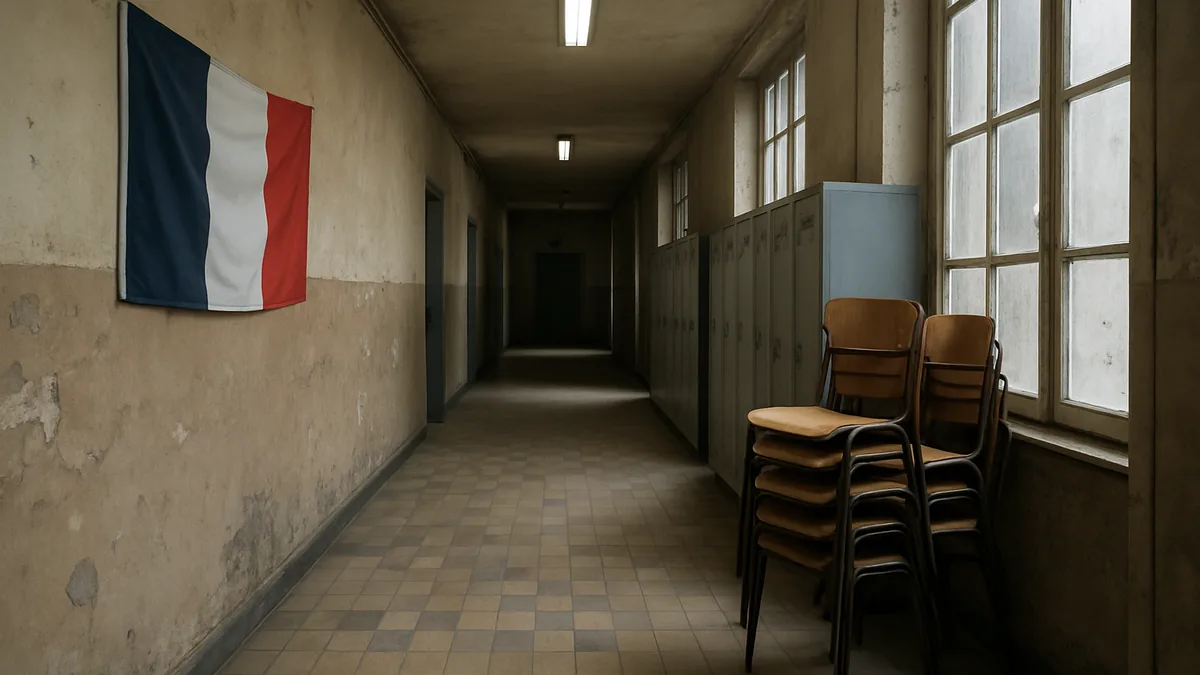
The movement started last month in high schools in the working-class northern suburbs of Paris, where students protested against teacher shortages and poor facilities. Blockades and demonstrations later spread to Bordeaux, Rennes, Nantes, Lyon, Lille and Marseille. On Saturday, students were joined by trade unions and by supporters of the “yellow vest” movement, which emerged in 2018 to challenge rising living costs and economic inequality.
Chabal, a professor of contemporary history at the University of Edinburgh, described the demonstrations as the logical result of a run of protests that stretches back to the yellow vests. He said that movement was driven by financial pressure and resentment of “the French presidential system”, a structure that often produces a centrist winner such as President Emmanuel Macron. Chabal argued that students’ anger over failing state schools had been added to those older grievances.
The students’ immediate demands focus on lycées, the public high schools that generally teach pupils aged 15 to 18. They want:
- smaller classes
- enough teachers
- better buildings
- less exhausting timetables
Their complaints also reflect wider doubts about whether the state can give young people the education and opportunities they need. For school staff and other workers, the dispute extends to wages and to the resources needed to run public services.
Budget plans and a public sector strike
The school protests overlapped with a nationwide public sector strike against the government’s budget plans. The proposed 2027 budget contains a package of cost-cutting and tax measures worth 54 billion euros ($60.8bn), which the government says is needed to shrink France’s deficit. One proposal would freeze the pay scale used to calculate civil servants’ basic salaries. Unions say that would be the fourth consecutive annual freeze.
Donatella della Porta, a sociologist and political scientist, said students were helping to inspire a broader movement around inequality, cuts to public investment and democratic rights. She said the movement was calling for spending on social welfare rather than militarisation. “They do not want to fight wars; they want a different future,” she said.
Della Porta also linked the youth mobilisation to protests over Gaza, noting that Palestinian flags had appeared at demonstrations in several European countries.
Government response, policing and the political fallout
The government has focused its immediate response on public order. Macron said those responsible for the violence would be “prosecuted and punished”. His remarks came as a fire largely destroyed the historic town hall in Limoges, while public buildings and shops were attacked in other places.
Jean-Luc Melenchon, leader of the left-wing France Unbowed party, has accused the government of repressing school students and letting the confrontation escalate. The dispute reflects a wider argument over whether the government treats the protests mainly as a security problem or addresses the grievances that brought different groups together.
Human Rights Watch said a 15-year-old lost a hand to a police stun grenade, and a 14-year-old suffered a shattered jaw after being hit by a tear gas canister fired at close range. The organisation condemned the use of excessive force against children and said the demonstrations had been overwhelmingly peaceful. Guya Accornero, a specialist in social movements at Lisbon’s University Institute, said earlier confrontations had left lasting tensions between protesters and police. She said that young people had been “violently repressed also when using non-disruptive tactics”.
Experts disagree on who will benefit politically. Paul Smith, an associate professor in French history and politics at the University of Nottingham, said he saw only one beneficiary, far-right leader Marine Le Pen, and suggested the unrest could also hurt Melenchon’s presidential hopes. Chabal cautioned against assuming a far-right gain, but said fear of disorder has historically helped conservative or centrist parties in France, including after the 1968 protests.
Le Pen has not wholly dismissed the protesters’ concerns. On X on Saturday, she called them “legitimate social demands” while claiming they had been “held hostage by the far left”. Experts say the far right is more likely to direct public anger towards immigration and the scapegoating of migrants than to blame neoliberalism and capitalism, as Melenchon has argued.
With a presidential election due in April 2027, candidates face competing pressures. They must show they can restore order while also convincing voters they will tackle the conditions behind the protests. Chabal said the central challenge is how to create change in “an environment in which no political party or movement is able to channel social discontent”.