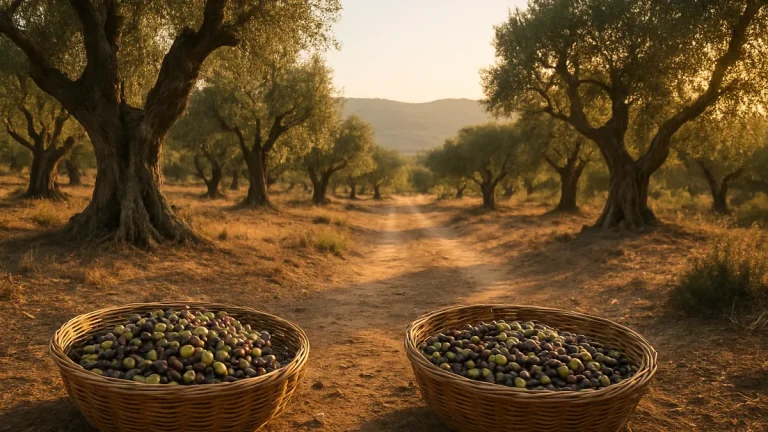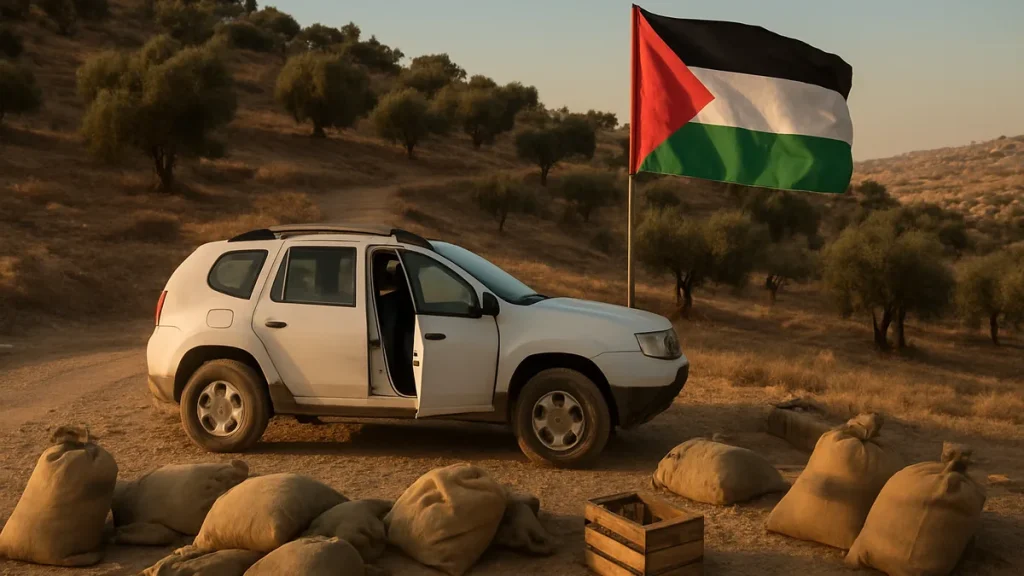

Israeli settlers attacked European diplomats and officials on Saturday in the occupied West Bank, in a surge of settler violence that has intensified in recent weeks during the olive harvest. The European Union condemned the attacks against its diplomats and against Palestinians on Sunday. A day before the diplomats were targeted, a veteran American journalist working for the Washington Post had also been badly beaten.
The violence comes only weeks before Israel holds its general election on October 27. Attacks by settlers on foreign officials and prominent Palestinians are not new in the territory, and a timeline of recent and earlier incidents shows a pattern of assaults on people who were documenting or assisting Palestinian communities.
Assault on European diplomats near Taybeh
The attack took place near the Palestinian village of Taybeh. The European group had gone to watch Palestinian olive harvesters at work when Israeli attackers confronted them. Belgium’s foreign minister, Maxime Prevot, said the settlers targeted the Belgian consul general, French and Polish diplomats, and Catholic representatives.
Prevot said a French mayor had been assaulted and a Belgian vehicle damaged. He tied the incident to what he called Israel’s illegal settlement policy and said he would push for further sanctions from the EU.
The French mayor, Bernard Baudoux, told AFP that the assault suggested Israel’s government was tolerant of settler violence. Video shared by an activist at the scene, Amit Orfali, shows Baudoux leaning against a vehicle while sitting on the dusty ground. Other clips show masked young men knocking hard on a driver’s window and demanding identification, while other masked men carrying sticks advanced in the distance. Orfali said the men had threatened to kill the group.
France’s Foreign Minister Jean-Noel Barrot called on Israel to arrest the extremist settlers responsible and bring them to justice. He said they must urgently stop the violence and guarantee the safety of civilians, as international law requires.
Netanyahu’s office appeared to question the reports. In a post on X, it described the accounts of the attack on the Europeans as alleged and said they required compelling evidence, even though published footage of the incident exists. In a statement on Sunday, the EU welcomed remarks by several Israeli representatives who condemned the attacks, but said it expected full accountability and effective measures to stop further violence against Palestinians and journalists during the olive harvest.
Journalists Heidi Levine and Jaafar Ashtiyeh assaulted
Palestinian farmers harvesting olives were also attacked, as was Heidi Levine, a 64-year-old veteran American journalist who freelances for the Washington Post. Witnesses said Levine fell to the ground before she was set upon. Jasper Nathaniel, an independent journalist who saw the assault, told that people had surrounded her on the ground, beating and kicking her.
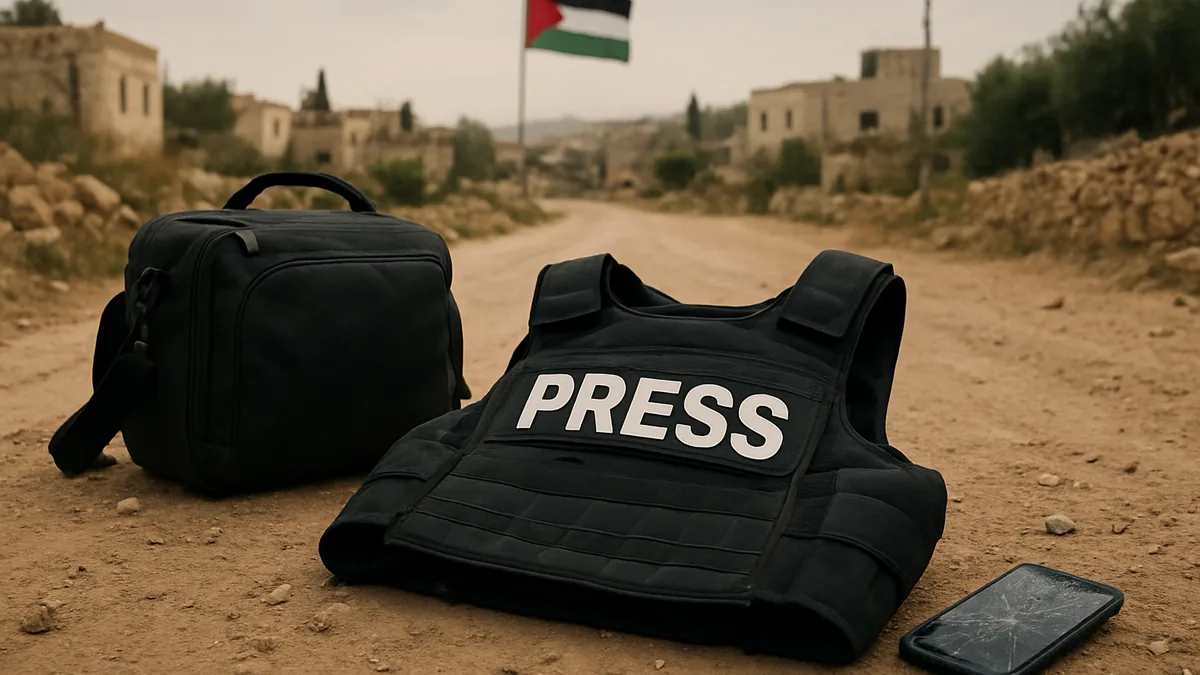
Levine later told reporters her attackers kept kicking her, by her estimate about 50 times. She was wearing a protective vest marked PRESS, but her cameras and phone were taken during the attack, according to the Washington Post. Nathaniel said he and others reached her when the settlers briefly backed away, but she could barely stand. Levine was taken to a hospital in Ramallah.
Nathaniel said Israeli soldiers arrived after the attack, fired shots and used tear gas against Palestinians, and shot a man in the leg. He also said soldiers pointed their weapons at paramedics and shoved journalists. Wafa, the Palestinian news agency, reported that Israeli forces fired live ammunition and tear gas during the incident. Nathaniel added that Palestinians went back to harvesting once the soldiers left.
Netanyahu’s office said the facts around the settler attack remained unclear and called for an investigation to establish what happened, including who started the violence. Levine’s case was one of several in which the office’s response drew scrutiny.
AFP photographer Jaafar Ashtiyeh, 58, was also beaten by settlers with rifle butts near Aqraba, south of Nablus. He suffered bruises to his head and torso and was taken by ambulance to hospital, according to witnesses, his family and fellow journalists cited by AFP. His colleague John Wessels was with him and was also threatened at gunpoint. Ashtiyeh is now conscious in hospital in Nablus, and his camera equipment was taken, Wessels said. The Israeli military had not yet responded to AFP.
Ro Khanna’s detention and the Israeli military’s response
US Congressional Representative Ro Khanna said he and his tour group were detained by rifle-carrying settlers during a trip to the occupied territory. On X, he accused the Israeli army of siding with the settlers. He told Reuters that armed men had blocked the road and then called the military, which he said took their side.
Khanna, a Democrat who is considering a run for US president in 2028, described the settlers as having been armed with US-made assault rifles. In an interview with DRM News, he said the experience was the first time he had been acutely aware of being brown, and he criticised the settlers and the young soldiers he said were funded by US tax money.
The Israeli military disputed Khanna’s account. It said troops had dispersed civilians who were blocking the road. Israeli officials also ruled out apologising to Khanna or holding the settlers accountable.
On Saturday, October 17, Khanna called Netanyahu a liar. He was responding to a statement from the prime minister’s office, posted on October 16, which said serious questions remained about who started the violence in the attack on Levine. Khanna said Netanyahu had also called him a liar after settlers detained him and a New York Times photographer in Zanuta in July.
Other attacks on activists, volunteers and a killing in Masafer Yatta
Anadolu reported that settlers stormed a Bedouin community in Ein ad-Duyuk, in the Jericho governorate, where a Canadian and three Italian activists were staying, and assaulted them. Three suffered moderate injuries and one was critically wounded, the agency said. Their passports, phones and belongings were also taken, according to local sources cited by Anadolu.
Separately, American-German volunteer David Hummel told AFP that eight mainly American volunteers were helping farmers pick olives near the Palestinian village of Qusra when settlers attacked them with sticks, metal pipes and rocks. He said he was hit on the legs, arms and jaw. The Israeli army condemned the violence, saying its troops had fired warning shots into the air, which caused the settlers to flee.
The timeline also recalls the killing of Awdah Hathaleen, a Palestinian activist and English teacher who contributed to the Oscar-winning documentary No Other Land. He was shot dead on July 28, 2025, in the village of Umm al-Khair in the Masafer Yatta region. B’Tselem, an Israeli human rights group, published footage that appears to show the suspect, Yinon Levi, firing on Hathaleen. Despite that footage and earlier sanctions against Levi by the EU and the United States, Israeli authorities released him to house arrest, and US President Donald Trump removed penalties against Levi and other settlers accused of extremist violence after taking office in January 2025.