
Gaza City, Gaza: The cost of basic goods is rising every day in Gaza, now that Israeli limits on commercial imports have stretched into a fifth straight day. Households already strained by the siege are buying up whatever food they can still find, fearing that shortages will soon hit and prices will keep climbing.
Flour, eggs, onions and other staples have become markedly more expensive since Wednesday, when Israel said commercial goods would no longer be allowed into the territory. The move comes amid a disagreement over fees that involves Palestinian merchants and Hamas, which still exercises some control in the strip.
Market prices jump within days of the closure
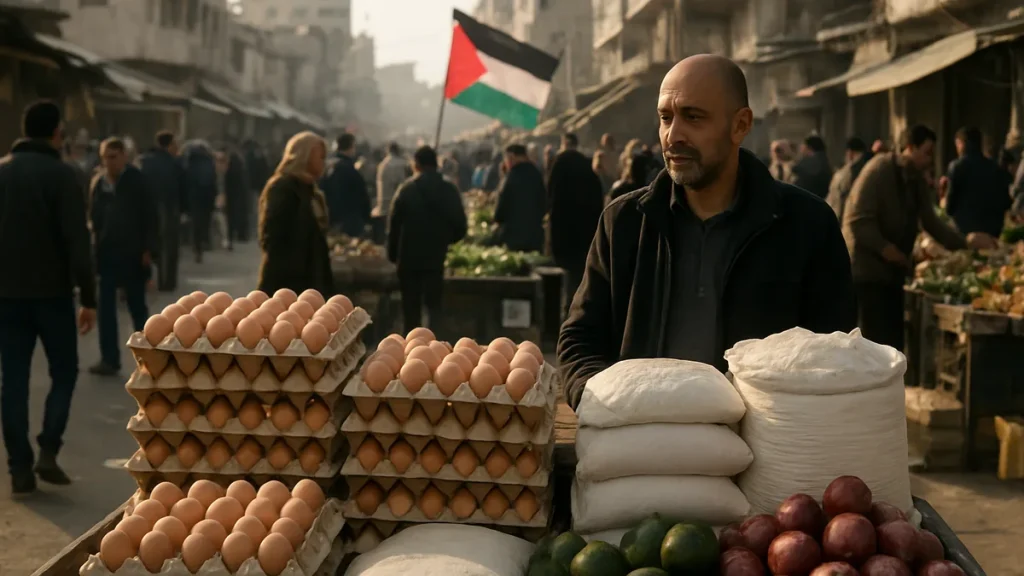
Hundreds of thousands of Palestinians in Gaza have sunk into poverty since the war began in October 2023. Prices of essentials have surged while incomes have shrunk, both because of the fighting and the tighter Israeli siege. Marketplaces are busier than normal, reflecting the rush to buy before prices move higher again.
Ismail al-Barawi, 52, from Jabalia in northern Gaza, said he saw a sharp increase within two or three days of the crossings closing on Wednesday. He described a familiar pattern in which uncertainty over the crossings is followed by higher prices. According to him, a carton of eggs that once cost 35 shekels ($11.34) now sells for between 60 and 70 shekels ($18 to $21).
Other items have followed the same path. Al-Barawi said onions had gone from five or six shekels ($1.50–$1.80) per kilogramme to between eight and 10 shekels ($2.40–$3), while avocados had risen from seven or eight shekels ($2.10–$2.40) to around 15 shekels ($4.50) per kilogramme. He warned that a 50 kg sack of flour could reach 200 or even 300 shekels ($60–$90) if the crossings stay shut.
Al-Barawi is responsible for feeding an extended family of about 11 or 12 people, including his married daughters and their children. He said the rising costs have forced him to buy less at a time. Instead of a full carton of 30 eggs, he may now buy only four or five. He blamed traders for pushing prices up as soon as they hear the crossings could remain closed, which he said adds to real shortages.
Government office rejects Israel’s explanation for the suspension
Gaza’s Government Media Office said on Thursday that it rejected Israel’s justification for the suspension. The office denied that authorities in the territory had imposed taxes or government fees on commercial trucks. It said the 10,000-shekel ($3,242) figure cited by Israel was tied to a voluntary community fund meant to support vulnerable families and financial relief projects.
The office also addressed a separate measure. It said a 30 percent rate for cash transactions had been adopted in agreement with the Chamber of Commerce, in response to a shortage of cash liquidity and the circulation of worn-out banknotes. It accused Israel of exploiting the disagreement to add further restrictions on supplies entering Gaza, a territory that has been under Israeli blockade since 2007.
According to the office, Gaza’s authorities were not responsible for the drop in the number of trucks reaching the enclave. It called on mediators and international parties to press for the entry of 600 trucks a day, in line with existing agreements with Israel. The office warned that continued restrictions would deepen the humanitarian and economic crisis in Gaza.
The United Nations Office for the Coordination of Humanitarian Affairs (OCHA) has reported that food prices in Gaza in September 2026 averaged 204 percent above their pre-October 2023 levels. Its October 2 situation report, issued before the latest border restrictions, documented wider humanitarian pressures on residents.
Families cut back meals as aid runs short
Iman Atallah, a 50-year-old displaced woman living in Beit Lahiya in northern Gaza, said the suspension of food deliveries has revived painful memories of the man-made famine that struck the enclave in 2025. She said the price of a sack of flour had already climbed from between 25 and 35 shekels ($7.50–$10.50) before the closure to about 80 shekels ($24).
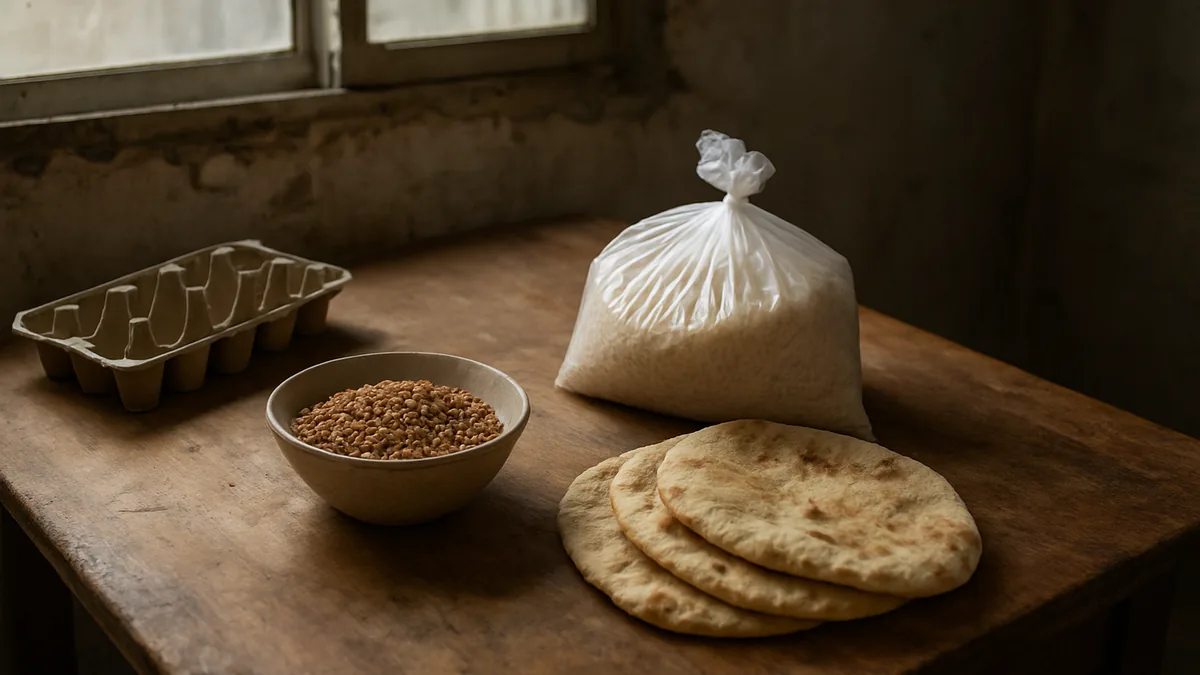
With little income and a family to support, Atallah said even basic food has become harder to buy. “Before the crossings closed, flour was affordable. We could somehow manage to buy it. Now it costs 80 shekels ($24),” she said. The flour her family receives through aid distributions lasts less than a month, and fresh fruit and eggs are not entirely out of reach.
Her household now depends largely on rice and lentils and can afford only a small amount of bread. Atallah said they sometimes skip breakfast or dinner, with lunch becoming the main meal of the day. She said the family once ate more and could buy eggs for the children, but has had to give those up.
Atallah’s family is among many in Gaza that cannot afford extra supplies. She warned that if the crossings stay closed for another 10 or 15 days, everything will become extremely expensive. “Those who have money will stock up, while those who do not will just have to watch,” she said.