
A California family says neglect in immigration detention contributed to the death of their son, Ismael Ayala-Uribe, who died in ICE custody in September 2025. Born in Mexico and brought to the United States as a child, the 39-year-old was arrested on August 17 while working at a car wash. He was held first at a local jail and later at the Adelanto ICE Processing Center in California.
A coroner’s report from the San Bernardino County Sheriff’s Department found that his death was caused by complications from an abscess in his pelvic region. His family argues that insufficient medical treatment allowed a preventable infection to become deadly. Ayala-Uribe was one of more than 50 people to die in ICE custody during the first 500 days of President Donald Trump’s second term.
Ismael Ayala-Uribe’s final days at Adelanto
His mother, Lucia Uribe, visited him at the detention centre every Saturday. On the last visit, she said, his hands looked paler, his eyes were bloodshot and his fever was rising. She recalled him telling her, “Mom, I’m not going to make it.” She said she could do little more than urge him to hold on.
Two days later, police came to her door and told her that her son had died at 2:32am on September 22, 2025. Ayala-Uribe’s brother, Jose Miguel Ayala, described him as protective of the family and said he had a big heart.
According to ICE documents, workers at Adelanto triggered a Code Blue alert for him on September 18, 2025, a signal of a life-threatening medical emergency. He was taken to the infirmary in a wheelchair and was given pain medication, an ointment and a fibre supplement. Physicians for Human Rights, whose expert Nicholas Cuneo reviewed the case, said he should have received a physical examination and antibiotics. “That is a major failure,” Cuneo said.
ICE records say his condition worsened after midnight on the Sunday, when he was vomiting, shaking and sweating. He was then sent to an intensive care unit, where, according to the agency’s documents, he went into cardiac arrest within minutes of arriving and later died.
Conflicting accounts of the timeline and cause of death
Reporters obtained a coroner’s investigation which states that Ayala-Uribe was critically ill when he first arrived at the hospital. That detail was not included in ICE’s public report on his death. The coroner’s findings also differ from the agency’s timeline.
The coroner’s report indicates that he went into cardiac arrest early on September 21, nearly a full day before he died, and that medical staff restored his heartbeat after intubating him. ICE’s report notes only one stoppage of his pulse, shortly before his death was announced on the morning of September 22. The agency described his condition on September 21 as “calm and cooperative” and said it showed no heart problems.
In a statement, ICE said detainees receive “comprehensive medical care” throughout their time in custody. California Attorney General Rob Bonta told reporters that his office had found “the exact opposite” during physical inspections of the state’s detention centres, including Adelanto. An internal mortality review committee also concluded that the care given to Ayala-Uribe “deviated beyond safe limits of practice”, according to a document obtained by US media earlier this year. It further suggested that medical staff delayed responding to calls about his declining health.
Rising death rates and conditions at Adelanto
In a social media post in June, the Department of Homeland Security, which oversees ICE, said the death rate had remained consistent with the past decade and wrote that there had been “NO spike in deaths”. Experts and watchdog groups have warned that this framing may be misleading. Cuneo said that statistics show the death rate has nearly tripled, which he said was not proportional to the growth in the detained population.
A Human Rights Watch report published in June found that immigrants in ICE custody were dying at roughly three times the rate seen under Trump’s predecessor, Joe Biden. The report put the annualised mortality rate at 2.24 deaths per 10,000 detainees during Biden’s term, compared with 6.38 since Trump began his second term. According to ICE’s own statistics, 33 people died in custody last year, and at least 26 have died so far in 2026.
Physicians for Human Rights also documented delayed emergency care, understaffing and a failure to provide adequate treatment, alongside overcrowding. Detainees at Adelanto told reporters of inadequate medical care, mouldy food and retaliation for protesting conditions. One detainee, Jesus Jacobo Ortiz Ruiz, estimated that there was one doctor for every 320 people in custody. Some detainees are part of a class-action lawsuit filed in January that accuses the US government of “inhumane and illegal conditions” at the facility.
Roughly 150 detainees signed a petition and staged a hunger strike earlier this year to protest conditions. Detainee Kurt Campbell said he was placed in solitary confinement for 30 days for taking part. Another detainee, Ashraf Abujama, said he had received physical retaliation. Four men have died at Adelanto between September 2025 and March 2026, including Ayala-Uribe.
Facility sale and the family’s ongoing grief
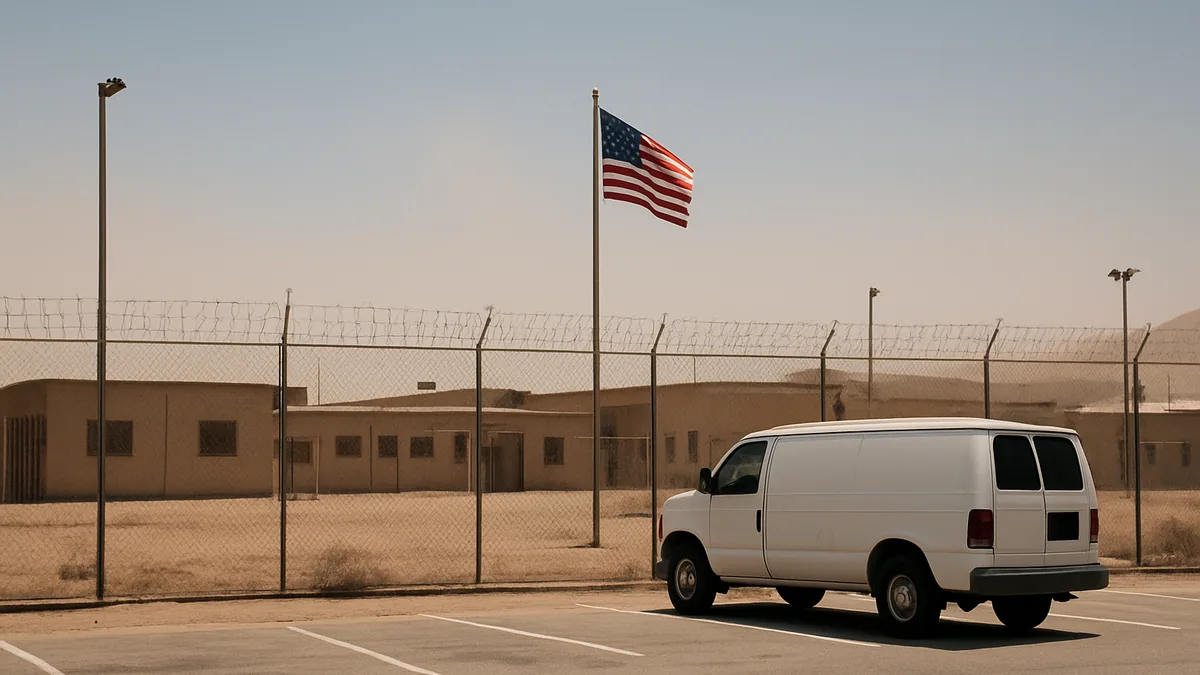
Adelanto, previously owned by the private prison firm Geo Group, has been sold to the Department of Homeland Security for $950m as the federal government seeks to acquire more detention centres. Critics warn that federal ownership could make conditions there less transparent and limit the oversight role of state and local authorities.
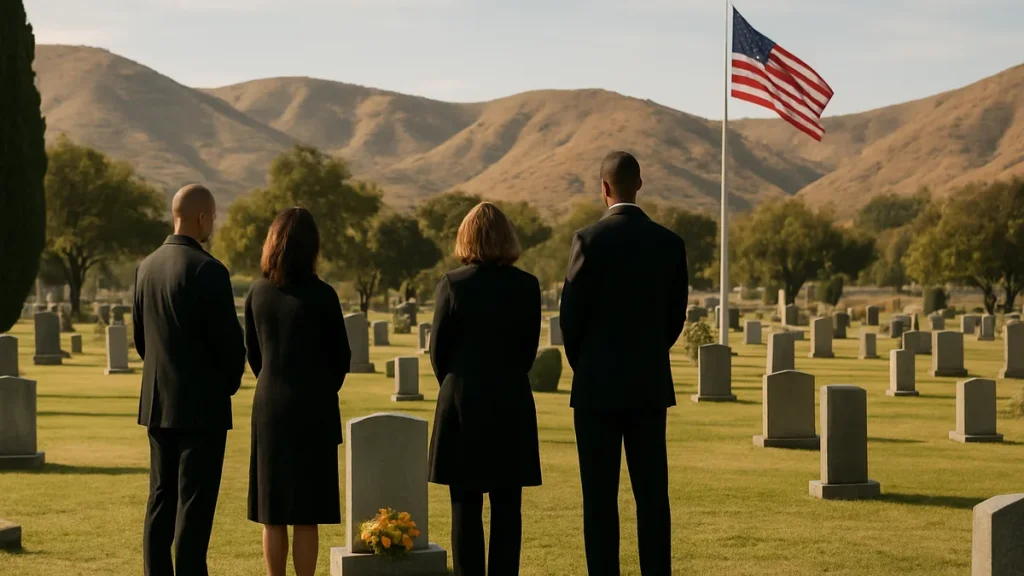
For Ayala-Uribe’s family, the change is part of a painful new routine. His mother, who once visited him at Adelanto, now spends Sundays at his grave. Jose often joins her, along with his sister and her two children, while their father often stays behind. “My dad still has a hard time going,” Jose said.
More than a year after his death, the family is still coming to terms with the loss. “There’s a time where I just feel like he’s just going to walk in,” Jose said. “There’s just an emptiness that wasn’t there before.”