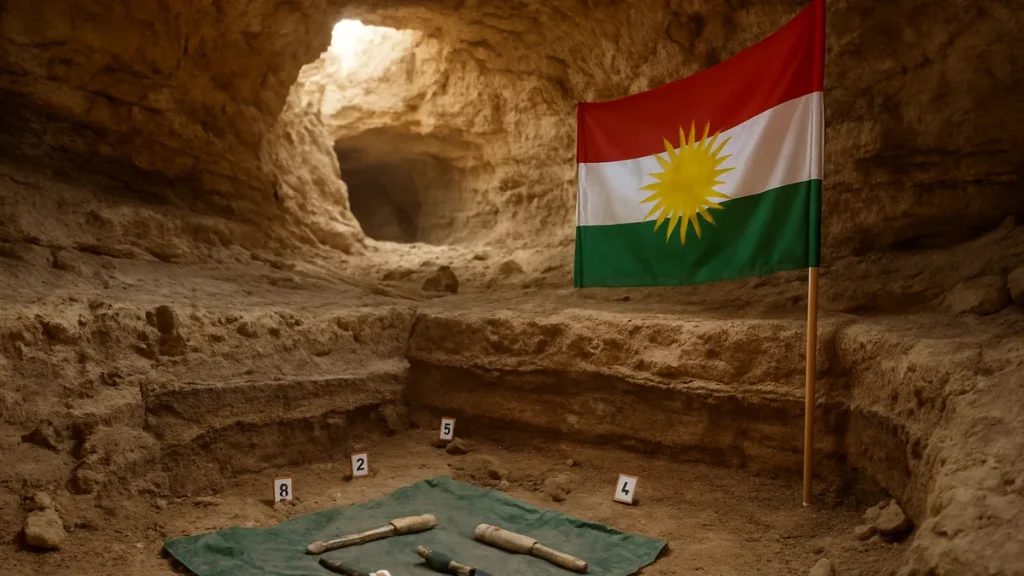

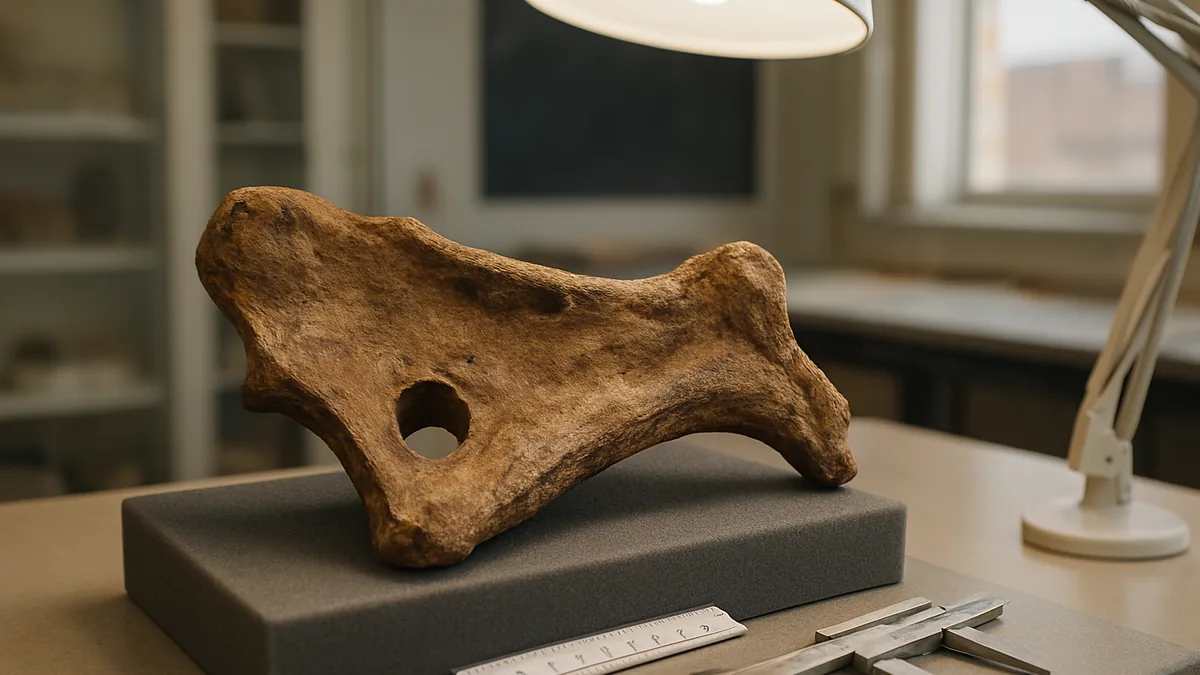
A Neanderthal who died around 75,000 years ago may have been pierced through the chest by a sharpened wooden spear, archaeologists say. A 15mm hole in a shoulder blade found in a cave in Iraqi Kurdistan could be the earliest evidence of lethal violence involving such a weapon, according to the researchers.
The team believes the spear entered the chest, passed through the body and left through the left shoulder blade. The angle of the wound and other evidence point to this, they said. The spear probably damaged a lung and major blood vessels, leaving a nearly perfect hole in the bone.
How the spear wound was identified
The remains of the wounded Neanderthal were found in the cave. Alongside the left shoulder blade, the team recovered the individual’s right hand, three ribs and some teeth. Neanderthals were a separate species of humans that died out around 40,000 years ago. They lived across a large part of Europe and western and central Asia, and at times overlapped with our own species, Homo sapiens.
Dr Emma Pomeroy, the study’s lead author from the Department of Archaeology at Cambridge, said the hole may be the earliest sign of “lethal interpersonal violence” involving a wooden spear. She said the fatal blow may have been aimed at the heart. Pomeroy added that the shape of the hole is unlike a natural break. Experiments with reconstructed wooden spears, she said, produce similarly round holes in bone.
Archaeologists refer to the remains as Shanidar A, after the cave where they were uncovered. Excavations there in the 1950s turned up the remains of at least 10 Neanderthals. Pomeroy said the wound is thought to be the first evidence of sharpened wooden spears being used in the prehistoric Middle East.
Doubts over whether the wound was deliberate
Pomeroy cautioned that violence between individuals is not certain. The injury could have come from friendly fire, meaning an accident during a hunt. Prof Chris Stringer of the Natural History Museum in London, who was not involved in the research, took a different view. He said an attack by a rival seemed the more likely explanation, given where the wound sits and how far it extends.
Stringer said the researchers left open whether the wound came from a hunting accident or from interpersonal violence. “In my view the latter seems more likely,” he said. The discovery also echoes an earlier find from the same cave, made in 1957. Those remains belonged to another Neanderthal who lived more recently, around 50,000 years ago. The ribs of that individual showed a partly healed wound, which archaeologists think was probably caused by a spear with a stone tip.
Growing evidence of violence in Neanderthal societies
Researchers say it is impossible to know for certain whether these Neanderthals were hurt by a companion during a hunt or killed by a rival. Still, the finds add to a small but growing body of evidence. Together they suggest that violence between humans may have been more common, and may stretch further back in time, than current scientific consensus suggests.
Stringer said he sees this growing evidence as a sign that violence between individuals runs deep into human prehistory. A key part of that evidence comes from a study published in 2022. It examined very early Neanderthal skulls from northern Spain, found at a site known as the “Pit of Bones”. The study suggests deadly violence was occurring there about 430,000 years ago.
The researchers recorded 57 healed head injuries across 20 individuals. Nine individuals had skull fractures that could have been fatal, and six had similar puncture wounds at the back-left of the head. Because the wounds kept appearing in almost the same spot, the researchers concluded that deliberate blows were more likely than accidental damage. One skull carried two wounds that had probably been made by the same object.
The Pit of Bones findings do not show that everyone in that population was habitually violent. They do, however, provide strong evidence that people were repeatedly killed there hundreds of thousands of years ago. For decades, many archaeologists linked the start of organised warfare to farming, when people settled permanently and competed over land, livestock and food stores. Evidence from earlier hunter-gatherers and from still older human relatives has since shown that individual killings predate farming by a very long time.
The central scientific debate now concerns how common such violence was, and when occasional attacks turned into organised conflict between groups. The research has been published in the journal Scientific Reports.