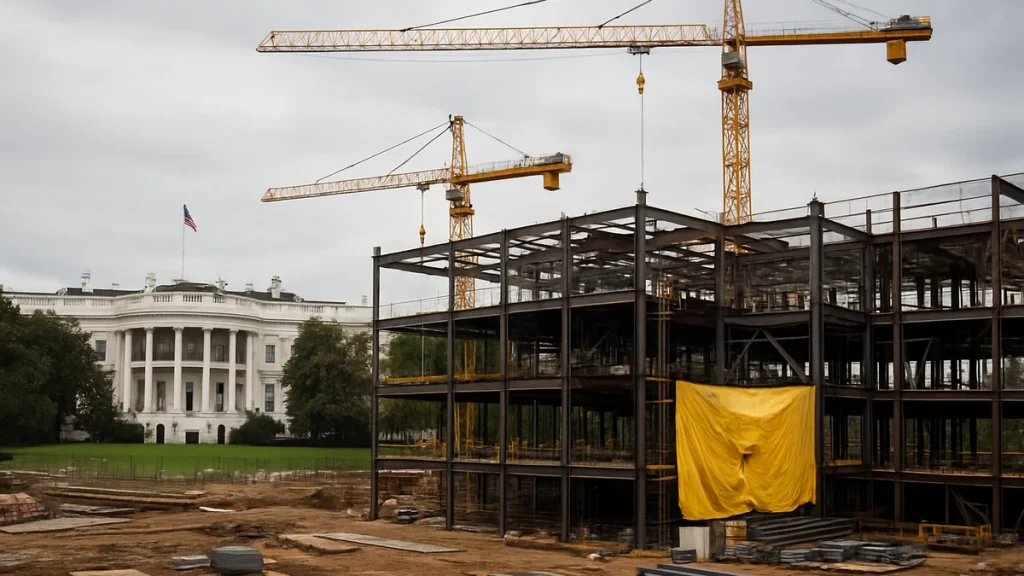

Nvidia and Apple have each pledged $25 million toward the White House ballroom that US President Donald Trump plans to build, according to a Washington Post report published on Thursday. The newspaper said private donations to the project total $333 million. Reuters said it had not verified the report.
The Adelson family, longtime financial backers of Trump and his Republican Party, also committed $25 million. Billionaire Charles Ergen, co-founder and chairman of the telecommunications company Dish Network, gave the same amount, the report said. According to the Post, Trump himself does not appear on the donor list.
White House withholds donor details and defends contributors
The White House has said it will not release information about the donors. Spokesman Davis Ingle said they “represent a wide array of great American companies.” Ingle told Reuters that critics raising questions about conflicts of interest would also complain if taxpayers were paying for the renovations.
Nvidia said it was proud to give to a nonpartisan trust that serves Americans. A company spokesperson said its support for the United States is “paramount, and independent of any business interests.” Apple declined to comment.
Watchdogs question transparency and donor influence
Watchdog groups and legal experts have criticized the scale of the project and the administration’s handling of fundraising and disclosure. They argue that it raises concerns about transparency, donor influence and adherence to long-standing ethics and oversight norms.
The Post reported that the vast majority of the funds came from companies and wealthy individuals with interests before the federal government. It also said half the total came from companies or executives of firms that have held federal contracts during Trump’s second White House term. Trump had initially said he and wealthy donors would cover the estimated $400 million cost, but later failed to win $1 billion from Congress for an underground bunker and security features.
Supreme Court lets construction continue during legal challenge
In August, the US Supreme Court ruled 5-4 that Trump could keep building the ballroom while he challenges a judicial order that would halt much of the development. In a dissent, Chief Justice John Roberts said the project was “likely unlawful.”
Preservationists and opponents say Trump exceeded his authority by demolishing the historic East Wing, which housed the first lady’s offices and the White House movie theater. Trump has said the 90,000-square-foot (8,360-square-meter) ballroom will seat 1,000 guests and include bomb shelters, medical facilities, defenses against drones and missiles, and other security features. Facing criticism, the administration now argues the facility is needed for national security, the same justification the president has offered for a proposed triumphal arch.