
Even as US President Donald Trump shifted the direction of his Russian oil sanctions policy on Friday, Ukraine’s Western allies had been stepping up their use of international maritime law. Experts told that countries enforcing sanctions on Russian oil have, for the first time this year, used boarding and inspection rights granted under the Law of the Sea.
Russian officials, for their part, warn that more pressure is coming. Speaking during a visit to China on October 12, Russian Maritime Board chairman Nikolai Patrushev said Western countries were trying to organise the interception of Russian vessels. He claimed London and Brussels were drawing up plans to blockade the Baltic Sea and the straits leading into it, and that other key shipping routes were also under threat.
How Article 110 is being used against shadow tankers
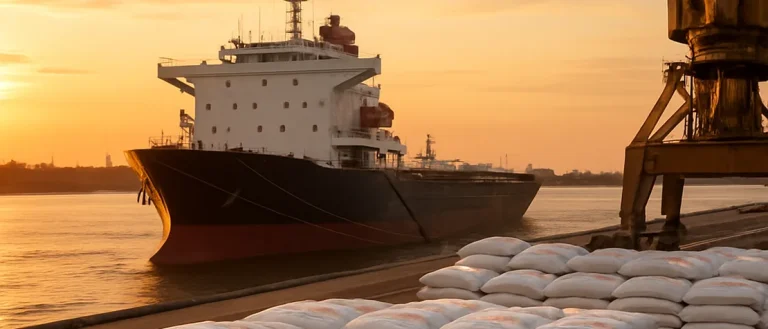
Western sanctions do more than ban purchases of Russian oil in the countries that impose them. They also bar Western-insured tankers from selling Russian crude to third parties, unless the sale is made below market prices, which leaves Moscow with little or no profit. Since 2022, Russia has shipped about half of its crude through a so-called shadow fleet of tankers that are neither owned nor insured by Western institutions and often fail to meet environmental and safety standards.
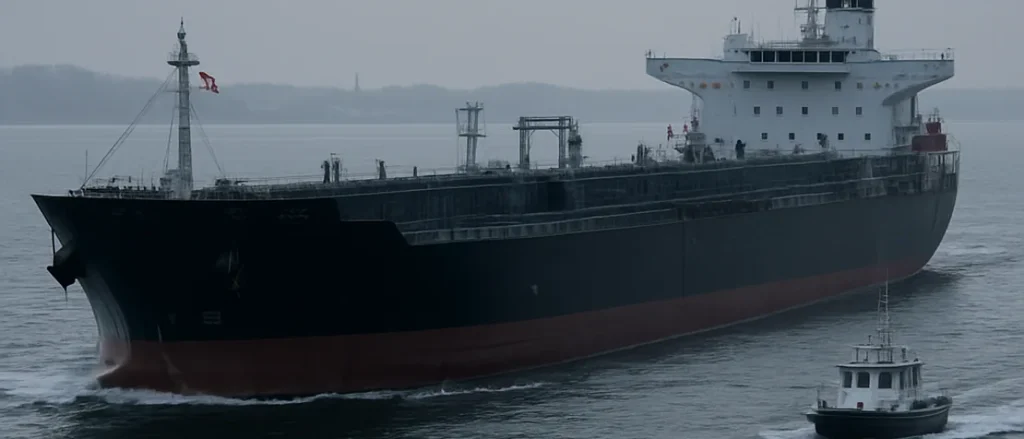
The United States, the United Kingdom and the European Union are now using Article 110 of the United Nations Convention on the Law of the Sea (UNCLOS), which allows coastal states to inspect vessels, to step up compliance checks. Analysts say this has narrowed Russia’s room to manoeuvre in its effort to get around oil sanctions, 45 months after the EU, US and other Group of Seven (G7) states imposed them. Michelle Bockmann, an analyst at maritime intelligence company Windward, said the aim was to disrupt Russia’s logistics and make it costlier to move oil to market, and that this was already happening.
Bockmann said many of the vessels had used fraudulent registries and had no recognised nationality. Under the old approach, officers would simply hail a ship, ask about its flag and insurance, and then let it continue under the right of innocent passage. Under UNCLOS, she said, authorities now have a legal basis to board such ships.
Shadow tankers have also been involved in a range of practices that invite suspicion. According to the reports cited, some transferred Russian oil between vessels on the high seas to hide where it came from, switched off their tracking systems, falsified their positions, avoided insurance requirements and flew false flags.
The United States was the first to invoke the article, late last year, to board vessels that were evading Treasury Department sanctions on Venezuelan oil, in an operation called Southern Spear. With help from the UK, US Marines later seized the Russian-owned Bella I in the North Atlantic last January. That vessel had been sanctioned for carrying Iranian and Venezuelan oil as well as Russian cargo. The UK and France have since boarded several other ships under UNCLOS rules. Experts said these inspections were few compared with the hundreds of shadow tankers still at sea, but they had nonetheless put the fleet under pressure.
Flag registries, reflagging and fallout for shipping firms
Kristina Siig, a professor of economic law at Aalborg University in Denmark, said the article had been largely unused until recently. “Article 110 had just been sitting there, not really getting any traction,” she said. “The tool has always been there, but it just never got pulled out of the drawer.”
The shift has also changed daily work in the shipping sector. George Xiradakis, a maritime consultant who sits on the boards of several shipping companies in Piraeus, Greece, said due diligence had become the biggest headache in ship management. He said charterers and buyers now have to check thoroughly that vessels meet international standards, and that the time required for this had grown several times over compared with 2025.
After losing access to Western fleets, Russia turned to flags of convenience. The EU, UK and US then approached those registries and persuaded them to remove shadow vessels from their books. Bockmann said St Kitts and Nevis were the first to act, in early 2024, followed by a string of other registries that she named, which she said had all stopped registering such ships.
Russia responded this year by moving many of those tankers onto its own register. TankerTrackers.com lists 340 dark or shadow tankers as Russian-flagged. Sanctioning states have answered by turning to UNCLOS.
Denmark and Sweden at the centre of Baltic enforcement
Denmark and Sweden hold a central position because they control the narrowest passages in the Baltic, the only route ships can take to reach the North Sea and the Atlantic. Tankers loading crude and petroleum products at the Ust-Luga and Primorsk refineries in the Leningrad region must pass through Danish or Swedish territorial waters, where national law applies in full.
The Danish Maritime Authority recorded 292 Russian shadow tanker transits through the Baltic in 2025 and has steadily tightened its inspections. Danish authorities began compliance checks on tankers anchored off Skagen in February 2025. In April, they detained the Vietnamese-flagged shadow tanker Vigo after finding its fire safety arrangements inadequate. In October, Denmark widened its checks to cover ballast systems, fuel quality, emissions, waste management and certificates.
Siig said Denmark’s approach was to apply the rules strictly. Danish authorities now ask for an oil insurance certificate, a sail plan through the Danish Straits and safety documents, in addition to proof of insurance.
Russia has reacted angrily. On September 14, a Russian frigate fired two flares at a Danish helicopter inspecting it in international waters south of Gedser, in the Danish Straits. A recent report from the Danish Defence Intelligence Service said Russian forces were increasingly acting aggressively towards NATO units in the Baltic Sea region. The same report said Russia was under more pressure than at any other point in the war against Ukraine, and that the Russian economy faced a serious crisis driven by military spending, sanctions and Ukrainian strikes.
Siig said Denmark was moving carefully as it used these provisions for the first time, and that closing the strait was not under consideration. She said she had seen no public evidence of such a measure, noting that the Danish Straits are international straits subject to transit passage. “Russia has lost the Baltic,” she said. “Everybody seemed to be getting along just fine. Then Ukraine happened, and suddenly they got boxed in, geopolitically.”