
Ukrainian President Volodymyr Zelensky has accused Russia of striking six energy facilities in his country only hours after US President Donald Trump said Moscow and Kyiv had agreed to an energy ceasefire.
Trump said on Sunday that the truce took effect straight away. Zelensky said it was “news to him” that any truce was in place, and he told Fox News that Ukraine had not attacked, while Russia had hit gas stations, power infrastructure and other sites.
Power cuts and injuries across Ukraine
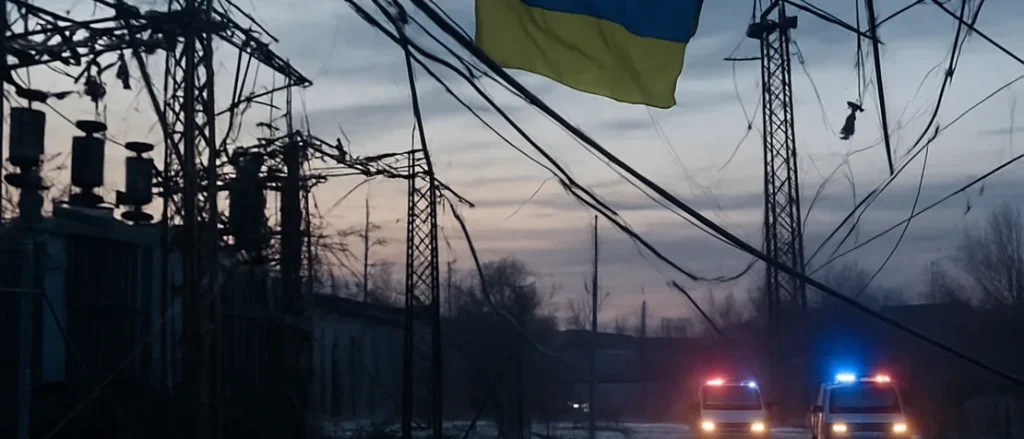
Zelensky said 33 people were hurt in strikes on energy sites across the country. Ukraine’s state news agency Ukrinform said a Russian strike had destroyed power grids in the city of Izyum, leaving it without electricity, and that energy and rail infrastructure in western Ukraine was also hit overnight.
Ukrenergo, the state-owned grid operator, reported fresh outages in Kharkiv, Donetsk and Zaporizhzhia caused by Russian attacks that damaged energy equipment. The operator also said rationing had been introduced in parts of the country to stop already damaged equipment from being overloaded.

Mixed reactions from Moscow and European officials
Russian Foreign Minister Sergei Lavrov said on Monday that Ukraine did not deserve the pause a ceasefire would bring. Zelensky, writing on X, said the attacks showed Russia was unwilling to accept an energy ceasefire.
Zelensky said the strikes appeared to be Vladimir Putin’s response to Trump. Even so, he backed the proposal as an important move toward ending the conflict, provided the Americans stepped in firmly and ensured Russia observed the truce.
EU foreign policy chief Kaja Kallas told a meeting of EU foreign ministers that the bloc would welcome an energy ceasefire once it held, adding that she had not yet seen Russia commit to it. Estonia’s foreign minister said the ceasefire was not working. UK Prime Minister Andy Burnham said Britain backed Trump’s call for a sustained energy ceasefire starting now, and France, Canada and the EU also voiced support.
Months of energy strikes and fuel price pressures
Ukraine and Russia have been trading strikes on energy infrastructure for months, disrupting power supplies on both sides. Moscow argues that the sites it targets are legitimate because they support Ukraine’s military operation. Zelensky has said Ukrainian strikes deep inside Russian territory aim to weaken Russia’s ability to finance the war.
A verification analysis of strikes from both sides found that each has stepped up attacks ahead of the coming winter. It recorded 273 strikes on Russian-controlled oil and gas facilities in 2026, more than double the 124 logged over the same period in 2025. Separately, data compiled by the Armed Conflict Location and Event Data project, known as Acled, showed 2.4 times as many reported Russian attacks affecting Ukraine’s energy network so far this year.
Trump has been urging Ukraine to stop hitting Russian oil infrastructure so that Russia can meet a recently agreed deal to release diesel to the US and global markets. Global conflicts have pushed fuel prices higher ahead of the US midterm elections, and on Friday Trump announced a plan to import Russian diesel into the US. The deal temporarily lifts US sanctions on energy imports, which Zelensky described as a gift to Putin.