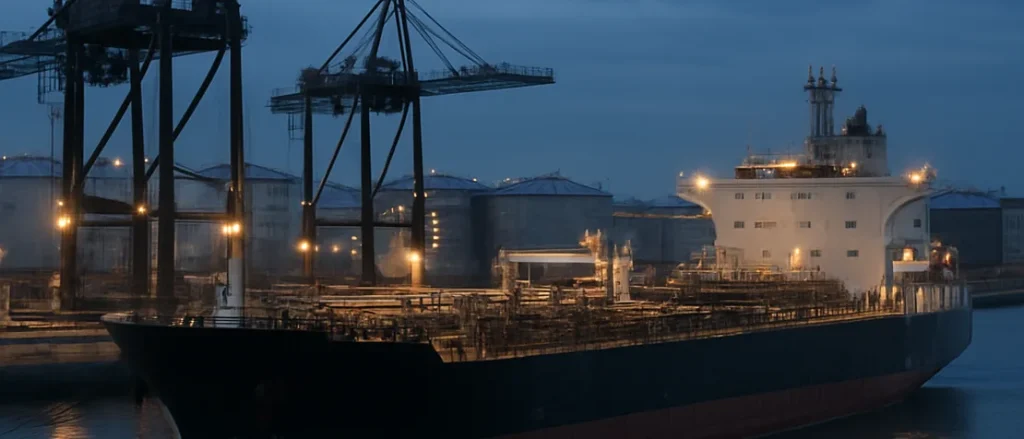

Russia has lifted its ban on diesel exports and is preparing to sell hundreds of thousands of tonnes to the United States and other countries as winter sets in. The move is part of a deal negotiated between US President Donald Trump and Russian President Vladimir Putin. The US Department of the Treasury issued a sanctions waiver on Russian fuel to make it possible.
The deal was struck amid a growing global crisis over energy supplies and prices. Trump announced it only a few weeks before the US midterm elections, in which his Republican Party risks losing its majority in both houses of Congress.
Fuel deal raises questions about US policy on Ukraine
The author argues that the deal’s main significance is political. In his view, Trump needs American voters to see him as caring for them, and the fact that Putin was in a position to help shows Russia’s central role in the global energy market. The author also says the arrangement showed a willingness by the White House to set aside Ukraine, which is in a weak position, to serve domestic interests.
It is not yet clear whether the deal marks a turning point in the US approach to the war in Ukraine. The author says last year’s Anchorage understanding suggests caution. Trump’s later mention of an “energy ceasefire”, which the author notes is unacceptable to Russia, looks to the author like an attempt to balance a move towards Moscow with reassurance to Kyiv and European allies.
The author adds that the US position is not helping Ukraine or its European allies as they struggle with an energy crisis and continuing losses.
Ukraine faces severe economic damage and a grim winter
According to the article, Ukraine’s economy is suffering severe damage. Its Black Sea ports can no longer handle its wheat exports, the country’s steel industry has halted production, and rail logistics are disrupted by a lack of operable engines.
Russia has also expanded its own strikes. The article says Putin admitted that Ukraine’s air campaign against targets deep inside Russia cost 1 percent of Russia’s gross domestic product. In response, Russian forces have dropped some of their self-imposed restraint and begun hitting targets they had previously avoided, including ships carrying goods to and from Ukraine, bridges across the Dnieper River and data centres.
Kyiv is facing drone and missile attacks almost around the clock, according to the article. Local authorities have started urging residents to leave, because winter preparations such as heating backups and stockpiles of food and water may not be enough to get people through the cold months.
Zelenskyy’s position and Europe’s stake in the war
The article describes Ukrainian President Volodymyr Zelenskyy as defiant. The author argues that he cannot withdraw, saying that if he agreed to pull Ukrainian forces from the remaining part of Donetsk, as Putin has demanded, he would have reason to fear for his life. The author also claims that Zelenskyy would lose a new presidential election and that his backers would then abandon him, pointing to former Georgian president Mikheil Saakashvili, who is now serving time in a Tbilisi prison.
Ukrainian politicians have grown more restive recently, the article says, but they are not breaking ranks with Zelenskyy on war and peace. Nationalists at home and donors in the West remain firm that the fight will continue.
The author contends that for Europe the war is about Russia rather than Ukraine. He writes that Europe, which pays for half of Kyiv’s budget, appears willing to keep fighting “to the last Ukrainian”. The author also says Europe will not end its involvement until its financial and political losses outweigh its use of Ukraine.
The author expects that both Ukraine and Europe will get through the coming winter, but argues that Kyiv is bound to lose in the end. He says Europe would then have to accept its client’s defeat while presenting a rump Ukrainian state as a kind of victory. The views in the article are the author’s own and do not necessarily reflect the editorial stance of the publisher.