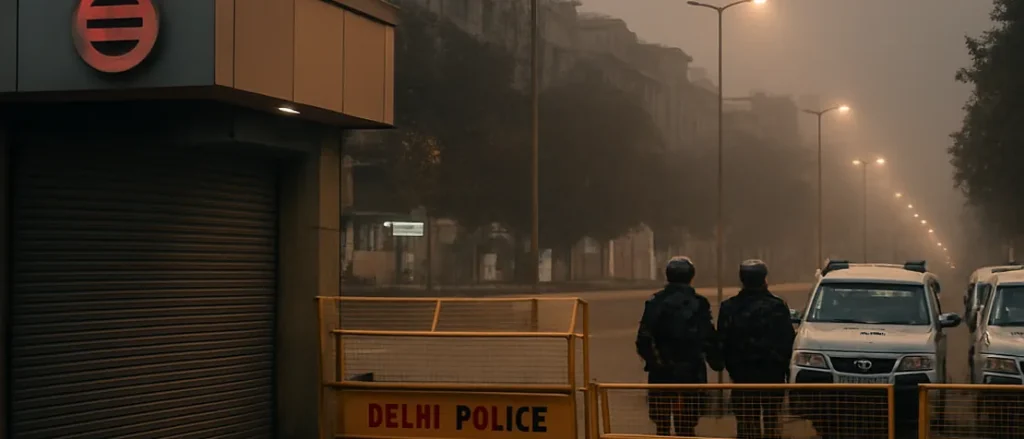

Authorities in Delhi shut six metro stations on Monday and warned of traffic disruption as opposition parties began marching towards the Supreme Court. The march is a protest against a contested revision of voter lists that has triggered several days of unrest in the Indian capital.
Demonstrations have taken place almost every day this month. Opposition parties and backers of the ‘cockroach’ youth movement are calling for Chief Election Commissioner Gyanesh Kumar to resign, arguing that the revision favours Prime Minister Narendra Modi’s Bharatiya Janata Party (BJP).
Millions of names removed from Indian voter rolls
The revision began last year and has led to more than 130 million names being removed from voter lists, a figure larger than Japan’s population. Of those removed, 28 million had died, 63 million had moved away, and 30 million could not be traced.
Opposition parties allege that Muslims and other minorities, who are unlikely to back the Hindu nationalist ruling party, are hit disproportionately by the deletions. The Election Commission denies favouring any party and says voters wrongly removed can re-enrol, while the BJP accuses its rivals of undermining democracy by questioning legitimate electoral processes.
Police lock down central Delhi and restrict movement
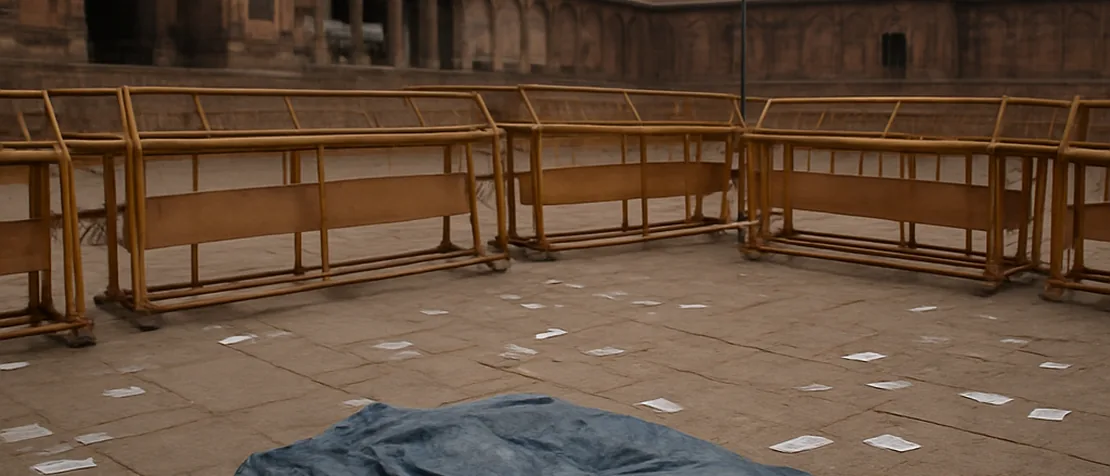
Thousands of protesters were detained by police over the weekend, including leaders of the Cockroach Janta Party (CJP). Thousands of security personnel also sealed off central Delhi to stop supporters from marching.
On Monday, six metro stations were closed for what authorities described as security reasons, and traffic restrictions and diversions were imposed along more than 20 stretches of road. Hundreds of officers in anti-riot gear remained in the centre of the city, major roads were blocked off, and water cannons were kept ready.
Delhi Police also said that Jantar Mantar, a historic observatory and long-standing protest ground in the city’s central business zone, is no longer an official protest site. An official order said three new venues had been identified instead. Earlier this year, the youth movement held a weeks-long sit-in at Jantar Mantar demanding that education minister Dharmendra Pradhan resign over exam paper leaks.
Congress meeting request with Chief Justice turned down
Congress had planned to submit a memorandum to Chief Justice of India Surya Kant, but its request for a meeting was declined. Kant told reporters he had informed the opposition that he would not be able to meet them.
In a letter to Gandhi, Kant said the court was already hearing the issues he had raised, so discussing pending cases would go against ethics and judicial propriety. He suggested that Congress could file a petition instead.
Separately, the CJP said its leaders were meeting police to press for a date for a peaceful protest. Spokesperson Saurav Das told reporters the group would give police an ultimatum of 24 hours, arguing that authorities cannot keep the matter pending indefinitely.
The youth movement has mobilised protests in recent months on issues ranging from school infrastructure to jobs, and it is one of the biggest political challenges Modi and his BJP have faced during his 12 years in power. The unrest began after a major Indian newspaper reported last month that Kumar’s two deputies had raised internal concerns about voter list revisions, registration procedures and digital systems.