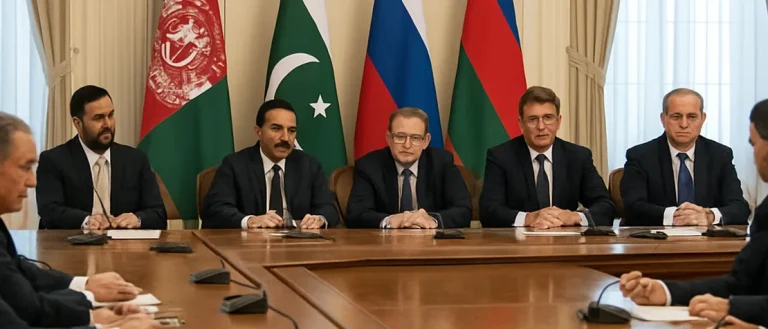


A major energy conference is going ahead in Riyadh from Sunday, even though a Houthi attack on the city’s King Khalid International Airport killed 12 people and injured 309, according to Saudi Arabia’s General Authority of Civil Aviation. The Ministry of Energy said on Sunday that the 25th World Petroleum Council Energy Congress had started in the Saudi capital.
The 17th International Energy Forum ministerial meeting will be held on the sidelines of the event, known as Riyadh Energy Week, which runs until Thursday. Italy, a co-host of the forum, will take part by video link, while Nigeria, the other co-host, is sending a representative. The forum brings together 68 countries that account for more than 90 percent of global oil and gas supply and demand, and the gathering comes as the US-Israel war on Iran has disrupted energy flows and pushed governments to rethink their energy security.
Where the world’s energy comes from and which regions matter
Energy powers homes, vehicles, lighting and factories, and it is drawn from fossil fuels such as oil, coal and gas, as well as nuclear power and renewables. Even with renewables growing quickly, fossil fuels still make up close to 81 percent of global energy consumption. Oil leads at 31.4 percent, ahead of coal at 25.9 percent and natural gas at 23.5 percent, with traditional biomass, nuclear and other sources accounting for the remainder.
Production is concentrated in a small number of regions, so a disruption in any one of them quickly spreads through global markets. The Middle East is the largest oil-producing region, while North America leads in natural gas output. Russia and Central Asia are also significant producers of both fuels.
Narrow waterways and the risk to Gulf shipments
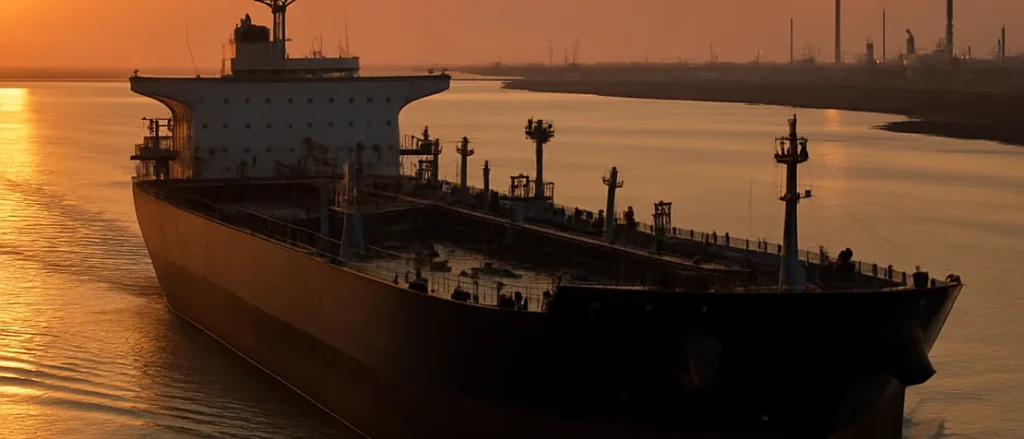
Geography adds another layer of risk, because three narrow waterways link Middle Eastern producers with buyers around the world. Before the Iran war, roughly 27 percent of seaborne oil trade and nearly 20 percent of liquefied natural gas trade passed through the Strait of Hormuz, which lies on the eastern side of the Arabian Peninsula.
On the peninsula’s western side, the Bab al-Mandeb strait joins the Red Sea to the Gulf of Aden, and the Suez Canal links the Red Sea to the Mediterranean. As the conflict has spilled into other parts of the Middle East and Yemen’s civil war has intensified, traffic through the strait and the canal has fallen, pushing some energy cargoes onto longer routes around Africa.
Richard Matthews, director of consultancy and research at Gibson Shipbrokers, a London-based shipbroking and maritime advisory firm, said this may be the first time a major chokepoint has faced such a serious constriction. He argued that the Strait of Hormuz is different because it has no real alternative sea route, with pipelines offering only partial substitutes, which explains the size of its impact on cargo volumes.
How import dependence is pushing up costs for Pakistan and others
The pressure reaches ordinary households and businesses through higher prices for essentials. Countries that rely on oil, gas and fertiliser from the Gulf face higher costs, longer waits for deliveries and the need to find new suppliers. Where deals have kept goods moving, the extra expense is still being passed down the supply chain.
Eritrea and Madagascar are the most dependent on Middle Eastern oil, each sourcing about 90 percent of their supply from the region. Pakistan follows at 78 percent, with Japan and Kenya each at 77 percent.
Gas has proven even harder to replace, since most of it arrives as liquefied natural gas from Qatar and the United Arab Emirates through the Strait of Hormuz. Buyers are paying more for fuel and electricity and competing for a shrinking pool of cargoes, and poorer importers with little storage have struggled most to find alternatives. The countries relying most heavily on Middle Eastern gas are mostly in Asia:
- South Korea: 31 percent of its gas from the region
- India: 29 percent
- Pakistan: 27 percent
- Taiwan: 26 percent
Emergency oil stocks thinning as prices stay above $100
Emergency stockpiles have been the main buffer against the war’s supply shocks, but that buffer is now wearing thin. Energy industry leaders have warned that Western countries have little left to release, and the US Strategic Petroleum Reserve is at its lowest level since 1982.
Amin Nasser, head of Saudi Aramco, told the Energy Intelligence Forum in London on Monday that fewer than 6 billion barrels of commercial inventories remain, and the vast majority of that is not practically available.
The International Energy Agency, which coordinates emergency stocks for its members, released a record 400 million barrels of oil in March. It is now preparing to release another 100 million barrels of crude and diesel to ease soaring diesel prices, although some of that may be oil from the March release that has yet to reach the market. A storm in the Gulf of Mexico and attacks in Saudi Arabia are again threatening supplies, keeping oil prices above $100 a barrel.
Before this year’s releases, China held by far the largest reserves, an estimated 1.4 billion barrels, more than the rest of the list combined. The United States was second with 413 million barrels, followed by Japan with 263 million.