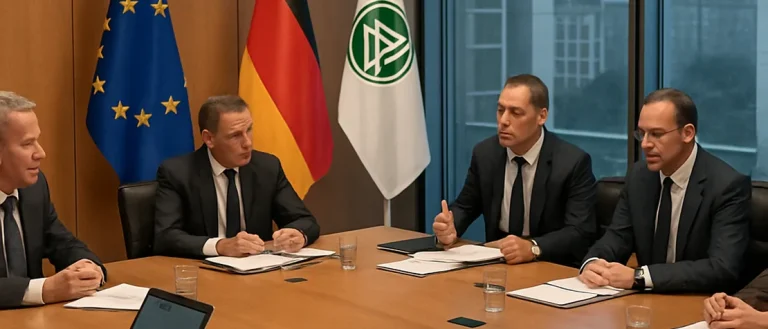

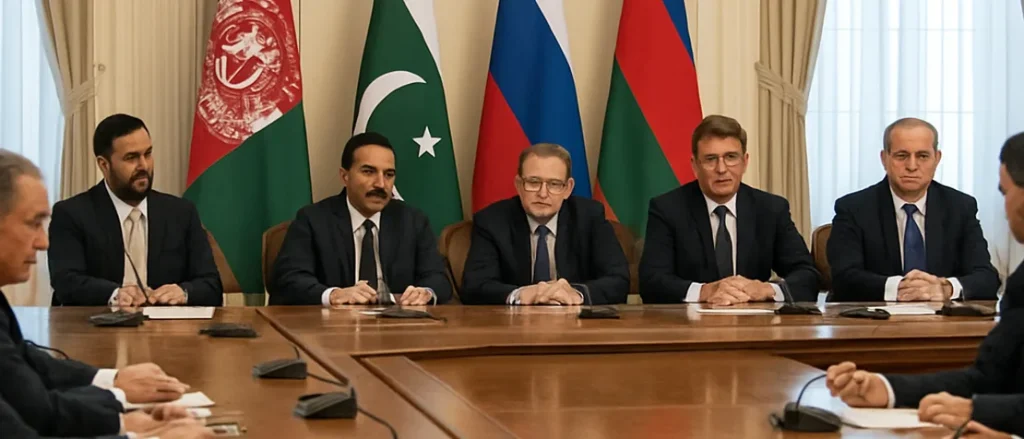

Pakistan announced on Friday that the Afghan Taliban declined to endorse a joint statement at the recent Moscow Format meeting after Islamabad reiterated its concerns about terrorism originating from Afghan territory. The Foreign Office emphasized that the absence of a consensus communique would not alter the realities affecting regional security.
During a weekly briefing, Foreign Office spokesperson Sajjad Haider Khan explained that Pakistan had clearly presented its stance on terrorism at the eighth Moscow Format Consultations on Afghanistan, held in Moscow on October 5. The points raised by Pakistan had also been reflected in previous joint statements issued by the regional forum.
“The absence of a joint statement cannot change the realities of the region,” the spokesperson stated. The meeting concluded without a joint declaration after Pakistan and the Afghan Taliban delegation failed to agree on the final document’s wording.
Russia’s special envoy for Afghanistan, Zamir Kabulov, noted that the disagreement centered on references to Afghanistan in the context of terrorism. Although similar language had appeared in last year’s statement, the Afghan side believed the situation in bilateral relations had since changed.
Pakistan has consistently accused the Afghan Taliban of allowing the banned Tehreek-i-Taliban Pakistan (TTP) and other militant groups to operate from Afghan soil and launch attacks inside Pakistan. Kabul rejects these allegations and criticizes Pakistani military operations within Afghanistan.
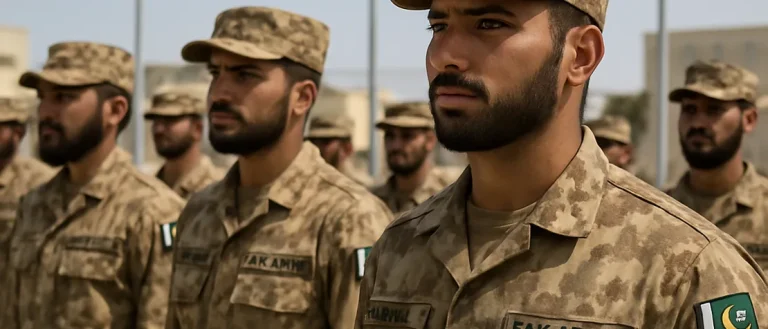
At the Moscow meeting, Pakistan’s Special Representative for Afghanistan, Mohammad Sadiq, highlighted that terrorism remains at the core of Afghanistan’s challenges. He alleged that terrorist groups operating from Afghan territory pose a serious threat to Pakistan and regional security, citing that over 4,700 Pakistanis had been killed in attacks originating from Afghanistan during the past three years.
The Moscow Format brings together Afghanistan and regional countries including Pakistan, Russia, China, Iran, India, and Central Asian states to discuss Afghanistan’s political situation, security, and regional cooperation.
Separately, the Foreign Office spokesperson addressed ongoing discussions between the United States and Iran, stating that talks on seven key points continue, with Washington having shared its position on Tehran’s proposals. He attributed the direct contacts between the two countries to Pakistan’s mediation efforts, noting that Islamabad and other significant nations remain engaged in efforts to resolve the conflict.
“The United States has also shared its position on Iran’s seven points,” the spokesperson added. He mentioned that an existing memorandum of understanding in Islamabad aligns with some of the points currently under discussion. Pakistan encourages Washington and Tehran to maintain direct engagement, reduce tensions, and resolve differences through dialogue. The country remains ready to resume mediation if needed, emphasizing a preference for negotiated solutions over escalation.
The spokesperson also criticized restrictions on Pakistani media in India, highlighting that social media posts showing Indian soldiers alive have been blocked by Indian authorities. Thousands of Pakistani websites and social media platforms are reportedly blocked in India, and Pakistani television channels are unavailable there. Additionally, websites and social media accounts of Pakistani artists, including Rahat Fateh Ali Khan, have been restricted. These measures, he said, reflect a shrinking space for freedom of expression and diverse viewpoints in India.
Responding to questions about trade through alleged illegal transit routes, the spokesperson said he lacked specific details but reaffirmed Pakistan’s commitment to complying with international sanctions and trade restrictions. “Pakistan will continue to abide by the international sanctions regime,” he confirmed.
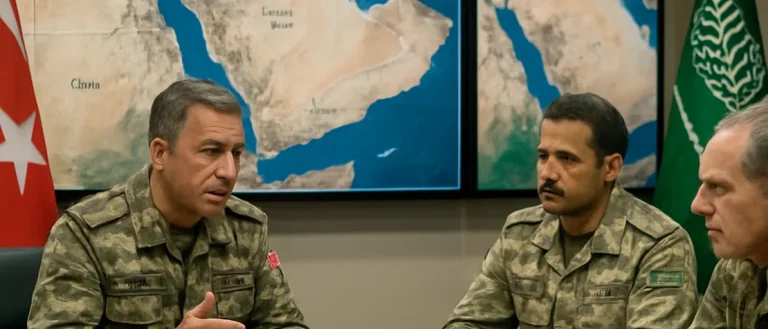
Regarding regional security, Sajjad Haider Khan stated that Pakistan stands with Saudi Arabia under the Makkah Joint Defence Agreement. The pact’s strategic, political, and defence committee recently held an emergency meeting attended by Pakistan’s deputy prime minister, defence minister, and field marshal to review the regional situation. The committee reaffirmed collective security commitments and decided on practical defence measures amid rising tensions.
Prime Minister Shehbaz Sharif condemned the October 2 Houthi attack on Saudi Arabia’s Taibah power distribution station, describing it as a serious provocation. The spokesperson stressed that the sanctity of the two holy mosques must be protected under all circumstances. “The security of member states of the Makkah Joint Defence Agreement is an integral part of each other’s security,” he said.
Lastly, Pakistan reiterated its support for peace efforts in Gaza, joining the Board of Peace to help end the conflict and promote a credible political process. The country called for full implementation of the Gaza peace plan and United Nations Security Council Resolution 2735, reaffirming that Palestinians should have an independent and sovereign state based on pre-1967 borders. The UN secretary-general has reaffirmed his commitment to close coordination with Pakistan on this issue.