
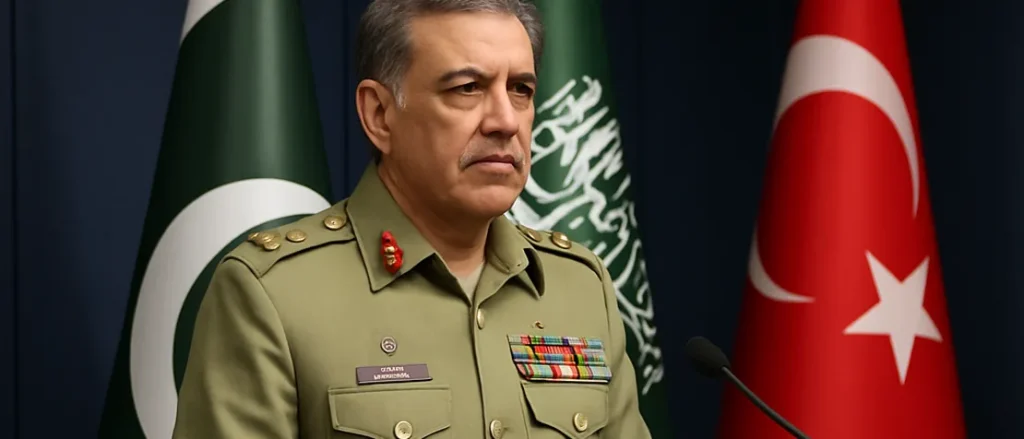

Lieutenant General Ahmed Sharif Chaudhry, Director General of Inter-Services Public Relations (ISPR), affirmed Pakistan’s commitment to achieving a negotiated and peaceful resolution to the ongoing Middle East conflict. In an interview, he stressed that Pakistan does not want the conflict to escalate either horizontally or vertically, highlighting the country’s efforts to bridge differences among the involved parties.
Addressing concerns about Pakistan’s neutrality amid Iran’s attacks on Saudi Arabia and the involvement of Iran-aligned Houthis, Lt Gen Chaudhry described Pakistan as an “honest broker”. He explained that Pakistan’s neutrality is rooted in transparency and consistency, maintaining clear positions with all partners and friends in the region.
The ISPR chief also noted Pakistan’s condemnation of attacks by Israel and the United States on Iran, as well as Iran’s assaults on Arab and Gulf nations. He emphasized that Pakistan openly voices its stance because it has a vested interest in regional peace and stability, warning that no party benefits from the expansion of the conflict.
Regarding the Makkah Joint Defence Agreement, Lt Gen Chaudhry explained that Pakistan is actively working on operationalizing the forces involved. He clarified that the pact is intended for purely defensive purposes, with implementation decisions left to operational commanders in response to evolving security challenges and threats in the region.
When asked about the presence of Pakistani troops in Saudi Arabia as part of the Makkah alliance, the ISPR chief revealed that Pakistani forces have been stationed there for decades. He pointed out that the alliance did not arise suddenly but is built on longstanding diplomatic, political, military, and people-to-people relations among Pakistan, Saudi Arabia, and Türkiye.
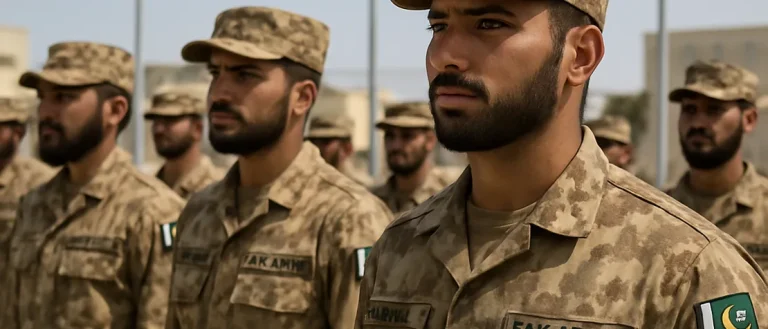
Lt Gen Chaudhry confirmed that Pakistani troops are already deployed in various capacities across multiple domains within Saudi Arabia. This statement followed the recent agreement by Pakistan, Saudi Arabia, and Türkiye to immediately implement their collective defense commitments, including the rapid deployment of agreed military forces and capabilities in Saudi Arabia.
The decision was made during an emergency meeting of the Makkah Joint Defence Agreement held in Riyadh. The deployment will proceed under approved arrangements and in compliance with the national laws of the involved countries. These measures aim to enhance military readiness, integration, and collective defense capacity.
Signed in August, the Makkah Joint Defence Agreement stipulates that an armed attack against any member state is considered an attack against all, reinforcing the commitment to mutual defense among Pakistan, Saudi Arabia, and Türkiye.