
If President Donald Trump concludes the conflict with Iran without securing a formal agreement, Tehran could gain a dominant grip on Middle East energy supplies, while Gulf Arab oil and gas producers face the repercussions of a conflict they neither initiated nor influenced. Rather than weakening Iran’s theocratic regime, the war might instead embolden it, as Iran withstands weeks of U.S.-Israeli military actions, targets Gulf Arab states, and disrupts global energy markets by effectively blocking the Strait of Hormuz.
In a pre-address interview, Trump indicated the United States would end the war with Iran “fairly quickly,” suggesting a possible withdrawal even without a negotiated settlement. However, in his subsequent national speech, he promised intensified strikes on Iran, asserting that the U.S. was nearing completion of its military objectives. Trump also warned that failure by Iranian leaders to comply with U.S. demands could escalate the conflict, with potential attacks on Iran’s energy and oil infrastructure.
For Gulf nations, ending the war without clear assurances about the aftermath presents a serious risk, as the region would have to bear the strategic and economic consequences of a conflict concluding to Iran’s benefit. Mohammed Baharoon, director of Dubai’s B’huth Research Center, emphasized that halting hostilities does not guarantee Iran’s capitulation. He noted that as long as U.S. forces remain stationed in Gulf bases, Iran will continue to pose a threat.
This imbalance is central to Gulf apprehensions: Iran might emerge undefeated, gaining leverage to threaten shipping routes, energy supplies, and regional stability, while Gulf states absorb the costs of an unresolved war. Baharoon highlighted concerns over restricted navigation freedom, warning that Iran could assert control over territorial waters and impose new rules in the strategically vital Strait of Hormuz, a crucial artery for global energy transport. He stressed that Iran’s capacity to disrupt energy flows sends a stark warning to any future aggressors contemplating attacks on the country.
Gulf officials have largely avoided direct involvement in the conflict, prioritizing the prevention of a broader Sunni-Shi’ite confrontation that could reshape the Middle East for decades. Analysts point to a significant miscalculation by the U.S. and Israel regarding Iran’s response to unprecedented strikes on its leadership. The assassination of Supreme Leader Ayatollah Ali Khamenei early in the conflict, intended as a decisive blow, instead altered the nature of the conflict. His replacement by his son, Mojtaba Khamenei, transformed the attack from a decapitating strike into a provocation demanding resistance and retaliation.
Middle East scholar Fawaz Gerges observed that Trump and Israeli Prime Minister Benjamin Netanyahu elevated the conflict from a geopolitical dispute to a religious and civilizational struggle, turning Khamenei into a martyr figure. This act strengthened the hardline elements within Iran’s theocratic leadership and Revolutionary Guards, fostering a narrative of existential resistance where surrender is unacceptable and endurance is revered.
Experts argue that the assumption removing top leaders would fracture Iran’s system failed to account for its complex institutions, parallel power centers, and historical resilience, including surviving an eight-year war with Iraq and enduring decades of U.S. sanctions. The outcome has been increased radicalization, resulting in a more defiant Iran and a region forced to confront the consequences.
Alex Vatanka, an Iran specialist, remarked that killing an Ayatollah is an extraordinary act, especially by a foreign power, and characterized Trump as a leader who disregards norms and protocols, further antagonizing the Shi’ite clerical establishment.
U.S. and Israeli strategists underestimated Iran’s ideological strength and resilience, terrorism expert Magnus Ranstorp. They believed that achieving air superiority by targeting missile sites, command centers, and senior figures would ensure freedom of movement and contain Iran strategically. Instead, Iran’s system consolidated, supported by institutions designed to regenerate under pressure.
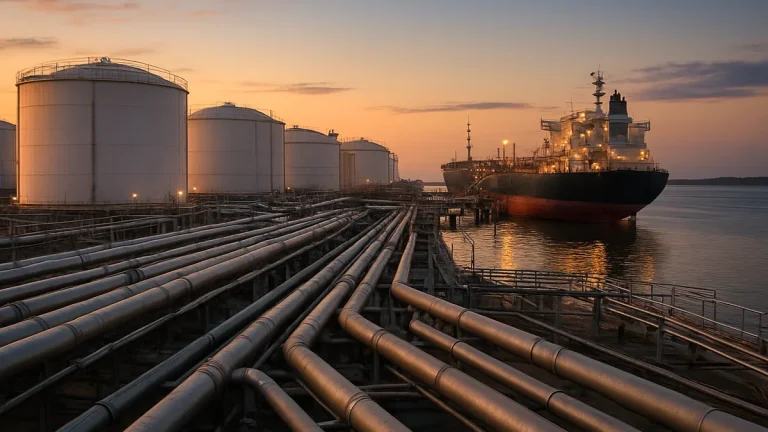
Political analysts in the region note that Iran’s strategy relies on asymmetric retaliation rather than conventional victories. Tehran has long identified pressure points, particularly energy assets and the Strait of Hormuz, as central to its approach. By attacking energy infrastructure and threatening this critical waterway, Iran has driven up oil prices, increased global inflation, and shifted economic pressure onto the U.S. and its allies. The goal appears to be economic exhaustion rather than battlefield triumph, with survival itself constituting a form of victory.
An early conclusion to the conflict without security guarantees would leave Gulf states vulnerable, as future Iranian retaliation might extend beyond the region. Tehran maintains the ability to activate extensive global networks developed over decades to target Israeli, U.S., and allied interests far from the battlefield. Ranstorp described Iran as a hydra-like threat with reach well beyond the Middle East.
This looming threat complicates any U.S. withdrawal. Should American forces pull back, and given Israel’s reliance on U.S. support, Iran would not perceive the outcome as defeat. Instead, the theocratic regime would have survived intact, and the regional balance of power would remain largely unchanged, potentially rendering Iran a more formidable and dangerous actor in the Middle East.