
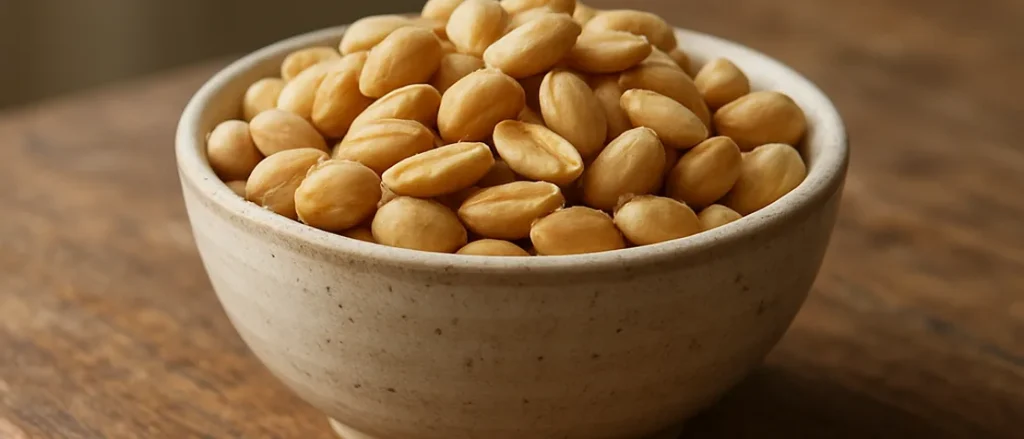

A daily handful of peanuts may support brain health as people age, according to a new study from the Netherlands. Researchers found that regularly eating unsalted, skin-roasted peanuts improved how older adults’ brains react to insulin.
Investigators at Maastricht University Medical Center ran a 16-week trial involving 31 healthy volunteers aged 60 to 75. Each participant consumed 60 grams of peanuts every day, roughly two servings.
Peanut snack improves brain insulin response in older adults
Using advanced brain scans, the team concluded that the daily snack enhanced the brain’s handling of insulin. Insulin helps nerve cells survive and communicate, a function considered essential for memory and possibly protective against Alzheimer’s disease.
Dr. Peter Joris, the study’s lead author, said the brain may grow less responsive to insulin with age, a shift linked to age-related cognitive decline. The peanut diet helped the brain respond better to insulin in memory-related areas.
Scans showed notable gains in the brain’s right hemisphere, particularly the hippocampus and other memory-related regions. An earlier 2025 analysis of the same 16-week diet had reported a 3.6 percent rise in brain blood flow and a 5.8 percent gain in verbal memory scores.
Nutrients researchers link to peanuts’ brain effects
Researchers credit peanuts’ nutritional makeup, including healthy fats, fiber and key minerals. They also pointed to L-arginine, a plant protein that contributes to nitric oxide production, a compound that aids learning and memory.