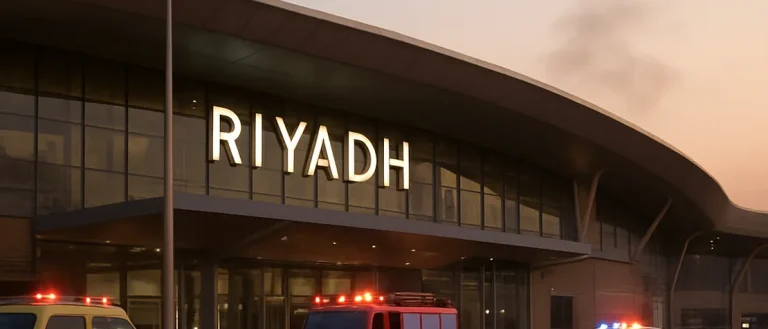
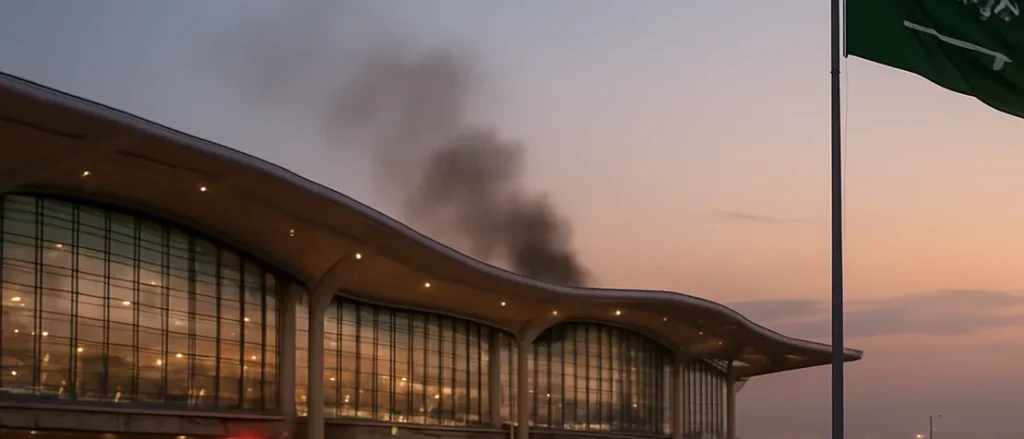

A projectile struck King Khalid International Airport in the Saudi capital on Sunday, according to a Saudi military spokesman, starting a fire in one of the passenger halls. Saudi Arabia’s civil aviation authority said people had been hurt. The site has now been hit on two consecutive days, officials said.
Yemen’s Houthi rebels have claimed responsibility for the strikes. They have also warned airlines and travellers to avoid Saudi airports and airspace altogether.
Saturday’s deadly attack and the victims
Saturday’s attack, which came after similar strikes earlier in the week, killed 13 people and wounded 308 others. The Saudi civil aviation authority said the dead included four Saudi nationals, two people from Bangladesh, and one person each from the United States, Jordan, Palestine, Syria, Sudan and Egypt.
The Indian embassy in Saudi Arabia said on Sunday that an Indian man had died from wounds sustained in the attack. Earlier, a strike on the Riyadh airport on Thursday killed three Saudi nationals, and two further deadly attacks hit airports in Abha and Riyadh in the two days before that.
Saturday’s strike was the deadliest single attack on a Gulf Arab country since the war between Israel, the United States and Iran began in February.

Houthi threats and the coalition’s response
The Houthis said they had targeted the airport over a 24-hour period with a mix of ballistic and cruise missiles, along with drones. Their military spokesman, Brigadier General Yahya Saree, pledged to keep carrying out escalating operations deep inside Saudi Arabia.
Saree also warned that Saudi airports were potential targets for his forces, though he excluded those in the holy cities of Mecca and Medina. The Houthis say they are striking Saudi Arabia because of its backing for government forces in Yemen’s civil war, and because of an air strike on Sanaa airport.
Major General Turki al-Maliki, spokesman for the Saudi-led military coalition, said air defences had intercepted a missile near the Riyadh airport while authorities worked to contain the fire. The coalition said it would respond to Saturday’s attack, which it described as a war crime and blamed on the Houthis.
Abroad, the reaction has been swift. The UK Defence Secretary, Wes Streeting, suggested Britain could potentially offer more support to Saudi Arabia. Foreign Secretary Ed Miliband said he was “appalled” by the attack, and the UK Foreign Office now advises against all travel to parts of Saudi Arabia, including areas within 10km of the Yemeni border.
US President Donald Trump said Washington would make a decision quickly on whether to strike the Houthis, after learning of the latest attack. US Secretary of State Marco Rubio condemned the attacks and confirmed that a US citizen had been killed.
Yemen’s conflict and fears of Iranian influence
A temporary ceasefire between the Houthis and Saudi-led forces, brokered in 2022, collapsed in July. The fighting intensified after the Houthis seized strategically important stretches of the Red Sea coast in a rapid offensive, which prompted Saudi strikes. Yemeni pro-government forces later said they had secured those areas.
The Houthis, backed by Iran, currently control around a quarter of Yemen’s territory and as much as 80% of its population, and they hope to eventually take full control of the country. Saudi Arabia fears such a takeover would lead to an Iranian satellite state on its southern border.
Houthi-run Al Masirah TV said Saudi forces had carried out an air strike on Sanaa International Airport in the Yemeni capital. Saudi Arabia has not confirmed that attack, and independent verification of the claim was not possible.
Abdullah Al-Alimi Bawazir, vice-president of Yemen’s internationally recognised government, called on regional and international partners to take decisive action.