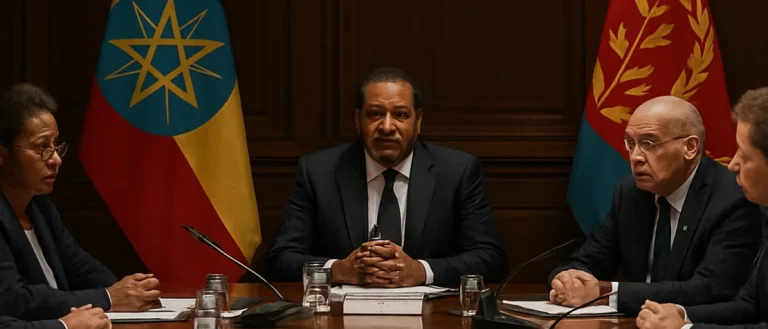

Pakistan’s economy is on firmer ground, Senator Muhammad Aurangzeb said in Bangkok on October 14, 2026, while speaking at a regional meeting with the IMF managing director. The session covered Pakistan’s economic progress and the challenges facing the wider region.
The meeting took place on the sidelines of the World Bank Group–IMF Annual Meetings 2026 in Bangkok, Thailand. Aurangzeb, who serves as Federal Minister for Finance and Revenue, used the occasion to outline the country’s recent results.
Fiscal gains and reserve buffers in focus
Aurangzeb said the fiscal deficit has fallen to its lowest level in 22 years. He added that Pakistan has recorded three consecutive years of primary surpluses and economic growth of 3.7%.
He also pointed to foreign exchange reserves at their highest level on record, enough to cover three months of imports. According to him, the country now has stronger protection against climate and regional shocks. He cited sovereign rating upgrades, the September Eurobond issuance and the staff-level agreement with the IMF reached on October 7 as proof of progress.
Reform pledge and regional cooperation push
The minister reaffirmed Pakistan’s commitment to reforms. He said subsidies should be targeted, budget-neutral and time-bound so that low-income groups are protected and social cohesion is preserved.
Aurangzeb called for a wider mix of energy sources and trade routes, deeper regional integration, and investment in logistics and food systems. He also said the government was committed to multilateralism and ready to contribute actively to regional cooperation.
MIGA financing talks and UK hydropower case
Aurangzeb met Multilateral Investment Guarantee Agency (MIGA) Managing Director Tsutomu Yamamoto to discuss financing and guarantee support for Pakistan. He said financing terms should reflect the country’s improved sovereign ratings and its access to international capital markets.
He expressed satisfaction that MIGA had revised its pricing and said Pakistan wanted to move ahead with Board consideration and documentation. Separately, he reviewed a hydropower-related case before the UK Supreme Court, noting that next steps would depend on the court’s judgment.