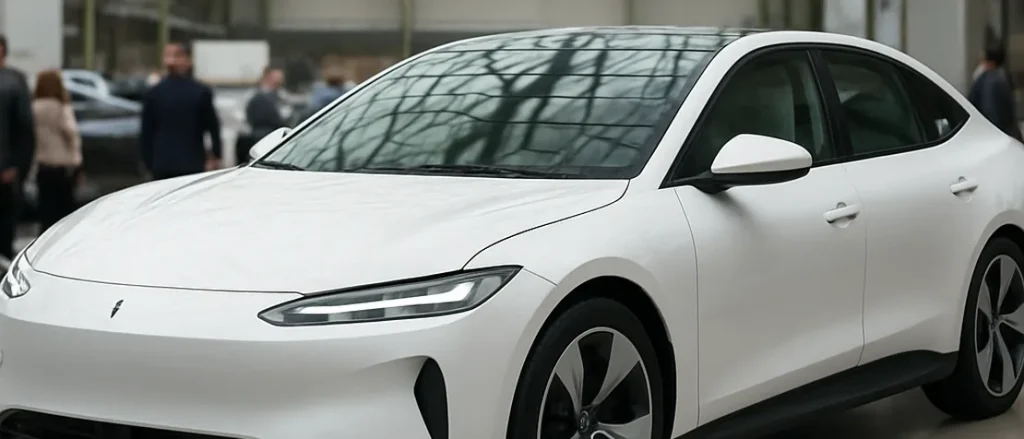

Volkswagen and Stellantis used this year’s Paris auto show to project optimism about battery-powered cars, drawing on lessons from Chinese companies that are both rivals and partners. The announcements by Stellantis on Monday also pointed to wider room for cooperation with Chinese firms.
Both groups are reworking their strategies to meet Chinese competition in Europe. Demand for electric cars has risen recently, driven by higher fuel prices and cheaper models, including mass-market brands from both companies. Volkswagen and Stellantis are working to hold their market share as Chinese manufacturers, facing a slump at home, expand abroad.
Stellantis turns Chinese partnerships into a technology study
Stellantis, which owns Citroen, Peugeot, Opel and Fiat in Europe, is using its joint ventures with Leapmotor and Dongfeng to examine what gives Chinese companies their edge in technology, chief executive Antonio Filosa told reporters. Filosa said he did not entirely accept that the company lacks essential capabilities, but acknowledged there are areas where the two sides could complement each other. He argued that by bringing engineering teams together, the company could pinpoint the source of Chinese competitiveness and learn from it.
The group entered a production arrangement with Leapmotor earlier this year and plans a similar tie-up with Dongfeng as part of a strategic shift under Filosa. These partnerships are set to be localised so they comply with incoming Made in Europe rules.
Danilo Annese, chief executive of Leapmotor International, the Stellantis-led joint venture, said battery electric vehicles were gaining traction faster than he had expected a year ago. He said this was also happening in Italy and Spain, where adoption has been slower.
Stellantis’ partnership with Leapmotor includes a mid-sized electric SUV being developed by the Chinese maker and Opel. Opel chief executive Florian Huettl said he was struck by the speed of the project, which could bring new vehicles to market in as little as two years. Such arrangements are rare among Western carmakers.
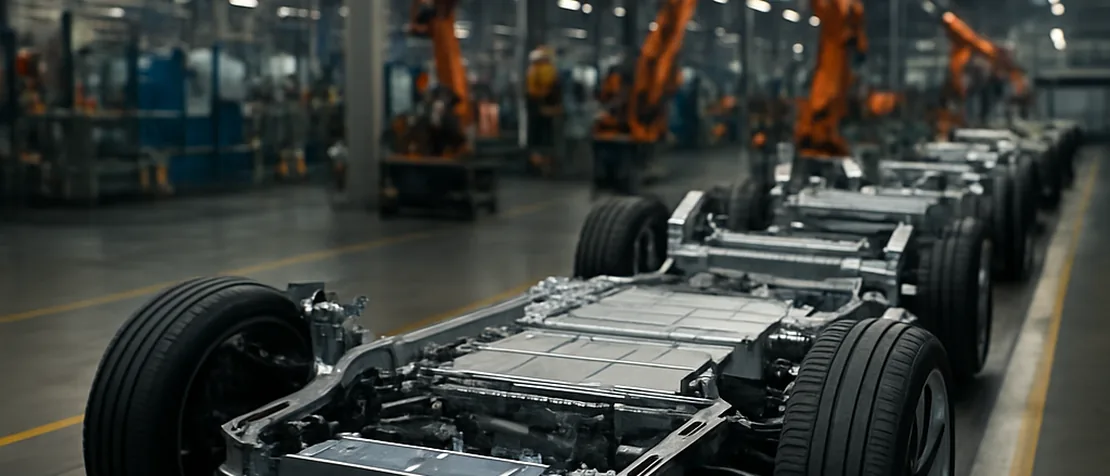
Volkswagen’s China focus leaves European cooperation largely theoretical
Volkswagen’s recovery has been heavily shaped by China, which chief executive Oliver Blume has described as a “fitness centre” for the industry. Yet the impact on its European operations has been limited, at most.
The carmaker’s partnership with Xpeng focuses on the Chinese market, while cooperation in Europe remains largely speculative. Blume has floated the idea of using excess plant capacity for such ties, but no concrete talks have emerged.
Blume told an industry conference in Paris on Tuesday that he currently sees no need for a Chinese joint venture in Europe. He said the company feels well prepared, thanks to the opportunities it has expanded in China over recent years.
Analysts warn of risks in Chinese tie-ups on European soil
Analysts note that bringing Chinese partners into Europe, for instance by giving them access to underused German factories, could help rivals set up local production and sidestep rules meant to shield European carmakers. Felipe Munoz of Car Industry Analysis said pressure remains on Stellantis to catch up with Chinese rivals in a fast-changing market. He said the industry needs production rather than concept cars, which Stellantis showed in Paris as part of Filosa’s push to refresh its lineup.
Stefan Bratzel, an analyst at Germany’s Center of Automotive Management, said both companies are working with Chinese players in different ways. He noted that Volkswagen has concentrated on China, while Stellantis’ alliance with Leapmotor is becoming a success story in Europe.
Bratzel added that European automakers may have to accept China’s role as a teacher for some time. He said that for years Chinese firms learned from German ones, and that this relationship now has to be reversed.