European officials say Russia has escalated its shadow war on the continent this year. They point to a string of suspected incidents, from airspace violations to drone incursions, and Moscow has also been accused of causing trouble in the Black Sea. Experts argue that the bloc needs to do more to deter Moscow and defend itself.
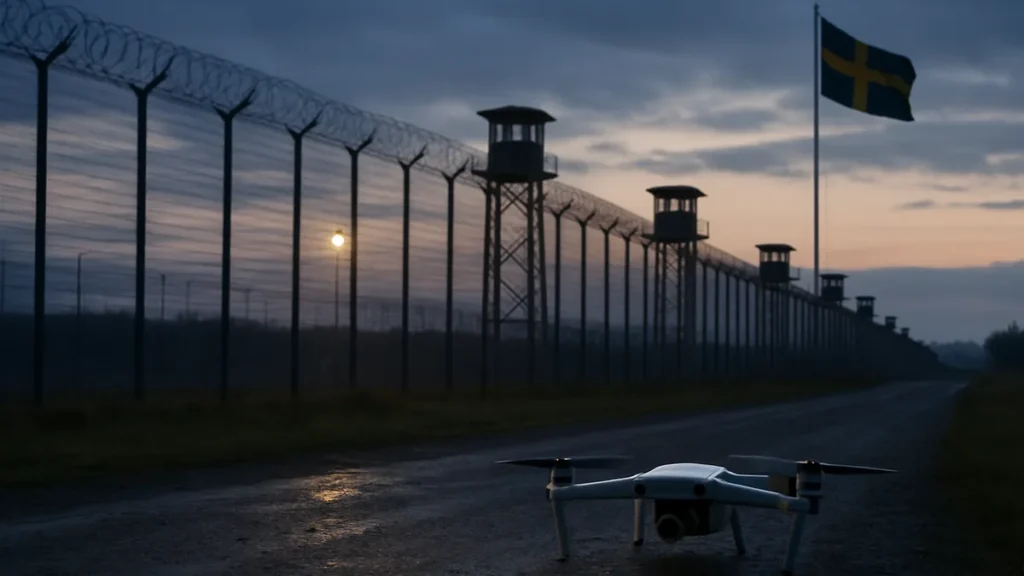
Officials allege that Russian fighter jets have flown into Polish, Lithuanian and Estonian airspace, apparently to test how quickly those countries respond. Suspected Russian drones have also been shot down over Poland, Finland and the Baltic states.
Alleged airspace, drone and Baltic border incidents
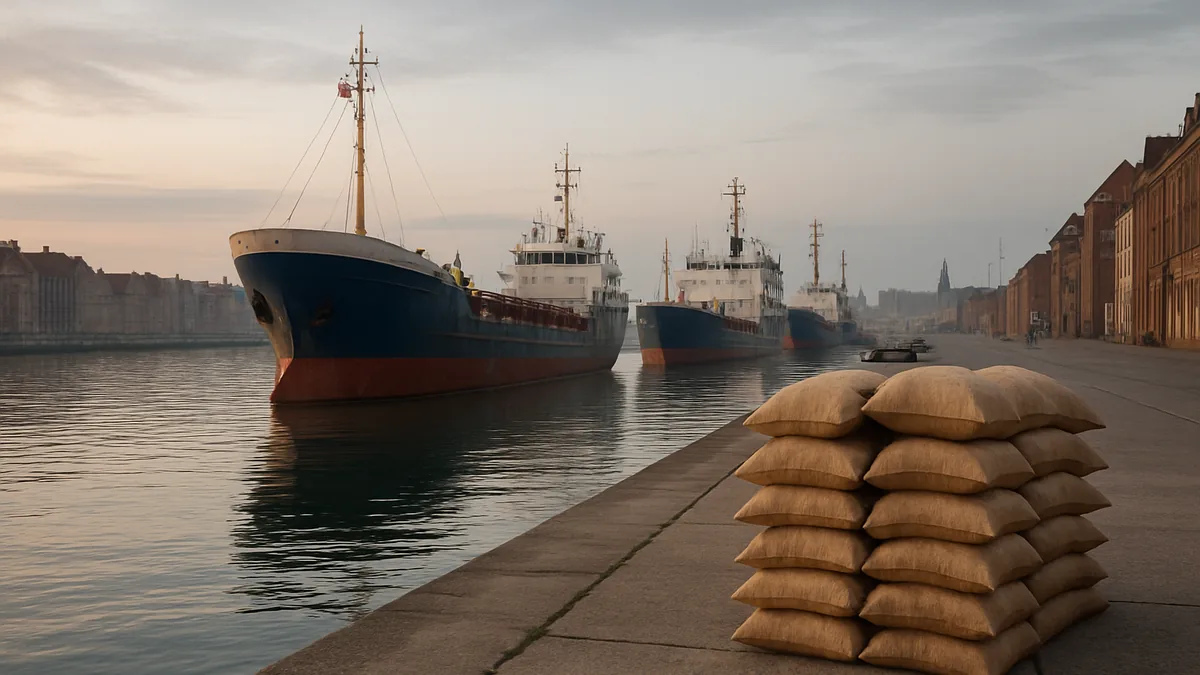
In the Black Sea, Ukraine has accused Russia of using aerial and surface drones to sink four cargo ships in two separate operations in October. The vessels went down just outside the territorial waters of Bulgaria, which is a member of both the European Union and NATO. Kyiv presented the attacks as an apparent warning that Ukraine’s grain exports passing through NATO waters may not remain safe for long.
Russia and Belarus have also been accused of trying to destabilise the Baltic states by making their borders look unstable. Ieva Cesniece, Latvia’s ambassador to Greece, described masked and most likely armed individuals on the Belarusian side who tried to force groups of illegal migrants into Latvia. “Those individuals expressed threats to Latvian soldiers and border guards,” she said.
Cesniece said that on the same day, masked individuals crossed into Latvian territory and carried out deliberate sabotage, damaging border infrastructure and removing surveillance equipment. Latvian media have reported that asylum seekers and undocumented migrants who tried to walk back from the border were rounded up by Belarusian authorities and pushed towards Latvia again. Cesniece linked these actions to the war in Ukraine, saying: “The weaker Russia appears in Ukraine, the more it tests our resilience, trying to weaken NATO and EU resolve and support for Ukraine.”
Warnings of attacks on European defence firms
As European governments warned of an imminent escalation of Russia’s shadow war, experts said the bloc must work harder to deter Moscow. Olena Tregub, cofounder and head of Ukraine’s Independent Anti-Corruption Commission, said protecting critical infrastructure, strengthening intelligence services and preventing attacks were essential but not enough. “It is about convincing your adversary that continuing these operations will become too costly. And I’m not sure Russia currently sees those costs as sufficiently high,” she said.
Tregub, who follows money trails, believes European governments have not done enough to identify the networks behind these operations, expose their command structures, disrupt their financing and logistics, and impose consequences. She also warned that Moscow does not clearly separate the military capabilities Ukraine uses on the battlefield from the European infrastructure that supports them. In her words, “a factory producing military equipment for Ukraine, a logistics hub transporting that equipment or a company providing critical technology can all become potential targets of disruption.”
The warnings have grown since a failed August operation to blow up cargo planes at Germany’s Leipzig/Halle Airport, which the European Commission later verified as a Russian operation. Czech spy chief Michal Koudelka warned in September that Russia might attempt a military attack on a NATO member in “months, not years”. Days later, Russian Foreign Ministry spokesperson Maria Zakharova said European defence industries supplying Ukraine were legitimate targets for Moscow.
This month, representatives of five EU intelligence agencies told a financial newspaper that Russia was seeking to “kill” European defence bosses and target their supply chains. A German newspaper, the Frankfurter Allgemeine Zeitung, has reported that Russia planted incendiary devices in the offices of the defence companies Rohde & Schwarz and Helsing in Munich. A news website also reported that EU security officials believed Moscow was planning to move beyond messaging and claim lives on European soil.
European officials have spoken about strengthening the resilience of data centres, telecommunications and other vulnerable networks and industries. They have not, however, spoken about retaliation.
Ukraine’s push for retaliation and more aid
Meanwhile, Russia’s war is going badly on the ground. Two Ukrainian counteroffensives have blunted Moscow’s main thrust to capture the eastern region of Donetsk, and have in effect denied it any territorial gains this year. Ukraine has also designed and built its own weapons since 2023 and has struck oil installations and weapons factories deep inside Russia.
Ukrainian President Volodymyr Zelenskyy asked journalists on October 16 where Russian President Vladimir Putin would stop if he was testing drones against European countries, including NATO members. “They are not talking about it very loudly yet. They don’t want escalation, … but you will talk very loudly when there are ballistic and cruise missiles and also thousands of drones,” he said.
Oleksandr Danylyuk, a long-serving adviser to the Ukrainian Ministries of Defence and Foreign Affairs and now a Russian warfare expert with the Royal United Services Institute, said the lack of retaliation encourages Moscow. “Russians are limited right now only by their capabilities because they do whatever they want. There is no reaction,” he said. He called for more forward troops in the Baltic states to create “deterrence by denial” and to strengthen Ukraine.
Minna Alander, a leading European researcher in security and defence at the Center for European Policy Analysis, said several retaliatory steps were realistic and could be imposed immediately. These included:
- denying Russians travel visas
- carrying out retaliatory cyberattacks
- further interdicting the Russian oil fleet
- sanctioning Chinese suppliers of defence goods to Russia
Danylyuk said money remained the most powerful deterrent. “The most direct way to punish Russia is to actually increase support to Ukraine,” he said, adding that each detected Russian intelligence operation in Europe should bring a larger package of combined support. Yet he observed that Ukraine’s allies were signalling the opposite. The United States withdrew its military and financial support in January 2025 and recently cast doubt on the dependability of its satellite services, while in France and Germany, governments are being challenged by opposition leaders who want aid to Ukraine stopped.
Ukraine now needs more money to reverse the course of the war and reclaim occupied territory, and most of it is expected to come from Europe. “Next year, the war will cost 155 billion euros [$170bn]), and we need at least 70 billion euros [$80bn] more from you,” Zelenskyy told the European Council on October 16. He added that Ukraine could double or even triple its drone production, saying: “Just imagine how much more pressure we could put on Russia if we could do two or three times more.”