
In Tunis, a growing number of young people say the decision to leave the country is no longer only about income. Journalist Maher Qassem, who has worked in the media for years, says he is thinking of starting again abroad because nearly all of his salary goes on loan repayments, rent and his son’s education.
Qassem told an interviewer that there have been times when he could not help his sick mother pay for medication and treatment. His account is one of several gathered from Tunisians who describe frustration seven years into the presidency of Kais Saied.
Rising living costs leave families struggling to plan ahead
Qassem once hoped to buy a home and build a secure future. Those plans have now been replaced by the need to cover monthly bills and mounting debts, and he worries about the quality of life his son will face.
Ghaith was 19 during the 2019 presidential election. He had little interest in politics at the time and did not vote, but he remembers the optimism that followed Saied’s victory. Seven years on, he says little has changed in his own life, with cost-of-living pressures still present and everyday access to some essential goods and services still unreliable.
Ghaith is also unhappy with how the authorities communicate with the public. He says citizens want clearer explanations of government policies and the results they are meant to produce, along with accountability and a credible plan for the future. Qassem, for his part, says working as a journalist has also become harder.

Tunisians remain divided over Saied’s reform record
Not everyone has lost faith in the president. Mohamed Amine, a taxi driver in his 30s, voted for Saied in the most recent presidential election and still believes he can improve the country’s situation.
Amine describes the president as “sincere in his intentions” and committed to change. However, he believes a range of obstacles has held back Saied’s reform programme. In his view, it is too early to judge the outcome, and the president deserves more time.
The split reflects a wider debate. Some Tunisians feel the past several years have not delivered the change they expected, while others still believe reform can succeed.
Joblessness and skills loss add pressure on young Tunisians
Unemployment, especially among young people and university graduates, remains a major challenge. According to the National Institute of Statistics, the jobless rate stood at 14.9 percent in the second quarter of 2026, with about 622,000 people out of work.
The picture is harsher for younger Tunisians. Unemployment among those aged 15 to 24 reached 35.4 percent, while the rate for university graduates was 26.6 percent. Among female graduates it stood at 35.6 percent, compared with 14.2 percent for male graduates.
The wish to leave is widespread. An Afrobarometer study, carried out by an independent African research network that runs public-opinion surveys across the continent, found that roughly two-thirds of young Tunisians had considered emigrating. The share saying they had thought about leaving “a lot” rose from 38 percent in 2018 to 51 percent in 2024, and 59 percent of those considering emigration cited better job opportunities as their main motivation.
Skilled workers are also leaving. Kamel Sahnoun, head of the Tunisian Order of Engineers, told a press conference organised by the professional body that around 6,500 engineers left Tunisia in 2022 alone. That compares with an annual average of about 3,000 in 2013 and 2014.
The healthcare sector is facing similar losses. Figures from the Tunisian Agency for Technical Cooperation show the number of healthcare and paramedical professionals recruited to work abroad:
- 1,839 in 2023
- 1,022 in the first nine months of 2024
- 1,244 in 2025
These figures, together with international demand for Tunisian expertise, point to a search for better working and living conditions overseas.
Emigration increasingly seen as a life project
Hamza, a 26-year-old software engineer working for a foreign company, says his income is good, yet he is seriously considering leaving. “It’s no longer just about money,” he says. His thinking is shaped by his lifestyle, his dealings with the administration, uncertainty about the future and the country’s broader economic situation.
Ramadan Ben Omar, a researcher who specialises in migration, says the reasons people leave have grown more complex. He says they now include the search for greater freedom, the chance to take part in public life and the prospect of a better future. Increasingly, he adds, young people treat emigration as a life project in its own right rather than a simple route to higher earnings.
Ben Omar also points to border areas such as Ben Guerdane, where accumulated economic and social pressures have pushed more young people to consider leaving through regular or irregular migration routes.
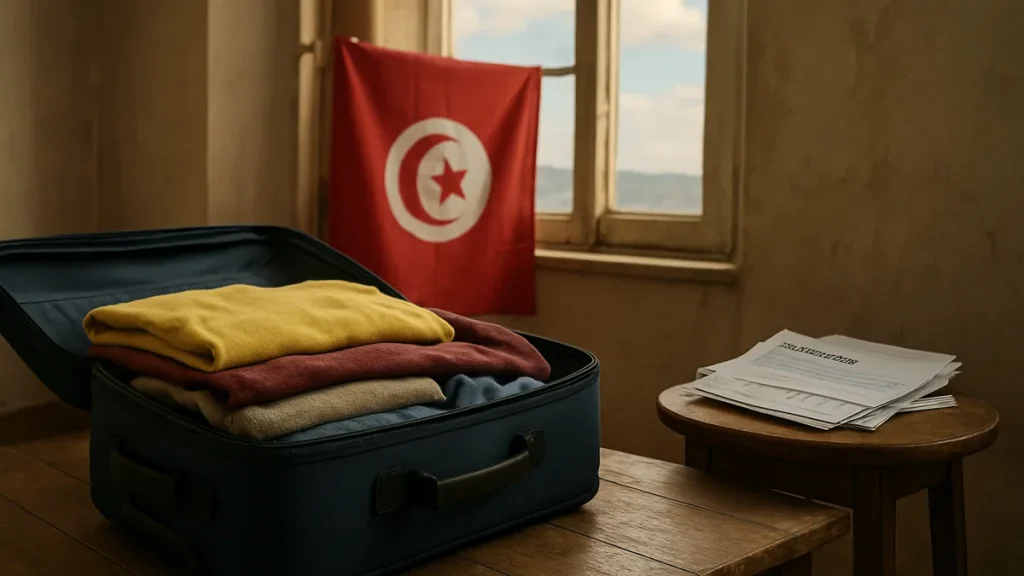
The personal stories reflect these divergent paths. Qassem has already packed for a fresh start in France, Hamza is weighing his options despite his professional success, Ghaith is disappointed after years of waiting, and Amine still believes reform is possible. For Tunisia, the central issue is whether it can give its young people enough reason to stay.