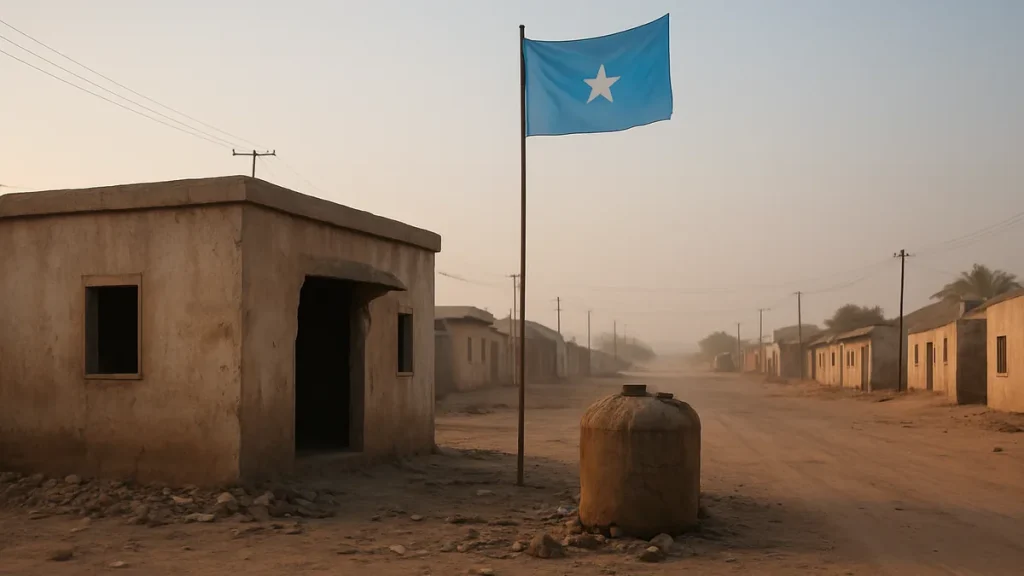

Families in the Somali town of Jamaame say relatives were killed or seriously injured during a November 2025 military offensive that involved United States air strikes and Somali ground forces. Survivors interviewed in recent months describe deaths, displacement, lost livelihoods and injuries that still shape their daily lives. The town lies in Somalia’s southern Jubaland state.
The accounts come as American air operations against armed groups in Somalia have grown sharply under President Donald Trump. Public records from US Africa Command (AFRICOM) list 84 strikes in Somalia through September 2026. The New America Foundation, which independently tracks the campaign, counts 88 over the same period.
Survivors describe deaths and injuries in Jamaame
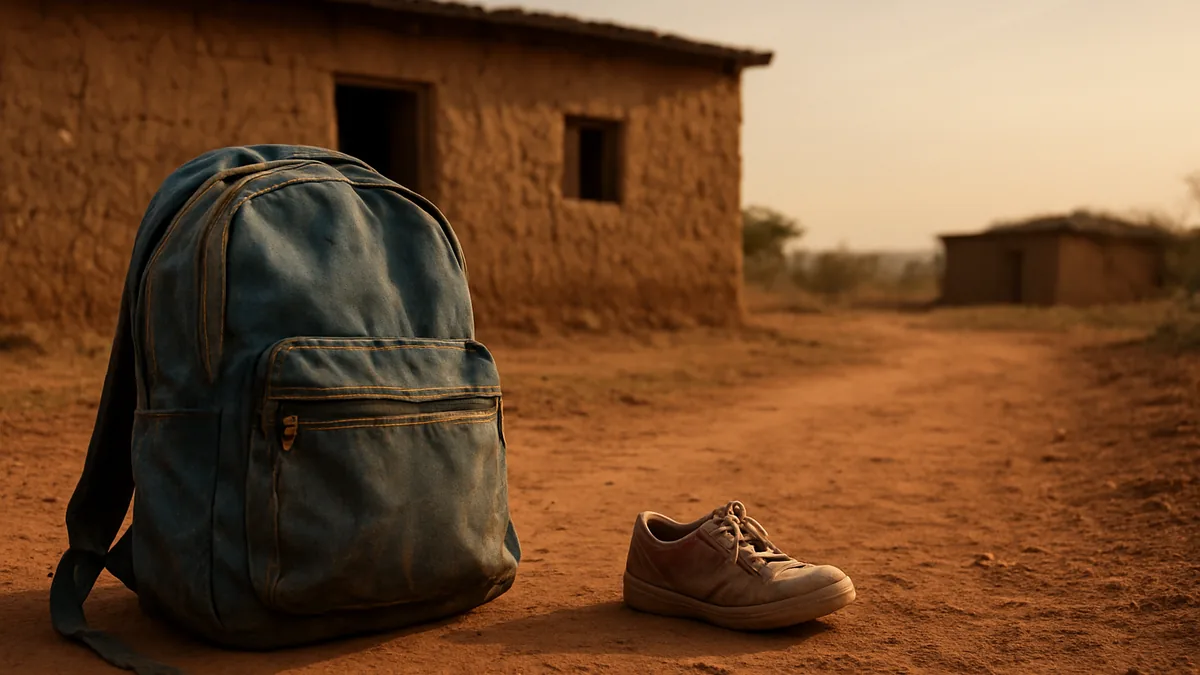
Maryam Haji Abdi Guled’s son, Abdiqadir Salah, was seven when he was hurt during the offensive. A fragment of shrapnel remains lodged near his hip, and doctors have warned that removing it could leave him paralysed. Maryam now walks him to school herself because she fears another child could knock him over while playing.
She recalled the morning aircraft appeared over the town. She was preparing breakfast after her children came home from school when they heard a roar overhead. Aircraft had become so common that the family no longer found the sound unusual. “The aircraft never leave us, night or day, and we have become accustomed to them,” she said.
Her children ran outside towards the noise, and she followed to bring them back in before the family fled. A munition struck nearby, followed by another explosion near the front door, and more bombardment came around the house. Maryam believes US drones that had been circling the town carried out the attack. Three of her six children were wounded, and she became separated from them during the chaos.
The journey to medical care in Mogadishu took her more than 24 hours, during which her son bled and struggled with pain. Ugaas Ahmed Ugaas Said Ali, a Bimaal clan chief who stays in contact with affected families, said many others remained in Jamaame with injuries and had been unable to reach the capital. Farmer Ali Aden Borrow said his pregnant wife was killed when debris from what he described as an air strike hit her neck while she tried to gather their children to flee. Another farmer, Nuur Ali Nuur, said debris struck his wife’s lower body and right hand, leaving her paralysed from the waist down.
AFRICOM says evidence did not meet its threshold
The US military has acknowledged conducting air strikes in the area on November 14 and 15, 2025, but it disputes that its aircraft caused civilian casualties. AFRICOM told the news organisation it had assessed reports that US operations killed between 10 and 12 civilians and destroyed homes and businesses in Jamaame. It concluded that the information it reviewed did not meet its “more likely than not” threshold for finding that US strikes caused the reported harm.
AFRICOM said this finding does not mean strikes caused no harm. Rather, the evidence did not establish that US operations were more likely than not responsible for the reported casualties and damage. The command said the assessment could be reopened if new information emerged. It did not say whether investigators had spoken to survivors, relatives, hospital staff, local authorities or other witnesses, and it did not provide the evidence behind its conclusion. It said its investigations draw on intelligence and operational reporting, much of which is not public.
Those findings differ from accounts given by families who say they watched the bombardment, and from independent monitoring. A monitoring network led by the UN refugee agency, UNHCR, documented 12 civilian deaths during fighting and air strikes around Jamaame between November 16 and 18, 2025. It also recorded 22,800 people fleeing the town and nearby villages in those three days, describing the displacement as “rapid and widespread”. The network noted that the figures cover several phases of a mixed air and ground offensive, which makes it hard to tell which forces caused individual deaths.
Compensation rules and a disputed Badhan strike
AFRICOM said that when an assessment finds US operations more likely than not caused civilian harm, it considers responses such as acknowledgement, an apology or compensation, alongside measures to prevent similar incidents. US legislation makes up to $3m available each year for discretionary payments to people killed or injured, or whose property was damaged, during US or coalition operations. Decisions also consider the host government’s advice and the risks of distributing payments. Speaking in Mogadishu in July, AFRICOM commander General Dagvin Anderson said US forces had sometimes made mistakes and had “provided reparations”, and that the command investigated all credible reports of civilian harm.
A separate case shows how contested such findings can be. On September 13, 2025, AFRICOM carried out a strike near Badhan in northern Somalia that it said killed Omar Abdullahi, a local clan elder travelling in a convoy. The command later identified him as an al-Shabab arms dealer. Puntland’s Criminal Investigation Department said he had no criminal record and was not under investigation. Somalia’s defence official Ahmed Moallim Fiqi challenged the killing in parliament, arguing that Abdullahi could have been questioned rather than targeted. AFRICOM said its civilian-harm assessment did not meet the threshold, but it did not directly answer questions about the evidence for its arms-dealer claim or whether the targeting decision had been reviewed.
Experts question injury reporting and strike numbers
Anna Zahn, US-based archive lead at Airwars, said the effects of air strikes could last for years, and that injuries are often under-reported in Somalia, where treatment can be costly and long. She warned that the strikes that caused injuries may also have damaged the roads, vehicles, hospitals and other infrastructure needed for sustained care. Earlier research by the peace organisation PAX in Jubaland documented chronic injuries, lost livelihoods and psychological trauma linked to alleged US strikes, but researchers said they could not establish the targets in most cases they examined.
AFRICOM distinguishes between deliberate strikes, which undergo several layers of review, and defensive strikes against imminent threats. Its broad definition of combatants includes people judged to provide material support to hostilities, which raises questions about how such judgements are made. Zahn said AFRICOM had largely stopped routinely disclosing the number of fighters killed or injured in individual strike announcements from early 2025. She also said the number of strikes during Trump’s second presidency has nearly reached the total for his first term, at roughly four times the rate recorded under former president Joe Biden. The US says its strikes are coordinated with Somalia’s federal government, but Somalia’s Defence Ministry did not respond to a request for comment.