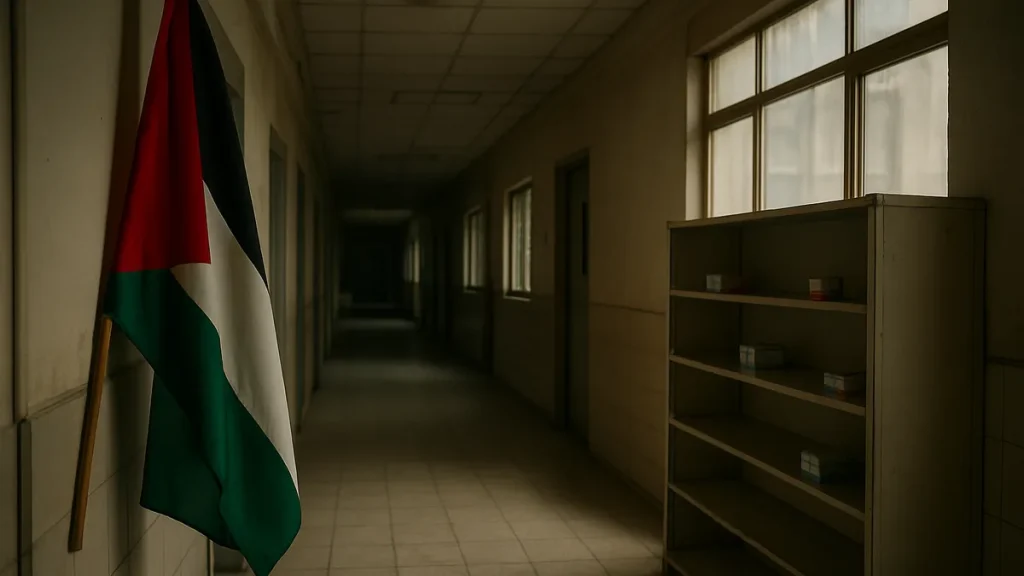

Staff at Beit Jala Government Hospital in the occupied West Bank say shortages of medicine and cuts to pay are making it harder to treat cancer and dialysis patients. Khaldoun Atwan, head of the daytime oncology unit, begins each day not knowing whether he will reach the hospital, whether his patients will, or whether the drugs they need will be in stock.
The hospital is the only government hospital in Bethlehem governorate, which is home to some 320,000 people. Atwan said the crisis has reached a point he had not seen before. Staff describe a system that is weakening quickly, with supplies running short and many doctors and staff working reduced hours.
Drug shortages hit cancer and dialysis care at Beit Jala
Atwan said some cancer patients have regressed after missing crucial appointments or essential drugs for chemotherapy. He recalled that drug supply was not an issue even during the second Intifada. “Everything’s short … whatever’s available we give,” he said. “It’s a disaster.”
Hisham Amle, an oncologist at the hospital, said shortages were “an old problem, not a new one”, but that about 90 percent of important items, chemotherapy drugs above all, used to be available. Now even immunotherapies and biologics are missing. He warned that if a patient misses a session, the treatment given before it may be lost.
Khuloud Dweib, the hospital’s director of pharmacy, said the ministry had recently obtained eight previously missing oncology drugs and four biologics. She said this should last between a month and a half and two months, but many other drugs remain out of stock. Atwan said he could no longer assemble a complete treatment protocol for his patients.
Unpaid salaries and funding collapse strain West Bank clinics
The article links the crisis to the finances of the Palestinian Authority, which it says have collapsed over the last three years. The cause is a fall in international aid and disruptions to Israel’s transfers of tax receipts. The report also says Israeli actions in the occupied West Bank since October 2023, including road closures, checkpoints and settler attacks on Palestinian communities, have hurt the economy.
As a result, staff are receiving only half their salaries, and the Palestinian Authority cannot pay for essential medications. Ministry clinics are operating part-time, and when they open, doctors see well over 100 patients a day. Iyad Dari, the attending physician at the dialysis unit, said the problem is not a lack of staff. Workers paid half their salaries, he said, may come in only two or three days a week because they cannot afford to work full hours.
Yosef Ojra, an internal medicine specialist at Beit Jala, said the withheld revenues have depleted the Health Ministry’s funds to pay medical suppliers, who are now withholding their services. Dari said the hospital is now mainly covering emergency cases. He added that patients who were once angry have come to understand that everyone is suffering.
Checkpoints and closures keep patients from treatment
The article attributes the withholding of tax revenues to an action spearheaded by Israeli Finance Minister Bezalel Smotrich. Milena Ansari of Physicians for Human Rights Israel said the crisis was predictable. She said Israel had already been periodically withholding tax revenues before the war in Gaza began in October 2023, which endangered the Health Ministry’s finances.
Ansari noted that, unlike in Gaza, Israel is not blocking medicines from entering the West Bank. The problem, she said, is that the Palestinian Authority has no money to buy them. She added that Israel has the primary legal obligation as an occupying power to ensure adequate medical care for occupied populations.
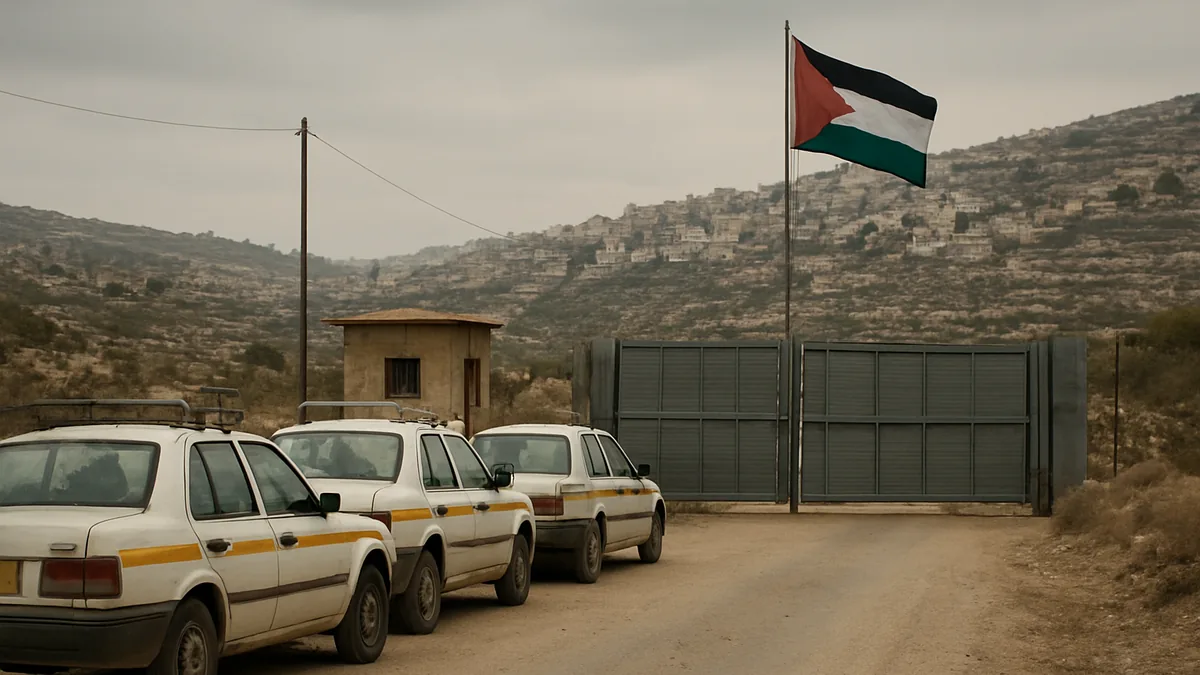
Getting to the hospital is also increasingly difficult. Dari described a dialysis patient from Nahalin who had an appointment at seven or eight in the morning, but whose village was sealed. The man waited four or five hours at a checkpoint before taking a long detour and reaching the unit at four in the afternoon. A normal journey costs about 10 shekels, Dari said, while a detour like this costs more than 100 shekels, and some patients need dialysis four times a week.
Atwan’s patients often need treatment split between Beit Jala and the Augusta Victoria Hospital in occupied East Jerusalem. Before the war, cancer patients from the West Bank routinely received permits to enter Jerusalem, but the article says there are no guarantees now. Atwan described a cancer patient who waited for a referral, found no treatment available, and was then rejected on security grounds. Atwan also said patients have become neutropenic after missed sessions, and one was lucky not to develop sepsis.
Patients ration medicine as surgery backlogs grow
Families are paying heavily for what is still available. Ahmed, a Palestinian from Bethlehem with a medical degree, said his sister, who has Crohn’s disease, needs Humira every two weeks. For three months the pharmacies were out of stock. Buying directly from the drugmaker would have cost about 2,000 shekels ($650) for one or two injections. “We couldn’t afford that,” he said. “So we just struggled until it became available again.”
An older cancer patient from a village facing settler attacks said he had cut back on his own medication, which is not supplied regularly. A course costs 20,000 shekels ($6,500). “I’ve started cutting back, not taking much,” he said. Dweib described a young man with multiple sclerosis studying in Egypt, whose medicine stopped being supplied without payment. His mother said she wanted to sell her house to pay for the injections.
Surgery backlogs have also grown. Sayed Ayyad, 22, from al-Eizariya, badly fractured his ankle in an accident last month and waited three weeks for an operation. He said he was told 60 people were waiting for surgery. One day his operation could not go ahead because there were no medicines, painkillers or anaesthetic.
Staff say they fear for their own safety as supplies run low. Dweib said medical personnel could be targeted at any moment simply for providing services. Dari said the longer staff remain, the worse the situation becomes. Atwan, who leaves the hospital at three each afternoon to reach Bab az-Zawiya in Hebron for a shared taxi, said his patients’ fate depends on luck. “We’ve got no future,” he said.