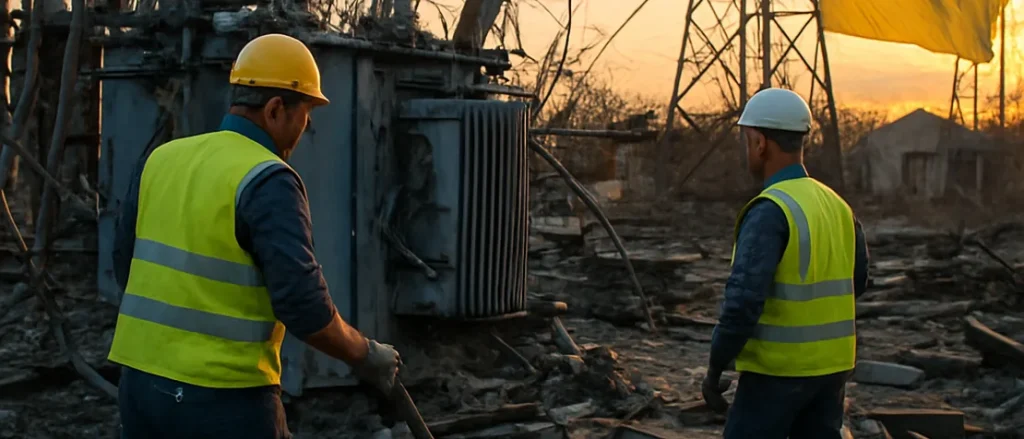

US President Donald Trump announced on Sunday that Russia and Ukraine had agreed a ceasefire on strikes against energy infrastructure, saying it was “effective immediately”. Ukrainian President Volodymyr Zelensky said the news was “news for me”, while Moscow has not commented publicly on the announcement.
Kyiv has questioned whether the arrangement is real and says it is willing to sign up if Russia does. Russia, by contrast, has offered very little. Asked whether such a ceasefire had been agreed, Kremlin spokesman Dmitry Peskov told reporters during his daily conference call: “Contacts are continuing.” He added that Moscow would inform journalists once it had something to say.
Pro-Kremlin media welcomes the energy truce
Although Peskov had little to add, pro-Kremlin media has been more forthcoming. It described Trump’s announcement as “a gift” for Moscow. The pro-government newspaper Moskovsky Komsomolets concluded: “Of course we benefit.”
The paper argued that the deal would mean Russia only had to stop attacks on Ukraine’s last remaining oil refinery, which it said had already been hit several times and was barely functioning. Kyiv, it wrote, would not be allowed to strike the many refineries Russia has. “In effect it’s a one-way deal that benefits us,” it said, adding that no one in Moscow had officially rejected it.
In other words, the analysis suggests Moscow sees the announcement as tying Ukraine’s hands rather than Russia’s. Long-range Ukrainian drone strikes on Russian oil facilities in recent months have caused extensive damage and fuel shortages across the country. If such attacks continue, the analysis says, Russia is likely to claim that Kyiv is harming US economic interests and the Republican Party’s chances in the November midterm elections.
Diesel deal and Trump’s comments on Ukraine’s leadership
Russian officials, according to the report, will argue that the strikes undermine a recent Trump-Putin fuel deal allowing the US to import Russian diesel. Trump has said the agreement will benefit US consumers, although there is widespread scepticism that the volumes involved will do much to lower fuel prices.
The Kremlin would be pleased if Ukrainian drone strikes on oil facilities angered the White House and reduced US support for Kyiv, the analysis says. Moscow would also welcome Washington halting intelligence sharing with Ukraine and weapons sales to Europe destined for Kyiv. It has already been pleased to hear Trump say: “I think it’s time for Ukraine to get a new president.”
Kremlin rejects long ceasefire while strikes continue
Zelensky has called for a 60-day Russian ceasefire to allow presidential elections in Ukraine. Peskov responded that the Kremlin has said many times it does not want a ceasefire but a lasting peace, and that it is willing to do whatever is possible to achieve one. The analysis says that “whatever’s possible” does not include a 60-day or 30-day ceasefire.
On Monday, the Kremlin proposed a one-day cessation of hostilities so Ukraine could hold elections. The report says this will not be seen in Ukraine or the West as a serious offer, though it comes as no surprise. Putin has shown little desire to halt the fighting, and recent statements and signals suggest that, with winter approaching, the Kremlin is counting on continued strikes to increase pressure on Ukraine.
Also on Monday, Foreign Minister Sergei Lavrov said Ukraine did not deserve the “respite” a ceasefire would bring. Zelensky claimed that Russia had hit several energy targets across Ukraine overnight and into the morning, and said six Ukrainian energy sites had been hit since Trump announced the ceasefire. The analysis argues that Moscow believes the diesel deal and Trump’s growing impatience with Zelensky will help it secure its goal of Ukraine’s capitulation.