
New Delhi, India: India’s main opposition leader, Rahul Gandhi, has returned to the streets of central New Delhi. He is leading dozens of members of parliament in demanding the resignation of the election chief, as protests gain momentum.
Gandhi, the heir to India’s most influential political dynasty, is trying to turn a summer youth uprising into a wider challenge to Prime Minister Narendra Modi’s decade-long dominance of Indian politics. The protests are putting the Hindu nationalist government under growing pressure.
Opposition accuses government of cracking down on protesters
At a press briefing on Monday, Gandhi said the Modi government had put the capital city “in jail”. Security forces have been detaining thousands of students every day, and allegations of custodial violence have created a climate of fear in the capital, according to the reports gathered for this story.
The youth-led “Cockroach” movement, which forced out the education minister in July, has threatened to protest on Tuesday if it is not allowed to rally at Jantar Mantar in central Delhi. That site was the focus of the summer demonstrations. Alongside Gandhi’s Congress party and other opposition forces, the Cockroach Janta Party (CJP) and thousands of students from left-wing organisations are taking part.
Gandhi has called for the Chief Election Commissioner to be tried for treason. “We will not spare you,” he said, addressing Kumar at the Monday briefing. Opposition politicians allege that rallies led by Gandhi and others have been met with violent force, and videos show them being detained. Gandhi said protesters “came with love in their hearts, not hatred or anger” at a Saturday protest, adding that “they were beaten, both by cops and BJP goons.”
In a post on X, Gandhi wrote that Modi “cannot silence India’s voice” and that “these cowards cannot intimidate us.” He called on people from all walks of life to join the Monday protest.
Election Commission under fire over voter list changes
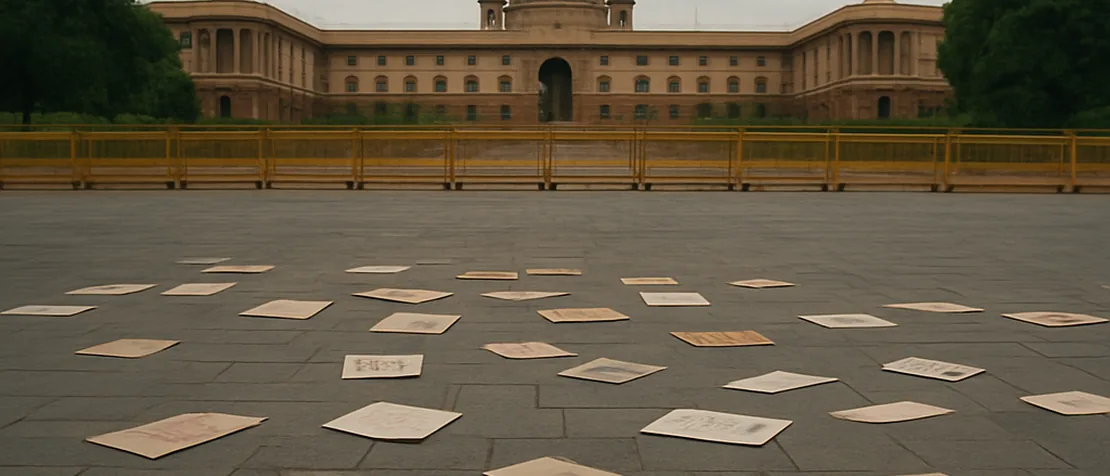
India’s Election Commission is meant to be an autonomous body overseeing the world’s largest electorate. It has come under criticism after revelations that its chief, Gyanesh Kumar, frequently overruled concerns raised by the other two election commissioners about the integrity of changes to the voter database.
For months, opposition parties have argued that the commission is compromised and is sabotaging elections to benefit Modi’s Hindu majoritarian Bharatiya Janata Party (BJP). The BJP denies these allegations.
Since June last year, the commission has been revising and updating statewide voter lists. It has since removed more than 130 million names. Critics say this has disproportionately deprived minorities and other vulnerable groups of the right to vote.
Analysts see tougher protests and new street tactics
Analysts say the circumstances are starkly different from the summer protests, when CJP-led demonstrators demanded the resignation of then-Education Minister Dharmendra Pradhan. Asim Ali, a political analyst in New Delhi, said the opposition’s mobilisation would not stop, but the Modi government was unlikely to back down.
Ali said the crackdown on students had made it clear that it would be harder for young protesters this time. “Students can’t get beaten up and dragged violently daily,” he said. He added that opposition parties now need to lead from the front. He also linked the current period to the 1975 state of emergency, when then-Prime Minister Indira Gandhi suspended civil liberties. He said that after five decades, “those democratic gains have vanished”, and that the government faces no constraints from independent institutions.
Rasheed Kidwai, another political analyst, said he had seen New Delhi host “several big opposition political rallies” near parliament, drawing hundreds of thousands of people, when police did not interfere. He said the violent detention of members of parliament was particularly worrying. “We are seeing a big change from when politicians were more tolerant of dissent,” he said.
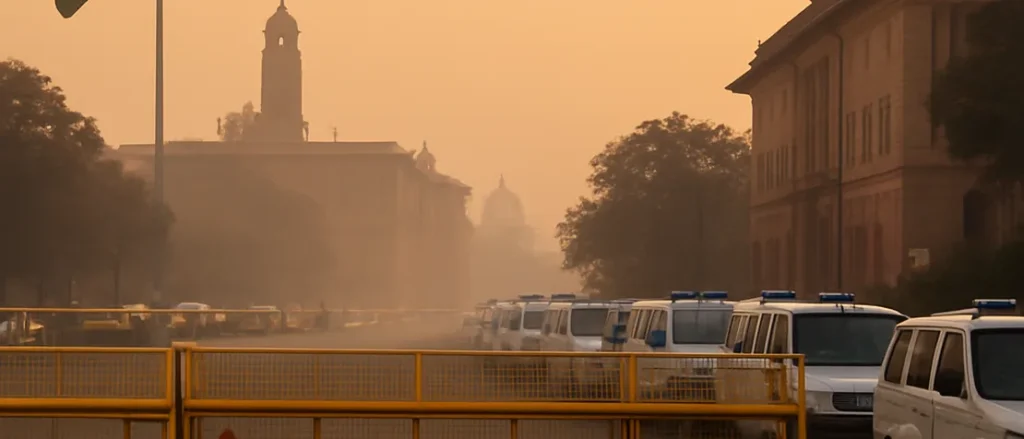
Faced with an unprecedented security deployment in central New Delhi designed to prevent protests, youth leaders are changing their tactics. Neha Bora, president of the All India Students’ Association (AISA), a left-wing group affiliated with the Communist Party of India, has repeatedly managed to stage protests despite police efforts. She does not disclose the time or place until about 30 minutes beforehand, and supporters are alerted through social media.
On Sunday, Bora chose a crowded street near central Delhi and jumped several barricades to reach the heavily secured Parliament Street, before she was chased down and dragged into a police van. Aditi Thakur, a 23-year-old student in the capital, said that “a call to protest can come anytime, anywhere.” Congress is also using flash rallies at unannounced venues, then leaving before police arrive.
Ali said the mood has shifted. “We are seeing that humour changing more into anger this time,” he said. The July protests were defined by Gen Z’s humour in the face of police brutality, but demonstrators are now preparing for a more serious confrontation, even if they remain peaceful, analysts say.
Ali said the biggest challenge for the government is the disruption of central New Delhi, which the government cannot allow on a daily basis. The area houses most federal government offices and is a major business hub. “We are seeing this movement grow into a bigger anti-government, anti-Modi movement,” he said.