
A day after a strike on Riyadh’s international airport left 12 people dead and more than 300 injured, Yemen’s Houthi movement on Sunday urged airlines, travellers and airport staff to steer clear of Saudi airports. The strike was the deadliest of its kind in the kingdom in over ten years, and it came as fighting between the Houthis and Yemeni government forces, which Saudi Arabia backs, has sharply intensified.
Houthi threats against Saudi airports and airspace
In a post on X, the group said it was renewing its alert to airlines, aviation experts, employees and passengers not to use Saudi airports or airspace. It described those facilities as exposed to attack and said they had become a battlefield for its forces, while exempting the airports in Makkah and Medina. The Houthis also held Saudi Arabia responsible for any interceptions that fail.
Yemen’s Houthi-run foreign ministry said on Sunday that any further Saudi military action in Yemen would bring a harsher response, and that its own steps would follow the principle of reciprocity. It warned that worse developments could follow unless Riyadh ended what it called aggression and interference in Yemen.
Saudi military role and the wider regional war
Saudi Arabia has expanded its military role in Yemen in recent weeks, carrying out strikes against the Houthis and supporting a Yemeni government counteroffensive. The moves followed the group’s seizure of strategic territory along the Red Sea coast last month.
US President Donald Trump said on Saturday that Washington was considering joining the Saudi strikes. He described the Yemen fighting as a spillover from the wider war on Iran, which the United States and Israel began in February.
The Saudi-led coalition said on Saturday that a projectile had landed near King Fahd International Airport in Dammam, in the Eastern Province. On Sunday it said it had intercepted a drone in the same region.
Casualties, airport shutdown and remote schooling in Saudi Arabia
Saudi authorities said the dead in Saturday’s attack included four Saudis, two Bangladeshis, and nationals of the United States, Jordan, Palestine, Syria, Sudan and Egypt. It was the third assault on the Riyadh airport within a week, and two earlier attacks there had killed four people and badly damaged a Saudi commercial aircraft on the tarmac.
King Khalid International Airport has been temporarily shut. The civil aviation authority said operations were suspended while damage and safety checks are carried out, but it gave no timetable for resuming flights.
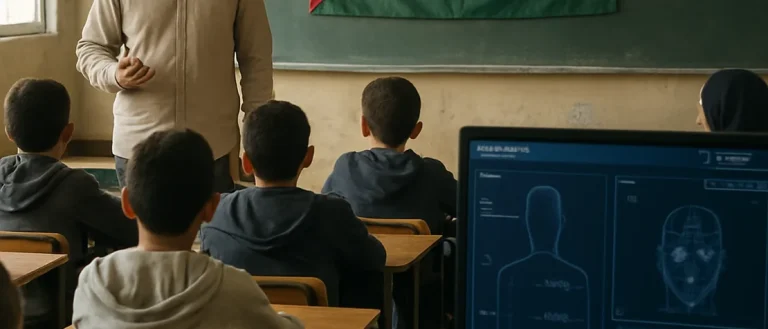
Authorities also told parents and students that in-person lessons would be suspended from Sunday until Thursday, with remote learning for all students, teachers and administrative staff.
Riyadh energy congress and forum still scheduled
The Saudi energy ministry said a long-planned international energy gathering would still go ahead in Riyadh. The five-day WPC Energy Congress is taking place at a convention centre roughly 10 km (6 miles) from the airport.
State TV said more than 70 ministers, 300 company executives and representatives of over 25 international energy organisations had confirmed attendance, though it was unclear whether they would attend in person or virtually. A ministerial meeting of the International Energy Forum was also due on Sunday, with its plenary session closed, according to a media advisory. No further details were immediately available.
Pakistan condemned the attacks on King Khalid International Airport, calling them an act of terrorism and reaffirming its commitment to Saudi Arabia’s security and territorial integrity.