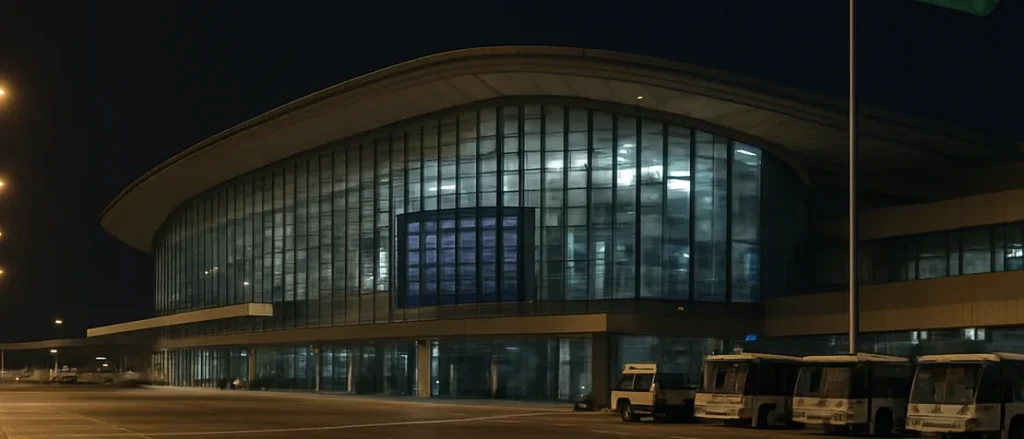

Yemen’s Houthis, the armed group also known as Ansar Allah (Arabic for Supporters of God), are striking deep inside Saudi Arabia with waves of ballistic missiles, cruise missiles and drones. The most serious result so far came when an attack on Riyadh’s King Khalid International Airport on Saturday killed 12 people and wounded 309. It was the deadliest attack in the kingdom in more than a decade.
The airport has been targeted several times since the Houthis launched their new military campaign against the kingdom in September. Saudi Arabia’s civil aviation authority suspended operations and diverted all flights after the Saturday attack. The United States and United Kingdom also issued new travel warnings for their citizens. The Houthis claimed two other attacks on the air hub earlier that week and, on Sunday, warned people to avoid Saudi airports.
How the Houthis have built up their arsenal
The Houthis’ drones and missiles have reached as far as Israel. Their accuracy has shown that they can hit specific targets, including Saudi airports and oil facilities. The exact type of weapon used against Riyadh airport is unknown. Still, the group has fired hundreds of drones and missiles at Saudi Arabia since the 2015 intervention in Yemen.
The group uses its weapons together, mixing drones and missiles travelling at different speeds to confuse air defences. The same approach shaped the ground war, where the Houthis pounded government positions for weeks before seizing the Red Sea coast in a rapid offensive last month. Among their most advanced weapons are the following:
- The Palestine-2, a two-stage, solid-fuel medium-range ballistic missile believed to have a range of 2,000km, with hypersonic capabilities.
- The Toufan, which appears to be a rebranded Iranian Ghadr missile, thought to have a range of between 1,350km and 1,950km.
- The Burkan and Badr series of short-range missiles, also believed to be of Iranian origin, which have been used in cross-border strikes into Saudi Arabia.
Some of the medium-range missiles carry cluster warheads. Their reach has allowed the Houthis to breach Israel’s air defence network, some 2,000km from Yemen.
Nawaf Obaid, a senior fellow at the Kings College War Studies Department, said the Houthis’ missile arsenal is essentially derived from Iranian weaponry, with some Chinese technological influence. “The Houthis have demonstrated little evidence of significant indigenous technological innovation,” he said. “Their domestic capabilities are largely confined to producing certain lower-end missiles and drones.”
Last month, Yemen’s government forces alleged that the Houthis have received help from Iran’s Revolutionary Guard Corps (IRGC) in developing a new capability, loitering cruise missiles. The claim has not been independently confirmed in the source material.
Why Saudi air defences are being tested
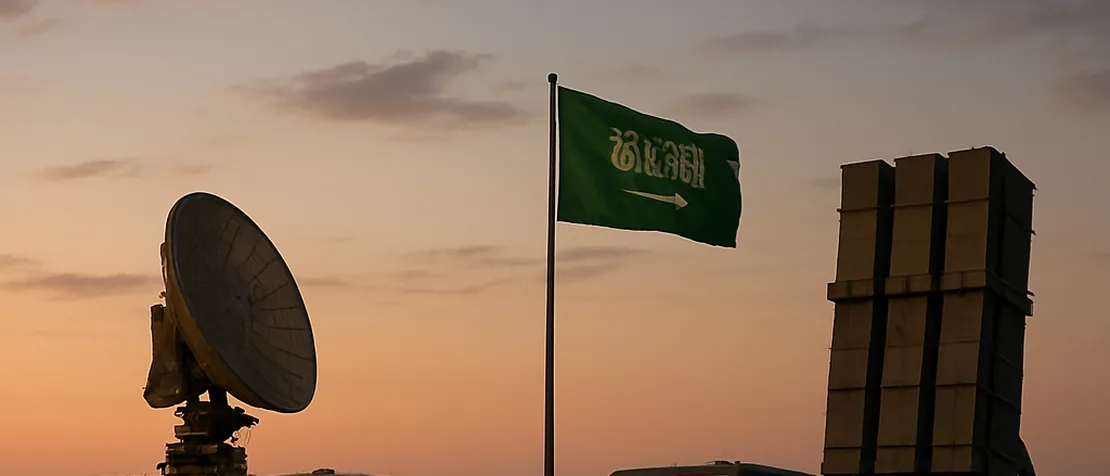
Saudi authorities say their forces shot down a number of projectiles over the past week. These included a pair of ballistic missiles aimed at the capital on Thursday. However, they failed to intercept the projectile that hit Riyadh’s King Khalid International Airport on Saturday.
Obaid said occasional penetration of Saudi air defences should be expected, given the size of the kingdom and its border with Yemen. “As much as you can have a multi-layered air defence system, one will always come through,” he said. He added that dozens of Houthi attempts are thwarted for each successful attack.
Wolfgang Pusztai, a security policy and defence analyst, said the main focus of Saudi Arabia’s ballistic missile defence system was countering threats from Iran. As Houthi attacks increase, however, he considers it likely that Riyadh is redirecting some of these defences towards Yemen.
Interceptor stocks are another concern. Saudi Arabia, like many of the United States’ regional and global allies, has struggled with limited stockpiles of Patriot and THAAD munitions. These were rapidly used up by the US and its allies in the early months of the war with Iran. Last month, Riyadh had reportedly reached out to a number of friendly countries to deploy air defence or other support against Houthi attacks.
Constraints on the Houthis and open questions
The Houthis are also fighting under serious constraints. The group is subject to a UN-mandated arms embargo and a years-long Saudi blockade, and it is fighting on several fronts across Yemen.
Obaid said the balance of military power currently favours the Saudi-led coalition. “Militarily, the Saudi-led coalition has the upper hand, but the Houthis can still dominate the headlines with occasional strikes against Saudi Arabia,” he said. He also pointed to the kingdom’s wider role. “As the world’s largest crude oil exporter and a G20 economy, Saudi Arabia carries global responsibilities that make such attacks disproportionately visible.”
The exact size of the Houthis’ missile arsenal is unknown. That uncertainty raises questions about how long the group can keep up attacks on Saudi Arabia while also fighting a intense ground war in which its missiles and drones are heavily used. Obaid said Saudi Arabia’s air campaign in Yemen has focused heavily on the group’s missile depots, underground installations and drone production facilities, which he said is “inflicting enormous damage” on the Houthis’ military capabilities.
Pusztai said the Houthis likely have only a limited number of short-range ballistic missiles left. That would make them unable to launch saturation attacks, in which multiple missiles and drones are fired at a target, as seen in Saudi Arabia. Instead, he said, they could focus on firing single missiles at less-defended civilian targets “to maximise the strategic impact of these attacks, in this case to disrupt civilian air traffic”.