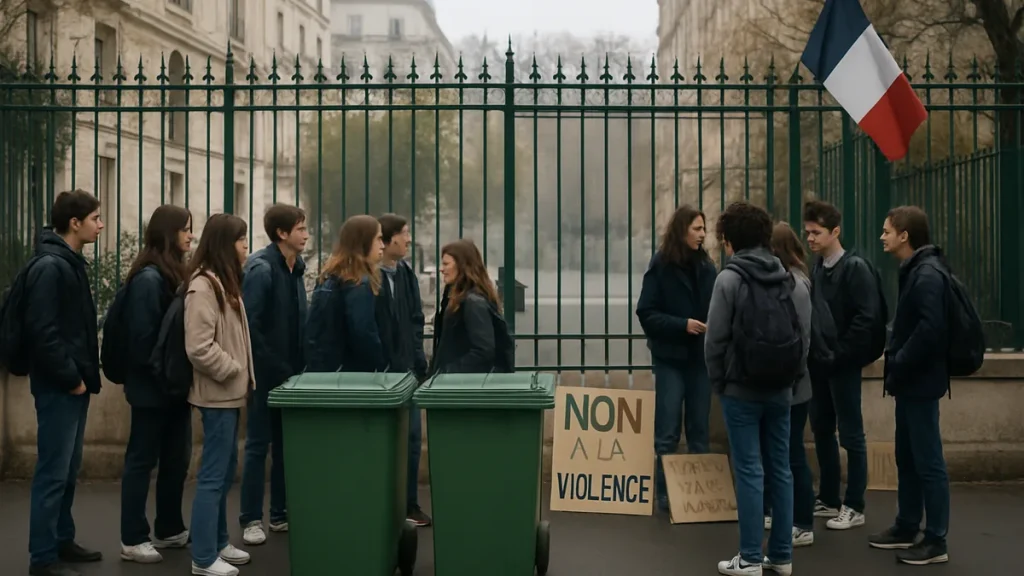

French Prime Minister Sébastien Lecornu has accused the radical left of using the high school protest movement for electoral gain. Speaking this week, he suggested student anger was being manipulated as politics heats up ahead of next year’s presidential election. Thousands of students have spent more than three weeks blockading high school entrances and marching through the streets, and hundreds of further demonstrations have been announced across France for Saturday.
Workers’ unions and figures from the so-called “yellow vest” movement are expected to join the students. Jérôme Rodrigues, a prominent yellow vest activist, has used Instagram to urge people to take part. In a video, he said the protests should give a voice to people who “want to be able to live decently, no longer have to count every cent, and no longer have to choose between eating and driving”.
Government accuses La France Insoumise of instrumentalising students
Lecornu said members of Jean-Luc Mélenchon’s France Insoumise (LFI) party were “instrumentalising the high school movement for their electoral advantage”. He accused them of encouraging protests and then going through the motions of condemning any violence. “This hypocrisy damages France,” he said.
Supporters of Mélenchon, who is seen as a presidential hopeful on the hard left, were heard chanting “Mélenchon for President!” among the students in the streets. Several demonstrators told the reporter they backed his proposal for a wealth tax, his call to lower the voting age to 16, and his visits to French schools to see their condition for himself.
The presidential election is about six months away, and the student movement has become part of a wider contest over who speaks for voters. Lecornu has complained that the high school protests are turning into a “movement of urban violence”.
Police tactics and the suspension of stun grenades
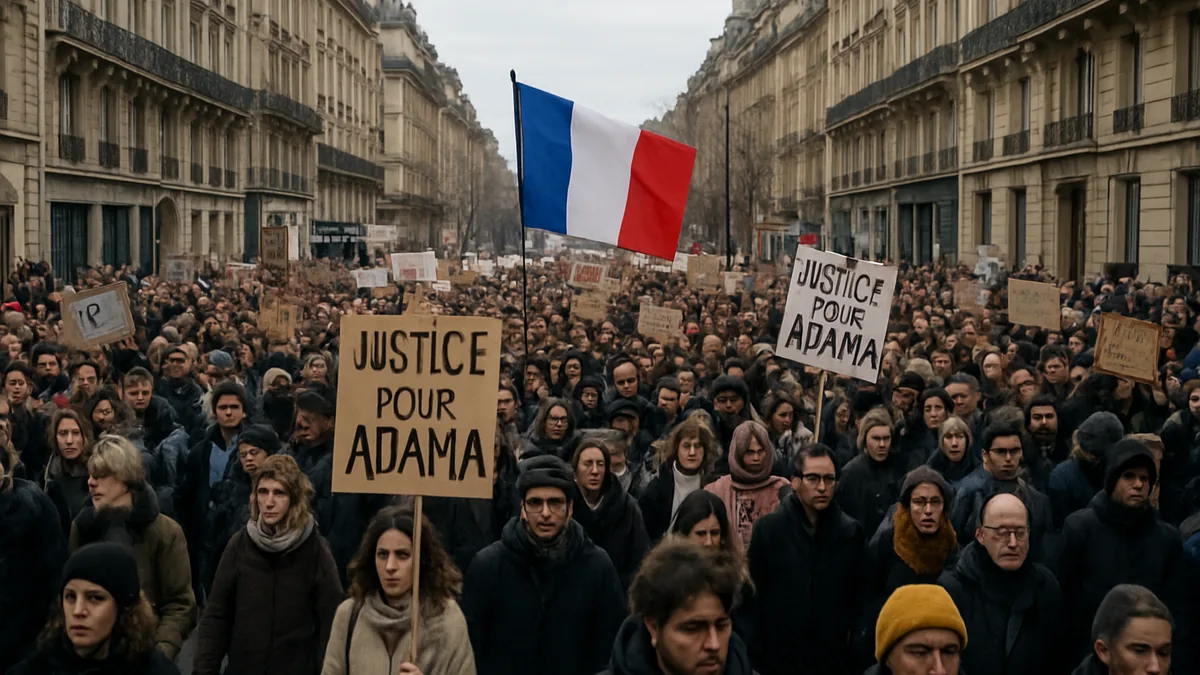
Protests earlier this month led to mounting accusations of police brutality, which France’s interior ministry denied. Hundreds of people were injured during those demonstrations, and a 15-year-old boy in the town of Lens lost a hand. Since then, France’s interior minister has suspended the use of stun grenades by police at high school demonstrations.
Parents have also become involved. In Paris, a group of mothers wearing placards reading “Mums in solidarity” joined the marches. Asked whether they were there to protest or to protect their children, they answered “Both!” One mother, Gwen, said she and other parents were taking turns each morning to co-ordinate between students and police at their local school lock-ins.
Gwen said she did not mind that her son was missing weeks of lessons because of the blockades. “It’s a far better education for him to wake up to his civic duty and to fight for what is just in society,” she said.
Concerns over France’s public debt and borrowing costs
The protests take place against a wider financial backdrop. Government borrowing costs are at high levels, parliament is deeply divided, and France has had six prime ministers over the last five years, all of whom have said they want to reduce the country’s public debt. Economist Anne-Laure Delatte, a CNRS Tenured Researcher at Paris Dauphine University, said France cannot be compared with Greece during its 2012 debt crisis or with Argentina in 2001.
Delatte said financial markets had already expected a budget problem after snap elections left parliament split between three opposing blocs, but also recognised that France is a large country able to raise taxes if needed. She compared the situation more closely to the UK in 2023, when the then prime minister Liz Truss’s mini budget triggered a sharp fall in the pound. In her view, the French crisis would be painful but could be contained, and she said a 4% increase in VAT would raise the 120bn euros needed to plug the public debt.
The European Central Bank would likely step in if France’s finances deteriorated to the point where other European economies were affected, Delatte also noted. Any tax rise or cut to welfare and education budgets, however, could provoke a strong reaction from citizens who are already visibly unhappy.
Calls for constitutional reform and decentralisation
Delatte does not believe a new president would ease the country’s financial problems. “We need constitutional change. A new system. A new Republic,” she said. She argued that the Fifth Republic is built around a powerful president, while parliament exists to block him or her rather than to find consensus or pass new laws. She also expects the parliamentary election following the 2027 presidential vote to be as divided as ever.
Centrist senator Anne-Catherine Loisier, of the Centrist Union in France’s upper house, offered a shorter-term approach. She said budgets were limited but that funding could be redistributed more effectively, and that education is a regional responsibility in France. “Absolutely,” she said when asked whether regions should be given greater powers. “France has traditionally been very Paris-centric but so much could be improved by decentralising the country.”
Loisier, like many leading politicians across the spectrum, said the protesting students “must feel heard”.