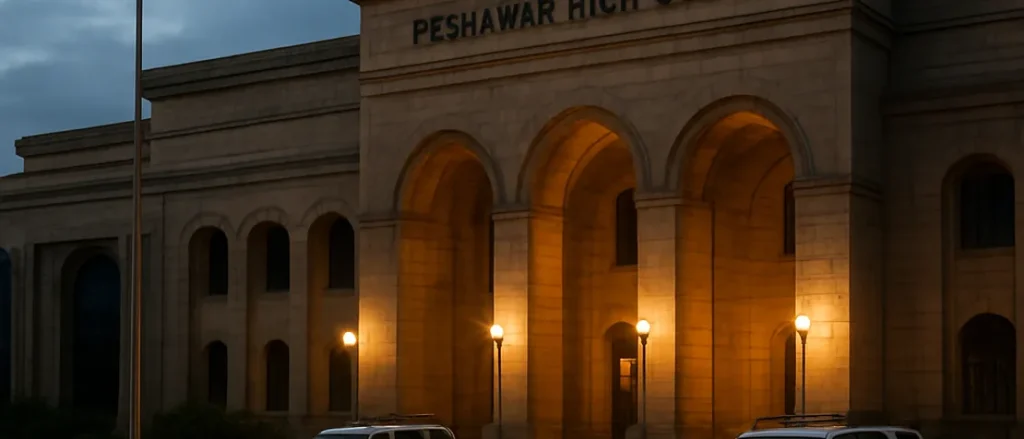

Pakistan Tehreek-e-Insaf has taken the imposition of governor’s rule and emergency in Khyber Pakhtunkhwa to the Peshawar High Court, asking the court to bring back the province’s elected government. PTI Chairman Barrister Gohar Ali Khan filed the petition through Advocate Ali Zaman and requested an early hearing, given how important the matter is. PTI Central Information Secretary Sheikh Waqas Akram confirmed the filing in a post on X. He said the case was brought against the Federation of Pakistan and others.
The petition was lodged three days after President Asif Ali Zardari approved the emergency and governor’s rule in the province on October 11. The measures placed the PTI-led provincial administration under federal control. The step came after tensions between the federal government and the PTI grew over security policy, counterterrorism operations and negotiations that had stalled between the two sides.
PTI says security concerns cannot justify removing an elected government
The PTI has described the governor’s rule as an assault on the province’s democratic mandate. The party argued that security concerns cannot be used to remove an elected government unless the constitutional requirements are fully met. It said it does not oppose efforts to fight terrorism, but rejects what it sees as an effort to use exceptional constitutional powers to change the political order.
Speaking in the Senate on Tuesday, PTI Senator Barrister Ali Zafar called the move a “political crisis disguised as a security solution”. He said the federal government must show that the constitutional conditions for intervention were genuinely met. Zafar acknowledged that Articles 232 and 234 grant extraordinary powers for exceptional circumstances, but said those powers are not unlimited.
Zafar also asked why the federal government had extended its response to the whole province when the security situation it cited was concentrated in particular districts. He urged Parliament to examine the evidence, necessity and proportionality of the measures rather than endorsing them without scrutiny. The PTI’s Senate parliamentary leader added that the intervention raised questions about provincial autonomy, federalism, fundamental rights and the constitutional balance between the federation and its units. The party has demanded the restoration of the elected government and the withdrawal of the emergency measures.

Federal government cites rising militancy and failed talks
The federal government announced its decision on October 11. It cited a deteriorating security situation and said the provincial government had not cooperated adequately with federal authorities in the fight against terrorism. President Zardari issued the proclamations under Articles 232 and 234 of the Constitution.
At a joint news conference in Islamabad, Law Minister Azam Nazeer Tarar said the provincial government led by Chief Minister Sohail Afridi had stopped functioning under the constitutional arrangement. Powers previously held by the chief minister, the provincial cabinet and advisers were handed to Governor Faisal Karim Kundi. The federal government also set up an 11-member advisory council to help the governor run the province. The government pointed to a reported 196 per cent rise in incidents of terrorism and extremism over the previous two and a half years, along with attacks on law enforcement personnel and damage to public property.
Information Minister Attaullah Tarar accused the PTI-led provincial government of letting militant groups operate and said its policies had weakened the fight against terrorism. The PTI has disputed these allegations. Interior Minister Mohsin Naqvi said Islamabad had tried to secure the province’s cooperation through negotiations but failed to reach an agreement. He said the decision was not taken lightly and that the constitutional provisions had been examined before action was taken.
Naqvi said the federal government had been engaging PTI leaders to reach an agreement on counterterrorism cooperation. He said a draft had been shared with the provincial leadership and that the federal government had proposed six amendments to it. According to him, the process then broke down. The PTI countered that political and security matters should not be mixed together, and that differences could have been settled through continued dialogue.
Constitutional articles and parliamentary oversight at the heart of dispute
Article 232 provides for an emergency in circumstances specified by the Constitution, including war, external aggression, or a threat to the security of Pakistan or part of it. Article 234 deals with a failure of constitutional machinery in a province and allows the president to take over certain provincial functions when its conditions are met. The two provisions serve different purposes, and both are subject to constitutional procedure and parliamentary oversight.
Under Article 234, a proclamation must be placed before a joint sitting of Parliament. It lapses after two months unless a joint sitting approves it by resolution, and it can be extended by further resolutions for periods of no more than two months at a time. The federal government has said the proclamations in Khyber Pakhtunkhwa were issued in line with the Constitution and that Parliament will be asked to endorse them. The PTI, for its part, argues that having emergency powers does not automatically mean the conditions for using them have been met.
The party’s petition will place the dispute before the judiciary, which will examine the legality of the measures against the Constitution and the arguments put forward by both sides. Opposition leader Raja Nasir Abbas, speaking in the Senate, described October 11 as a “black day” for democracy and said more time should have been given to negotiations. The dispute has also widened to include concerns raised by the PTI over the whereabouts of provincial leaders, including Afridi and Assembly Speaker Babar Saleem Swati.