
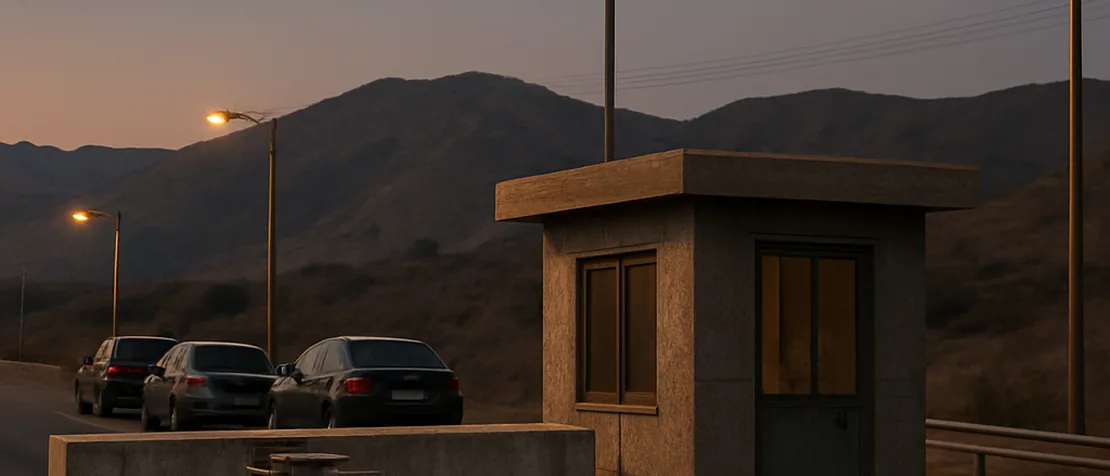
Israeli checkpoints, iron gates and road closures are turning everyday tasks into a draining ordeal for Palestinians in Hebron’s Old City, in the occupied West Bank. Badr al-Tamimi, 60, a shop owner who lives in the city, described residents feeling that they are being pushed out of their homes and neighbourhoods.
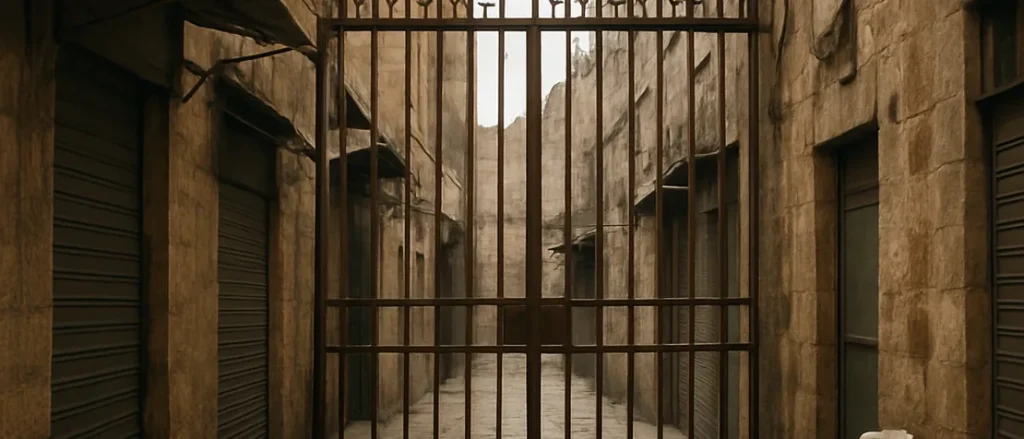
A few days before the report, Israeli authorities installed three iron gates across a 200-metre stretch of the Old City. The move appears to be part of wider efforts to restrict Palestinians’ freedom of movement around the city, according to the account. Hebron Mayor Yousef al-Jabari said one gate was erected on al-Zahid Road, the only route open to vehicles reaching the Old City entrance, while a second was placed at the start of al-Shalala Street and a third overlooks another section of that street.
Gates and closures tighten control of the Old City
The gates are part of a wider network of travel restrictions across the West Bank, but Hebron has been hit harder than most Palestinian cities, the report said. The United Nations Office for the Coordination of Humanitarian Affairs (OCHA) said about 40 percent of the 89 checkpoints in the West Bank are in the H2 area of Hebron, which is under tight Israeli control. OCHA also said that area holds about 11 percent of the 925 movement obstacles across the territory.
The mayor said about 10,000 Palestinians in the Old City and surrounding closed zones are affected by the measures. Separately, the report cited about 7,000 Palestinians in an area where hundreds of settlers live who are affected by the latest travel restrictions. Since October 2023, only Palestinians with specific identification numbers have been allowed to enter that zone, and its entrance checkpoints are generally open only from 7am to 8pm.
Some parts of Hebron are inaccessible to vehicles, and Palestinian residents face curfews two or three days a week, usually at weekends, according to the mayor. He believes the restrictions are meant to make it harder for Palestinians to return home and to stifle life in parts of the city.
Shops close as checkpoints slow daily life
Palestinians can be kept waiting at checkpoints for hours, and the report said the mood of the soldier on duty can determine how long a commute takes. Worshippers trying to enter the Ibrahimi Mosque have also been held up for hours, and resident movement largely stops during incursions, Jewish holidays and related security measures, according to al-Tamimi.
Repeated closures have paralysed economic activity, making it harder for shops and companies to operate. Al-Tamimi said that staying in the Old City was a matter of steadfastness rather than of having the basics needed for economic life. Issa Amro, coordinator of the Youth Against Settlements group, said the movement restrictions were effectively holding residents as hostages.
The mayor said the municipality has responded by filing lawsuits in Israeli courts, despite doubts about the impartiality of the judiciary. He also said Israel’s current government could be acting to win favour with settlers ahead of this month’s election, a claim presented as his view. Politicians from the settler movement hold key posts in the Israeli government, the report noted.
Schools and commutes under pressure
Students and teachers are often searched or detained at checkpoints, and since 2015 Israel has limited the number of Palestinian residents of closed zones who can pass through them. Ayat al-Jabari, a science teacher, said that a trip from her home to Qurtuba School, near the closed Shuhada Street, should have taken five minutes but often took an hour.
She said she was forced to take a longer route through a cemetery to avoid the checkpoint, a path where settlers and soldiers often appeared to block or abuse Palestinians, particularly in winter darkness. After moving to Al-Fayha School near the Ibrahimi Mosque, she said her commute had not improved. She also said schools close on Jewish holidays because students live in areas under total lockdown.
Historical roots of the restrictions
Before the city came under Israeli occupation in 1967, Hebron was a busy city with lively shops and markets, and residents could move more freely between neighbourhoods. Al-Tamimi said the Old City became cut off from its surroundings after 1994, the year of the Ibrahimi Mosque massacre, when a US-born Israeli settler killed 29 Palestinian worshippers. He pointed to Shuhada Street, once a key route for transport and commerce, which was transformed by road closures and restrictions. “They committed the crime, yet they continue to punish us for it,” he said.
Under the 1997 Hebron Protocol, signed between the Palestine Liberation Organization (PLO) and Israel, the city was divided into two zones. H1 was placed under relative Palestinian jurisdiction, while H2, which includes the Old City, the Ibrahimi Mosque and illegal settlements, stayed under Israeli security control. Amro said restrictions intensified during the second Intifada, which began in 2000, when Hebron became a centre of the uprising, with large areas sealed off and shops forced to close.
Al-Jabari said the number of checkpoints has risen to 32 since October 7, 2023, while other obstacles to Palestinian movement now exceed 130. He said the expansion of closed zones around the Ibrahimi Mosque and settlements was a continuation of policies in place for decades. Israeli authorities say the security situation justifies the measures, but the report noted that no comparable restrictions apply to settlers.