Interior Minister Mohsin Naqvi has come to the defense of Islamabad Police Inspector-General Syed Ali Nasir Rizvi and Capital Development Authority Chairman retired Lt Sohail Ashraf following widespread criticism over their use of a horse-drawn buggy during the Independence Day parade at D-Chowk.
The appearance of these senior officials in the buggy during the August 14 event drew significant backlash on social media, with many questioning the appropriateness of such displays of official privilege at a public celebration.
In a detailed statement, Naqvi clarified that neither the IG nor the Chief Commissioner was responsible for the decision to use the buggy. He explained that the carriage had originally been arranged for the chief guest and himself as the interior minister.
He further revealed that the chief guest and he were delayed due to a meeting between President Asif Ali Zardari and Prime Minister Shehbaz Sharif. Meanwhile, the public had been waiting since 5pm, and by around 6pm it became evident that the chief guest and minister would be further delayed.
To avoid keeping the public waiting any longer, Naqvi said the officers were instructed to begin the programme. The buggy, which had been arranged for the chief guest, was then used by the two officials due to unavoidable circumstances.
Naqvi also mentioned that both officials were initially hesitant to start the event without the chief guest and himself but complied after receiving specific instructions to proceed for the convenience of the attendees. He expressed gratitude to the residents of Islamabad for making the Independence Day celebrations a true success.
The incident sparked a heated debate on social media about the culture of VIP privilege and the relationship between state institutions and citizens, especially amid the country’s economic challenges. Critics contrasted this episode with the conduct of officials in wealthier nations, emphasizing that public office holders should view themselves as servants rather than rulers.
Journalists also weighed in, with anchorperson Athar Kazmi highlighting the stark contrast between the Pakistani officials’ use of a ceremonial buggy and Norway’s foreign minister, who was recently seen carrying his own luggage at Islamabad airport. Kazmi argued that this issue reflects a broader elite mindset regarding public resource usage.
Prominent voices like PILDAT President Ahmed Bilal Mehboob expressed hope that the buggy footage was fabricated, warning that if genuine, it illustrates a disconnect with the growing public frustration, particularly among the youth, against the VIP system.
Additional criticism came from anchorperson Nadia Mirza and journalist Naveed Siddiqui, who referenced the colonial-era ‘viceroy mindset’ of officials and urged senior civil servants to remember their roles as public servants.
While Naqvi’s explanation sought to contextualize the buggy’s use and shift responsibility, the controversy reignited a broader discussion about VIP culture, accountability, and how senior officials engage with citizens.
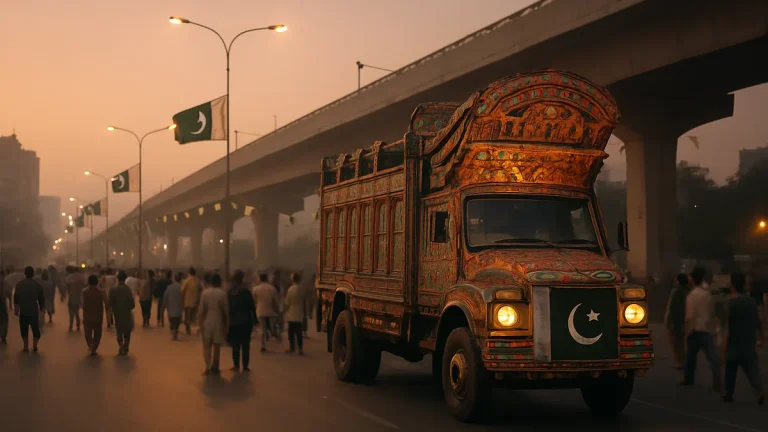
The Independence Day parade at D-Chowk was one part of Islamabad’s nationwide celebrations on August 14, which attracted thousands of residents participating in patriotic and cultural events. Despite the buggy episode drawing criticism, the overall celebrations were well-attended and festive.
Since then, the focus has moved beyond the buggy footage itself to a wider dialogue on public office ethics, the expectations of civil servants, and the need for greater dignity and respect in state-citizen interactions.