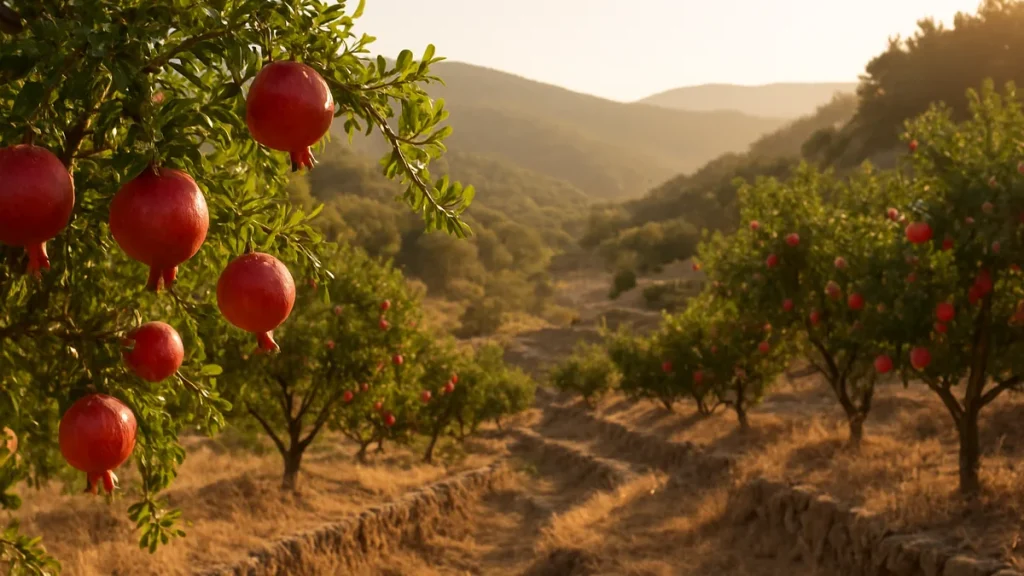

Pomegranate farmers in Darkush, a town in northwestern Idlib province near the Turkish border in Syria, are finding it hard to get an expected strong harvest to market. Rising production and transport costs, low prices and limited export openings are eating into their incomes, even though hopes for a good season remain high.
Pomegranate growing is a major livelihood in Darkush, a town lying in a valley within the Orontes River basin, at the foothills of the Syrian Coastal Mountain Range. Farmers are asking for affordable farm supplies, cold storage and access to new markets so they can sell their produce and raise their earnings.
Orchards and harvest timing in Darkush
Pomegranate orchards cover more than 250 hectares in the town, according to the local Agricultural Extension Division. Early varieties began to be picked in the second half of September, and output is expected to be good this season.
Mohammad Dada, an agricultural supervisor at the division, said field visits were under way to advise growers on harvesting, packaging and controlling pests, including aphids and fungal diseases. Farmer Mohammad Sharif said the crop is deeply rooted in the town’s heritage, and some varieties are turned into molasses and juice, allowing producers to diversify.
Rising costs outpace what growers earn
Dada said more than 70 per cent of farmers in the area depend on pomegranate cultivation. He added that current selling prices are not enough to cover the growing expense of pesticides, labour, packaging and transport.
He said producing one kilogramme of pomegranates costs around 50 Syrian pounds, equivalent to $0.41. He called for subsidised fertilisers and pesticides to ease the financial strain on growers.
Export limits and transport costs hit sales
Farmer Nima Adeeb Nima said five main varieties are grown in Darkush:
- Nab Al-Jamal
- Asfouri
- Al-Helu
- Al-Laban
- French
He said early varieties are harvested from mid-September to early October. Limited export opportunities and restricted access to foreign markets have hurt sales, while domestic markets cannot absorb the full harvest.
Trader Samer Bakro said fuel prices have pushed up the cost of shipping pomegranates to Damascus and other provinces. Renting a vehicle costs around $130, he said, adding that more export channels are needed to sell surplus produce, which also faces limited storage options. Expanding exports and improving storage could help farmers and traders reduce losses and secure better returns.