
Taiz is quickly becoming the most important front in Yemen’s renewed civil war. Iran-allied Ansar Allah Houthis are fighting the internationally recognised government, which is backed by a Saudi-led coalition, for control of the city.
In recent weeks, Houthi forces have encircled Taiz by cutting its main road south to Aden. The move has displaced many residents and worsened a humanitarian crisis already under way. Taiz, Yemen’s third-largest city, has been cut off since early October, and the Houthis have at times shelled government positions in and around it.
Why control of Taiz carries strategic weight
Taiz is the last major urban stronghold of anti-Houthi forces in Yemen’s southern highlands. Its rugged hills rise above Aden, where the government is based, and the flat coastal plain around the Bab el-Mandeb Strait. Holding the city helps the government keep the Houthis away from Aden and maintain its counterattacks around the strait.
A Houthi takeover would make those tasks much harder. It would also be a major symbolic defeat for the government and for the Saudi-backed Yemeni forces fighting alongside the coalition. Any Houthi victory there would mark one of the biggest turning points in a conflict that resumed this summer after a four-year truce.
For years, the city has sat at the tip of a government salient that reaches north into Houthi territory. The Houthis held the areas to the north, east and west of Taiz, while government forces controlled the city and its immediate surroundings, including Jebel Sabar, the high mountain to the south.
How the Houthis moved to cut the road to Aden
As fighting resumed, the Houthis pushed to seize territory south of Jebel Sabar along the road to Aden. The route runs about 200 km (125 miles) through rugged hills, where fighting is slow and difficult. Sections of it, including near the towns of al-Turbah and Mudiriyat al-Misrakh, are now under Houthi control.
Government forces, backed by airstrikes from the Saudi-led coalition, are trying to push the Houthis back and reopen the road. However, they were still losing ground around Taiz rather than recapturing territory in mid-October. There is no guarantee they will succeed.
Civilian hardship inside the city
Katja Juric, head of programmes in Aden for the International Organization for Migration (IOM), said Taiz city has an estimated population of almost 600,000. Government sources said 80,000 people had fled during the latest fighting. The IOM said the fighting has displaced at least 121,000 people across Taiz province, although many of them come from rural areas outside the city.
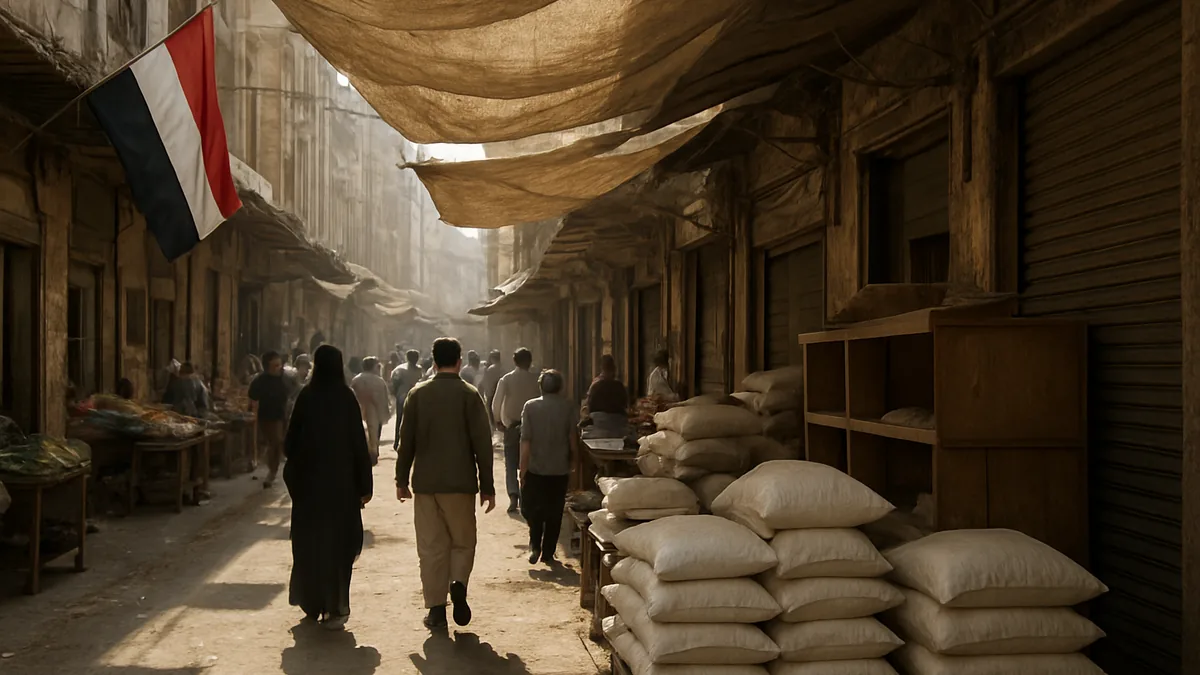
Residents said they now face shortages of basic goods and sharp price increases in city markets since the Houthis cut the road. Aid agencies have reported widespread shortages of fuel, food, medicines and clean water. The World Food Programme said in mid-October that wheat flour stocks in the city were nearly exhausted.
The health risks are growing. The UN children’s agency, UNICEF, recently found that one in three of the children it screened in Yemen was malnourished. Cholera, dengue and malaria are also present in the country.
Historical roots and what could come next
Taiz has long had difficult ties with rulers from north Yemen, and it was a hotbed of the 2011 Arab Spring uprisings that toppled former president Ali Abdullah Saleh. The Houthis follow the Zaydi school of Shi’ite Islam, while Taiz is predominantly Sunni Muslim. Saleh and the Houthis seized the capital, Sanaa, in 2014, derailing a political transition that had followed the Arab Spring.
In early 2015, army units loyal to Saleh seized positions in Taiz, which led to large protests and armed clashes. Protesters accused Saleh and the Houthis of attempting a coup. Months of fighting followed, and residents endured shelling, sniper fire and severe shortages during a long siege before government forces drove the Houthis and their allies out and reopened a land route to Aden.
The Houthis have stepped up attacks on Saudi targets and appear better armed and organised than in earlier phases of the war. They are now working to tighten their grip on Taiz and move closer to the city. That could lead to a prolonged siege similar to the one the city suffered earlier in the conflict. An attempt to take the city outright is also possible, but local opposition means resistance could be fierce and any such battle could be long and bloody.