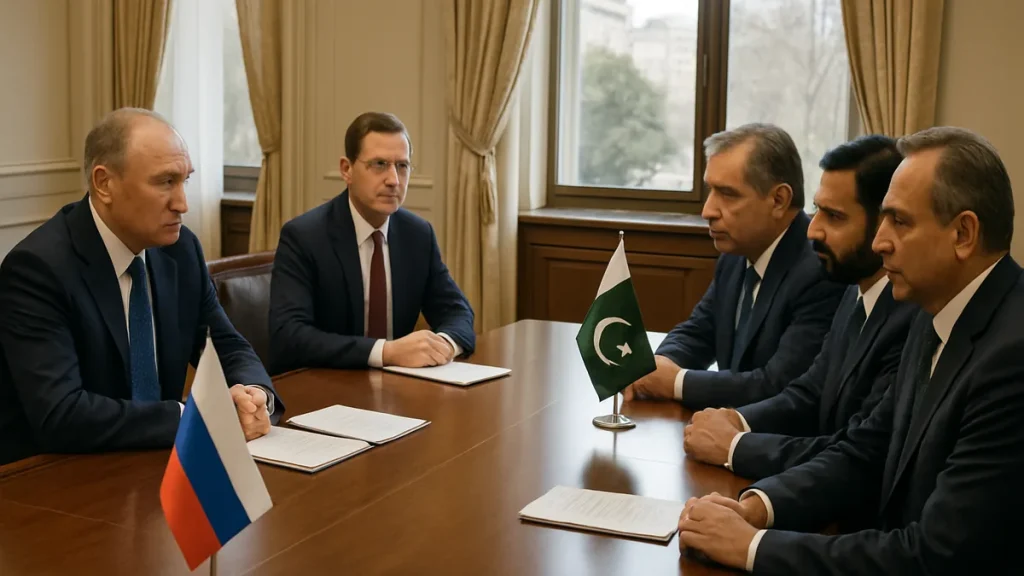

Russia has signaled its willingness to mediate between Pakistan and Afghanistan as tensions between the two countries persist. During a visit to Rawalpindi on October 14, Russia’s Interior Minister Vladimir Kolokoltsev met with Pakistan’s army chief, Field Marshal Asim Munir, to discuss security cooperation. Meanwhile, Russia’s Foreign Intelligence Service director Sergey Naryshkin held talks with the Taliban’s intelligence chief Abdul Haq Wasiq in Kabul.
Despite limited official statements, these meetings indicate Moscow’s intent to play a peace-brokering role amid ongoing hostilities between Pakistan and Afghanistan. The two neighbors have exchanged fire and threats over the past year, with ceasefires brokered by Qatar and Turkiye failing to hold and attacks continuing on both sides.
Russia’s mediation offer and regional security concerns
Moscow’s special representative for Afghanistan, Zamir Kabulov, recently told Russia’s TASS news agency that Russia is prepared to mediate if both Pakistan and Afghanistan request it. Pakistan’s ambassador to Russia, Faisal Niaz Tirmizi, confirmed that Islamabad has approached Moscow for mediation. However, the Taliban have not publicly sought Russian involvement, raising questions about Moscow’s ability to influence both parties.
Russia has expressed concern about the ongoing military confrontations, which have resulted in civilian casualties. The Russian embassy in Kabul posted on X that it is “seriously concerned about the ongoing military confrontation between Pakistan and Afghanistan, which affects civilians, including children.” The UN Assistance Mission in Afghanistan (UNAMA) reported that Pakistani strikes between September 30 and October 1 killed at least 10 civilians, mostly children.
Challenges in mediation and differing perspectives
The Rawalpindi meeting between Kolokoltsev and Munir focused on “mutual interest and the regional security environment,” according to Pakistan’s military media wing, Inter-Services Public Relations (ISPR), but did not specifically mention Afghanistan. Neither Russian officials nor the Taliban have disclosed details of the intelligence chiefs’ discussions.
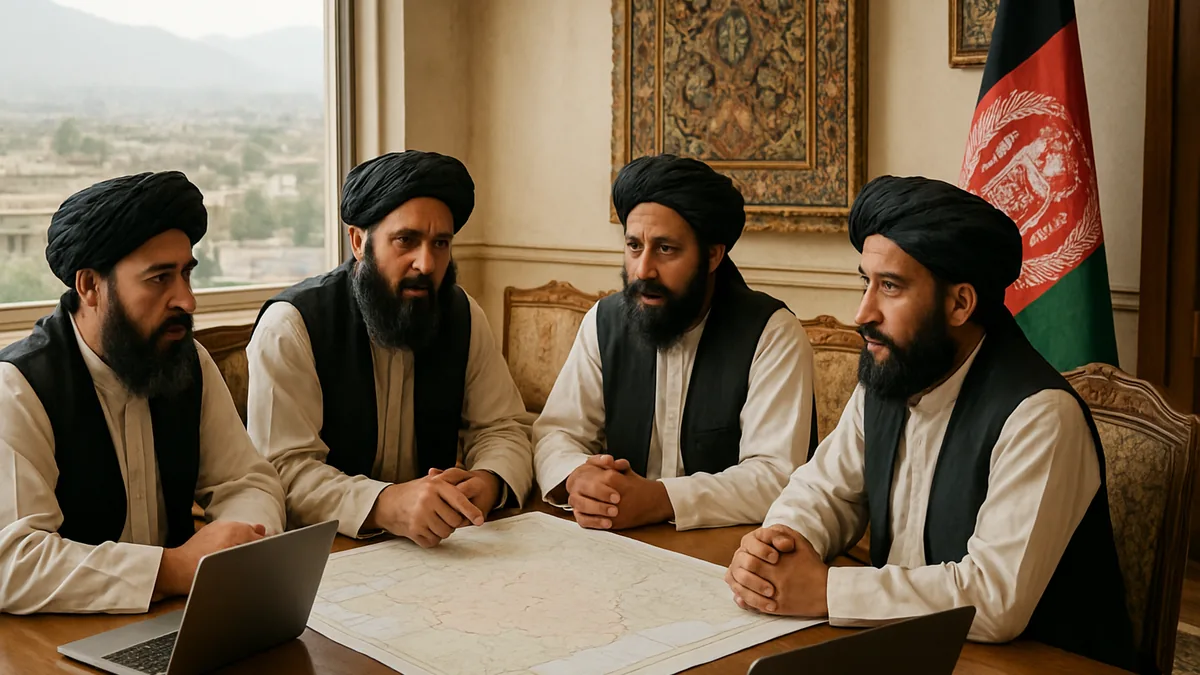
At a Moscow meeting on October 5, efforts to advance dialogue stalled due to disagreements over language linking Afghanistan to terrorism. Kabulov noted that the Afghan delegation objected to frequent references to Afghanistan in connection with terrorism. Pakistan’s Foreign Office spokesperson, Sajjad Haider Khan, emphasized that for Pakistan, terrorism is a substantive security issue, not just wording.
Security analyst Tameem Bahiss explained that Kabul’s objection reflects its long-standing position, as accepting such language would imply acknowledgment of allegations it denies. Pakistan maintains that groups like the Pakistani Taliban (Tehreek-e-Taliban Pakistan, TTP) operate from Afghan soil, while the Taliban reject these claims, asserting they do not allow their territory to be used against other countries and that Pakistan’s security problems are largely internal.
Russia’s strategic interests and influence in the region
Russia’s role as a mediator is complicated by its historical ties and current strategic interests. Traditionally aligned with India and opposed to the Taliban, Russia has in recent years improved relations with both Pakistan and the Taliban. Russia was the first country to officially recognize the Taliban government in Afghanistan in 2022.
Analysts suggest Russia’s primary concern is the threat posed by the Islamic State in Khorasan Province (ISKP), a rival of the Taliban that carried out a deadly attack in Moscow in 2024. Moscow appears satisfied with the Taliban’s efforts to counter ISKP and has not publicly pressured the Taliban regarding the TTP.
According to Eldaniz Gusseinov, head of research at Nightingale Int, pressing the Taliban too hard on Pakistan’s behalf could undermine Russia’s neutrality and its partnership with the Taliban against ISKP. Abdul Sayed, an analyst specializing in Afghanistan and Pakistan, noted that Russia’s main focus remains on ISKP rather than the Pakistani Taliban.
Potential leverage through recognition and cooperation
Russia’s recognition of the Taliban government and recent military-technical agreements could provide it with some leverage. In May, Russia and the Taliban signed an unpublished agreement covering repair and maintenance of Soviet and Russian-made equipment held by the Taliban. Following this, Taliban Defence Minister Mohammad Yaqoob stated Pakistan would soon hesitate to launch strikes.
However, analysts caution that Russia’s actual influence over the Taliban is limited despite its access. Taliban leaders continue to engage with Russia and India, signaling they may use these relationships to balance Pakistan’s military strength.
Pakistan’s upcoming chairmanship of the Shanghai Cooperation Organisation (SCO) and its hosting of the 2026-27 summit in Islamabad add another dimension to regional dynamics. While the Taliban were not invited to the recent SCO summit in Bishkek, their relatively close ties with Russia suggest they might welcome Russian mediation if offered.
Security expert Taimur Khan from the Institute of Strategic Studies Islamabad highlighted that the Taliban’s interest in maintaining Russian recognition could give Moscow additional influence to encourage action against terrorist groups operating from Afghanistan.