
G20 finance ministers and central bank governors are gathering in Bangkok, Thailand, on Thursday, as the global economic outlook grows more uncertain under the shadow of the US-Israel war on Iran. The talks are taking place alongside the annual meetings of the International Monetary Fund (IMF) and the World Bank, which run in the Thai capital from October 12 to October 18.
The economic fallout from the conflict is expected to dominate the discussions. Delegates are also expected to weigh heavy national debt burdens and long-running tensions over trade, though divisions between member countries could make agreement difficult.
Who is attending the Bangkok meetings
The G20 is an economic forum made up of 19 large economies, including the United States, China, the United Kingdom, Australia, Brazil, India, Japan, Indonesia and Saudi Arabia. The European Union and the African Union also take part. The group’s presidency rotates each year and is currently held by the United States.
Together, G20 countries account for about 85 percent of global gross domestic product and three-quarters of global trade. The forum was set up in 1999 as a platform for finance ministers and central bank governors to address shared economic concerns after the Asian Financial Crisis. It later grew into a wider forum that includes national leaders.
Most G20 finance ministers and central bank governors will be in Bangkok, along with IMF Managing Director Kristalina Georgieva and World Bank Group President Ajay Banga. The IMF, based in Washington, DC, promotes international cooperation on monetary policy, trade and economic growth. Its membership includes all but a handful of the world’s sovereign states. The World Bank, also headquartered in Washington, mainly provides loans and grants to developing countries and has 189 member countries.
The United States will be without its top economic official. US Treasury Secretary Scott Bessent will not attend, despite being the head of the world’s biggest economy and the G20 chair. US officials cited “domestic engagements” for his decision. Washington will instead be represented by Deputy Secretary Francis Brooke and Undersecretary for International Affairs Erin Browne.
The Bangkok gathering is one of several meetings of the group’s finance ministers each year. It will help shape the agenda for the leaders’ summit in Miami, Florida, scheduled for December 14-15.
Iran war and energy prices weigh on the global economy
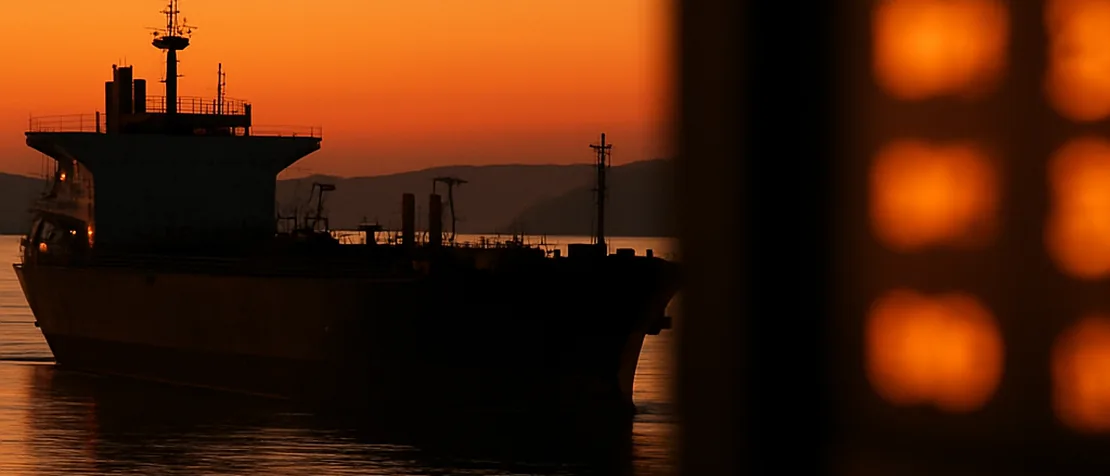
Attacks across the Middle East have disrupted economic activity throughout the region. Disruption to shipping in the Strait of Hormuz has also driven a surge in energy prices worldwide. Crude oil has traded above $100 a barrel for much of the past eight months, straining government finances and household budgets, particularly in the Gulf region and across the rest of Asia.
Ahead of the meeting, Australia’s Treasurer Jim Chalmers said he would use the discussions to call for an end to the conflicts in the Middle East and for the Strait of Hormuz to reopen. He said this was needed because the global economy desperately needed it. In a statement, Chalmers said the war was having a devastating economic impact and was pushing up fuel prices, inflation and interest rates around the world.
Debt levels and trade imbalances on the agenda
Ballooning debt is another issue likely to feature in the talks. Debt levels in the United States, Canada, Japan, Italy and France exceed 100 percent of GDP. In a speech on Wednesday, Georgieva warned that mounting debt posed a threat to the global economy. She said there was no “magic” formula that would allow governments to avoid tax hikes or spending cuts.
Members will also raise their own priorities, based on economic and geopolitical interests. The United States has repeatedly voiced concern about what it calls “global imbalances”, a phrase that observers read as a reference to China’s state-driven industrial model. Under that model, Chinese exporters have been able to flood overseas markets with cheap goods. US President Donald Trump has long argued that China’s large trade surplus, which stood at a cumulative $938bn in September, shows that international trade is stacked against US manufacturers.
In a statement addressed to the IMF on Wednesday, Bessent called for action to address mismatched trade balances. He said the effort should include stronger analysis of, and engagement on, the role that non-market policies and exchange rates play in driving external imbalances. Bessent also said policymakers around the world were having difficult discussions about how to sustain market-based systems amid distortionary policies from some economies that skew competition and hurt employment.
Past divisions cloud prospects for agreement
Divisions between members could limit what the group achieves. At the last G20 finance ministers’ meeting in Asheville, North Carolina, held on August 31 and September 1, member countries failed to issue a joint communique. China had objected to language on trade, and the absence of a shared statement left the group without a unified outcome from that round.