
A software engineer based in Atlanta, Brandon Thomas, has shared free replacements for paid desktop software from Adobe and Microsoft, a move that could reshape the market for established programmes. Thomas, who posts on Reddit under the username u/ai_art_is_art, presented the project last week under the name ArtCraft. It is essentially a free rebuild of the Adobe Creative Suite, including Photoshop and Adobe PDF, which have been recreated as PhotoCraft and PdfCraft.
The Adobe package usually costs individuals $779.99 per year if paid upfront, or $69.99 per month on an annual contract. Earlier this week, ArtCraft also released versions of Microsoft Office. These include WordCraft, DeckCraft and GridCraft, which are designed to compete with Microsoft Word, PowerPoint and Excel. Although the engineer is based in the United States, the programmes can be used worldwide.
How Thomas built the free ArtCraft software
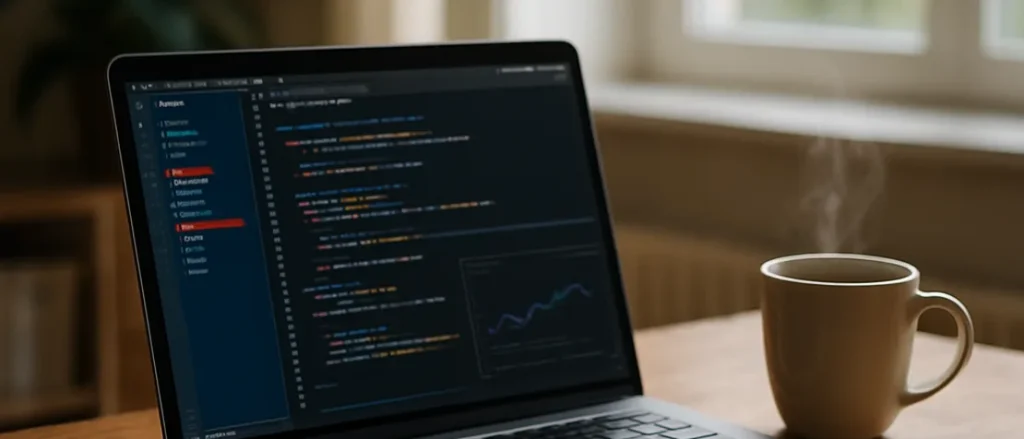
Thomas said he used Anthropic’s Claude Opus 5.5 AI platform together with Rust, a programming language, to reverse engineer Adobe’s creative suite. Announcing the project on Reddit, he said it was not a one-off experiment that would fade away. He also pushed back against the idea that he was merely a casual user of AI coding tools.
“I’m not just some casual vibe coder. I’m a 15-year industry veteran who has written everything from six-nines payment rails that move billions of dollars of transaction volume a day to advanced robotics and optics automation. I’ve used Rust extensively for about a decade, and I know how to build and maintain large-scale Rust projects,” he said.
The phrase “six-nines payment rails” refers to online payment infrastructure that offers 99.9999 percent operational availability. Thomas said he had grown tired of being charged cancellation fees on software and wanted others to use such tools without paying. On the Hacker News site, he wrote that the project would go much further, promising to replace Google Search, build smartphones and remove all the ads from the tech world.
Vibe coding and the rush of new apps
Despite his objections, Thomas’s approach relies at least partly on vibe coding. The term describes a method in software development where people prompt AI tools to generate code instead of writing it by hand. This allows users without technical programming knowledge to describe an idea and have an AI tool build it.
IBM, a technology company, describes vibe coding as a “shift toward intent-driven software development, where AI systems assist developers by generating code from natural language instructions”. The term was introduced in February 2025 by computer scientist and OpenAI cofounder Andrej Karpathy, who wrote on X that users could “fully give in to the vibes, embrace exponentials, and forget that the code even exists”.
The practice has become more widespread as AI has grown, with many new apps appearing on Apple’s App Store. Citing figures from Sensor Tower, a global market intelligence and digital analytics platform, one report said new apps doubled in the first half of this year to about 560,000.
Clean-room claims and the legal grey area
Copying existing software without infringing on intellectual property rights sits in a legal grey area. Thomas described his Adobe-like apps as “clean-room” replacements, meaning they were built from scratch using publicly available file-format specifications rather than Adobe’s proprietary source code.
However, little is known about how much of the code was written by Claude and how much by Thomas. Professor Andres Guadamuz, a reader in intellectual property law at the University of Sussex, raised this point in Technollama, his blog. “We also do not know whether the claimed ‘clean-room process’ stands up to scrutiny,” he said.
The decline of legacy software is unlikely to make products such as Adobe Creative Cloud or Microsoft’s offerings completely obsolete. Even so, the availability of free substitutes could make them far less profitable.