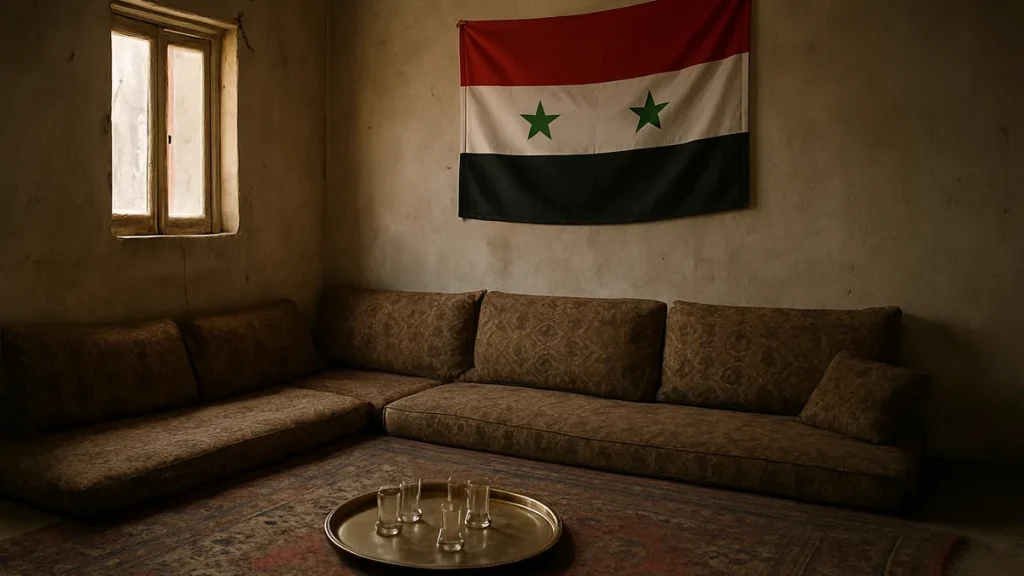

In Qatana, in southern Syria, a man named Ahmed describes in a low voice how he was beaten and tortured in an Israeli prison after being arrested at a checkpoint the Israeli military had set up in his village. He says the soldiers asked for his name and where he was from, and told him he needed to come with them for five minutes before being brought back. Instead, he says, he spent more than a year in detention in Israel, and he was released this month.
Dozens of people gathered outside his home after his return, hoping for news of their own relatives who are still missing. According to findings gathered for this report, at least 51 Syrians remain detained inside Israel. Many were first held in the Sde Teiman military prison and have since been moved to facilities run by the Israel Prison Service, including Ofer, al-Jalama (Kishon) and Megiddo. A small number have been released.
Detainees describe abuse and denial of legal access
Ahmed says he was held in handcuffs for 90 days. He describes being thrown onto the cell floor and beaten with sticks while his hands were restrained behind his back. He also says the cuffs were tightened by stepping on them until they cut into his wrists, and were sometimes left in that state for a day or two, causing his hands to swell severely.
Ahmed says he was not questioned until nearly five months into his detention. When questions came, he was asked whether he or anyone he knew belonged to Hezbollah, Hamas, ISIL (ISIS) or a list of other armed groups. He said these groups had little in common and fought on opposite sides during the war in Syria.
Mahmoud, a pseudonym used in this report, had been home for nine days when he was interviewed. He was detained at 3:30am, when Israeli troops surrounded his home, called him by name and showed a photo of him taken from social media. He says he was never charged, was never given access to a lawyer and does not know why he was released. He alleges that detainees were handcuffed and then attacked by dogs, and that he was held in a room full of loud speakers that he calls the “disco room”. He says he saw prisoners vomiting when they were let out. These claims are his own account and have not been independently confirmed.
The Red Cross has been denied access to detainees held by Israel since October 7, 2023, the date of the Hamas-led attack on Israel and the start of Israel’s war on Gaza, which the source describes as genocidal. Israel says its presence in Syrian territory is needed for security reasons and to defend the Druze community, which it says is threatened by the authorities in Syria. The Syrian government rejects that claim. The Israeli military has not responded to requests for comment.
Mohammed Seyyed, who was detained in 2025, says Israeli troops had carried out an incursion the day before, damaging his home and farm. He, his son, his brother and his nephew were taken into Israel while they were repairing the damage. He says an officer later admitted that he had been detained on the basis of false information, which he attributes to reports from people in his community who inform for Israel.
Shelling, incursions and limits on UN patrols
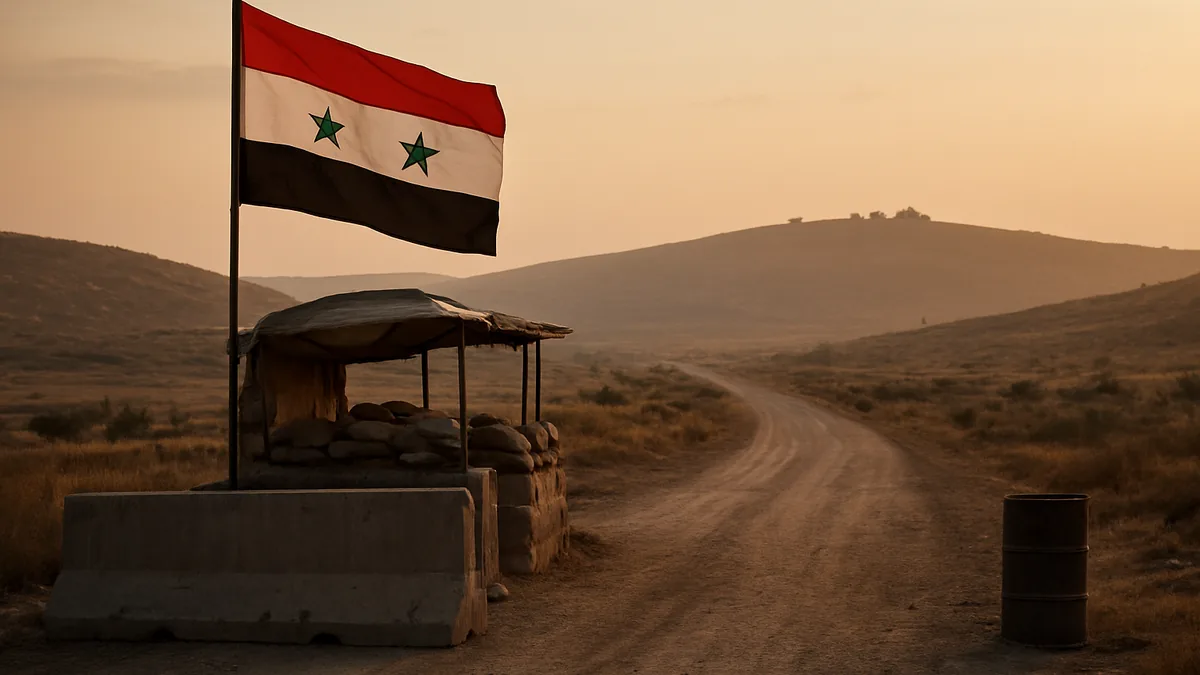
Residents describe a constant sense of danger. Since early August, the Israeli military has fired shells into local fields most days, stopping farmers and shepherds from working, sometimes killing livestock and frightening the population. In September, the Sijil Center, a Syrian organisation that monitors Israeli activity, documented 280 Israeli violations of the 1974 agreement between the two countries, including incursions, raids, arrests, artillery fire and machine-gun fire.
UN peacekeepers have patrolled a demilitarised zone between the Israeli-occupied Golan Heights and the rest of Syria since the 1974 agreement. Israel occupied more Syrian land in the immediate aftermath of the fall of the Bashar al-Assad regime in December 2024. The peacekeepers remain in place, but their ability to restrain Israeli military activity is limited, and that activity continues to increase.
In late August, two Israeli tanks and five other armoured vehicles moved down from a hilltop base and blocked the only access road to UN Disengagement Observer Force base 37, near the village of Jubata al-Khashab. A local council employee who called the base to offer help said he was told to stay where he was and that no one should come down. UNDOF told that its personnel’s movement is “restricted on occasion” by the Israeli military, and that Israeli roadblocks and checkpoints are “preventing UNDOF from conducting its planned and mandated patrol activities”.
Residents sometimes ask peacekeepers for help when people are detained at checkpoints, but they say there is little that can be done about the midnight raids. Checkpoints have also made many residents afraid to leave their homes. Road closures have effects that last after soldiers have gone. Students who need to travel for university are considering moving to Damascus, and people with health conditions worry they will be cut off from care.
Families wait for news as residents protest
The families of detainees say they feel abandoned by their government. They complain of a lack of legal and financial help, and say that with their breadwinners missing they have run up debts worth hundreds of dollars at local grocery stores. The Syrian government is described as being in a difficult position, unable to confront Israel militarily and facing stalled talks on a security agreement since the outbreak of the US-Israel war on Iran.
Frustration is growing. In Qatana, local sheikhs gathered after Friday prayers. Sheikh Mamdouh Tahhan referred to an incident in Abidin, where locals confronted Israeli troops, saying: “They tested our patience in Daraa.” He added: “As a state we don’t have the ability to get into a war with Israel, but as people we are ready.”
Families have set up a WhatsApp group to share news and information. Some parents listen for the sound of Israeli warplanes and a surveillance drone overhead, looking for signs of a release. Releases have happened on Wednesdays for several weeks in a row, which has made the day one of painful anticipation. One mother said she believed a drone overhead might mean a release that day.
Hassan Ahmed’s son was taken into Israel in April 2025, when he was 16. Israeli troops razed the family’s 400 olive trees shortly afterwards, and in October Israeli forces raided the farm again and destroyed solar panels. Hassan has become a key figure in organising protests and searching for information with other parents. Sitting on his balcony, he plays voice notes from other families that arrive every minute or so.
“I’m full of grief,” Hassan says. “I’ll never be able to describe the pain, it’s very tough. Even trying to describe it makes my heart tighten.”