
Antonio Guterres, who later became UN secretary-general, was Portugal’s prime minister when he called US President Bill Clinton from Lisbon on August 30 and September 8, 1999. The purpose of the calls was to discuss the mounting crisis in East Timor, a small Southeast Asian territory that had lived under Indonesian occupation since 1975. Violence returned after voters overwhelmingly backed independence in a referendum, and pro-Indonesian militias responded with a “scorched-earth” campaign that destroyed infrastructure, displaced up to half a million people and killed thousands.
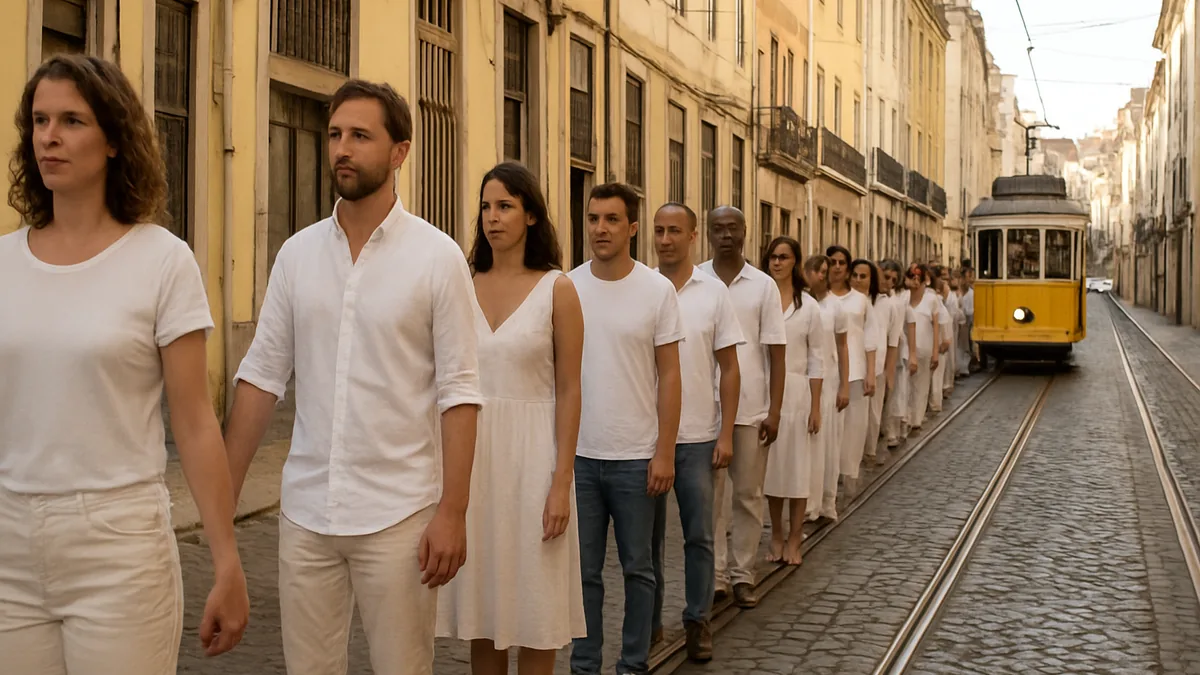
The crisis struck a deep chord in Portugal, where shared language, Catholic faith and historical ties to its former colony fuelled a solidarity movement. An estimated 10,000 demonstrators, dressed in white, formed human chains across the streets of Lisbon.
How Guterres pressed Washington over East Timor
Guterres had tried to raise the issue earlier. At a 1996 summit in Bangkok, he raised the politically sensitive question of East Timor with Indonesian President Suharto. He offered to restore diplomatic relations, which had been severed since the 1975 invasion, in exchange for the release of the Timorese resistance leader Xanana Gusmao. The offer was met with an uncomfortable silence.
In 1999, Guterres asked the United States to back a UN mission in East Timor, but Washington was unwilling to confront Indonesia. According to his 2022 biography, “Honest Broker”, he warned Clinton during their second call that Portugal could rethink its deployments in the Balkans if the international community did not act. Portugal’s NATO contribution was modest, but it was politically well placed, with troops serving in prominent post-Cold War missions in Bosnia and Kosovo.
He put a stark choice to Clinton. The United States could risk a public rift with a founding NATO ally, or it could use its influence to persuade Indonesia to accept an international force in East Timor. The next day, as pressure mounted internationally, the White House said Indonesia “must” allow international assistance.
Christine Cabasset, a teacher at Lille Catholic University and an expert on East Timor, said Guterres had pushed hard for the referendum and had been among those calling for UN intervention once the violence broke out. She added that he later played a key role in the push to create the UN Transitional Administration in East Timor. For Guterres, the episode was an early test of multilateral crisis diplomacy, a skill he would take to the UN in 2017. East Timor, also known as Timor-Leste, won its independence in 2002, and in 2024 Guterres was granted Timorese citizenship for his diplomatic efforts during the 1999 crisis.
A Catholic upbringing in Lisbon under Salazar
Antonio Manuel de Oliveira Guterres was born in Lisbon on April 30, 1949, to Ilda Candida de Oliveira Guterres and Virgilio Dias Guterres, a senior employee of the Lisbon gas and electricity company. He spent summers and long stretches in the countryside with his grandparents in the small village of Donas. His childhood friend Vitor Dias told the newspaper Publico that his grandmother placed great value on education, and that by the age of three or four the boy could already write his name. The grandparents’ house stood beside the church where “Little Toni” often served as an altar boy.
Portugal was then ruled by dictator Antonio Salazar, whose Estado Novo regime resembled Italian fascism but leaned less on force, personality cults and revolutionary zeal, and more on conservative Catholic values. The country was therefore largely cut off, politically and culturally, from democratic Western Europe. Historian Antonio Costa Pinto of the University of Lisbon described the regime as shaped by corporatism and conservative Roman Catholic values, and said that by the late 1960s and early 1970s it had become an anti-communist Cold War dictatorship.
The regime also clung to the old empire, holding that the seafaring Portuguese were naturally suited to colonial rule, and fought bloody rebellions in Angola, Mozambique and Guinea-Bissau. Joao Goulao, a retired doctor who grew up in that period, recalled a closed country with censorship everywhere and a political police force. He also described tight limits on travel abroad, which required many formalities, and said Portugal was so isolated that few tourists came.
Ordinary life reflected these contradictions. Coca-Cola was barred from being produced in Portugal, and until 1970 people who owned a cigarette lighter needed an annual licence, a rule meant to protect the domestic match industry. Literacy improved under Salazar, but in rural areas many children received only minimal schooling from teachers who often had little education themselves. Guterres’s grandmother nevertheless made sure he received a proper education, and he earned top marks at his Lisbon high school.
Student activism, revolution and entry into politics
Guterres went on to study electrical engineering at Lisbon’s Instituto Superior Tecnico, graduating in 1971. While there, he led the university’s Social Action Centre, which carried out social work in the capital’s poorest neighbourhoods. He also joined the Grupo da Luz, a Catholic student club led by Father Vitor Melicias, who became a close friend and confidant. Melicias later told World Mission Magazine that members often changed meeting places to avoid drawing the attention of the secret police.
His faith shaped his approach to social work early on. In 1967, aged 18, he joined a mass effort to help victims of the Lisbon flash floods, which had killed hundreds, while the regime worked to hide the scale of the disaster. Costa Pinto said the wave of student volunteering had politicised many young people against the dictatorship.
The regime fell in 1974. Salazar had been removed from office in 1968 after falling ill and died two years later, and his successor, Marcelo Caetano, could not keep the Estado Novo alive beyond that year. Military officers, disillusioned by the colonial wars, seized power on April 25, 1974, and crowds poured into the streets to back them. The Carnation Revolution, as it became known, set Portugal on a new course. Goulao, then 20, described a sudden openness, with the right to speak about problems and no press censorship, and said citizens could now travel abroad.
That same year, Guterres joined the Socialist Party (PS) and grew a moustache in tribute to Chile’s overthrown left-wing President Salvador Allende. In a 2016 interview with journalist Anabela Mota Ribeiro, he said he had not been politically active before the revolution, and that his involvement had grown out of social issues. In 1976, the young engineer was elected to parliament to represent Castelo Branco in Portugal’s first democratic election. In 1991 he co-founded the Portuguese Refugee Council, which focused on tackling discrimination and inequality faced by asylum seekers.
That year the PS lost the general election to the centre-right Social Democrats, led by Prime Minister Anibal Cavaco Silva, whose government had overseen years of steady economic growth. On election night, Guterres told reporters, “I’m in shock!” The remark was a blow to PS leader Jorge Sampaio and helped pave the way for a leadership challenge. Guterres took over the party the following year and began reshaping it as a moderate, modern European social-democratic party able to win support beyond its traditional base.