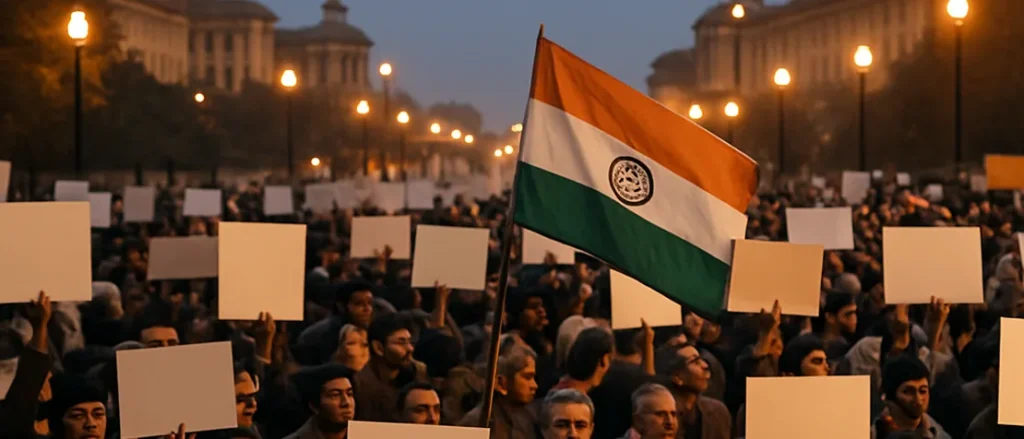

Major protests have gripped the Indian capital for more than a week. The opposition Congress party and young people, spearheaded by the “Cockroach” movement, are demanding the resignation of the country’s top election official.
The dispute centres on the removal of 130 million voters from electoral rolls. Critics say the removals benefited Prime Minister Narendra Modi’s party in recent state elections. The poll body and his Bharatiya Janata Party deny these claims.
What the voter list revision involves
The exercise, known as the Special Intensive Revision, is a house-to-house review of voter rolls. The Election Commission launched it in the eastern state of Bihar in June 2025 and later expanded it nationwide. Its stated aims are to update lists and remove duplicate and ineligible voters.
The Commission is an independent constitutional body, but its chief was appointed by a panel with a government majority. That arrangement has drawn allegations of political bias, which the Commission denies.
Unlike the past system, in which voters updated rolls voluntarily, the SIR is the largest such exercise in nearly two decades. Critics say it relies on centralised software and gives local election officials limited powers to check whether voters have died, moved or are ineligible.
Concerns over paperwork, deletions and proof of citizenship
Critics argue the centralised system prevents local officials from correcting errors. They say this has led to discrepancies that have struck millions from the rolls, and has forced many people to search for ancestral documents or launch legal challenges.
Strict paperwork rules, short deadlines and large-scale deletions could disproportionately exclude poor, migrant, elderly, homeless and nomadic people, critics say. Those removed are hunting for decades-old documents about themselves, their parents and, in some cases, their grandparents. Others are seeking to fix names altered by translation, spelling or data-entry errors.
Protesters say more than 130 million voters, a number larger than the population of Japan, have been dropped from draft rolls across 30 states and territories. The Election Commission disputes this assertion. Led by its chief, Gyanesh Kumar, the Commission panel says the deletions largely cover people who are dead, have moved, are registered more than once or are otherwise ineligible.
Critics say the process shifts the burden of proof onto citizens. They warn that mismatched records could complicate efforts to establish citizenship or receive state welfare benefits.
Internal objections and fallout from the West Bengal vote
Pressure grew after a newspaper reported that two of Kumar’s panel colleagues had raised at least 14 formal objections over 10 months. The objections concerned voter rolls, registration procedures and digital systems. The panel says differing views are a normal part of its deliberations.
The issue became a major political question after this year’s elections in West Bengal, which Modi’s BJP won for the first time. Millions of voters were excluded or subjected to review. Opposition parties said eligible voters were disenfranchised, a process they said disproportionately affected Muslim voters and benefited the BJP. The party and the poll body denied the accusations.
In May, the Supreme Court upheld the SIR exercise, saying accurate electoral rolls were essential for free and fair elections. However, it ruled that the poll panel could not make a final determination on citizenship. This week, opposition parties returned to court, citing arbitrary voter deletions and other irregularities. On October 1, the Election Commission directed officials to identify omitted voters and ease their path to re-enrolment.
Upcoming state polls and the cockroach movement
The revision comes ahead of a series of important state elections beginning in early 2027, including in Uttar Pradesh, India’s most populous state, which the BJP rules. It is unclear whether people left off the rolls will be restored in time to vote. In Bihar, several people are still appealing more than a year later to have their names reinstated.
The “cockroach” youth movement has mobilised protests in recent months over issues ranging from government school infrastructure to jobs for young people. It is one of the biggest political challenges to Modi and the BJP during his 12 years in power. The movement forced the resignation of Modi’s education minister in July over an exam leak scandal. It continues to press the government for economic and social reforms, and its success has inspired opposition parties to join forces.