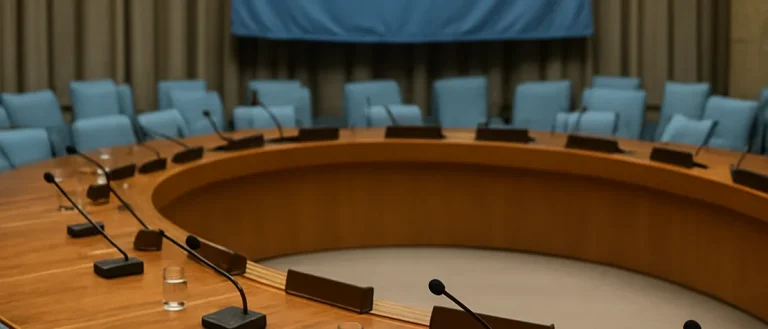

Human rights groups have strongly criticised the uncontested election of 15 members to the UN Human Rights Council. They argue the process let countries with weak rights records take seats on the 47-nation body. The General Assembly, whose 193 member nations all take part, held the vote on Tuesday.
Seats are shared among the UN’s regional groups to keep representation balanced. For the second year running, each group put forward exactly as many candidates as it had seats available for the three-year term, so no contests took place.
Uncontested races fill all 15 seats
Zambia, Ghana, Nigeria and Burundi were elected from the Africa group. Kuwait, Nepal, Jordan and Japan won Asia-Pacific seats, while Brazil, the Dominican Republic and Uruguay came from Latin America and the Caribbean. Ireland and Germany, from the mainly Western group, and Moldova and Ukraine, from the Central and East European group, will also join.
Louis Charbonneau, UN director at Human Rights Watch, said: “This uncompetitive vote makes a mockery of the word ‘election’.” He added that no one should receive a seat on the body “handed to them on a silver platter”. He urged member nations to “insist on competitive slates so they can reject candidates with poor human rights records”.
Concerns over the council’s role and history
The Geneva-based council reviews the rights records of all countries periodically. It appoints independent investigators on issues such as torture, and it reports on situations in North Korea, Iran and Myanmar. It also sends fact-finding missions, including to Ukraine, the occupied Palestinian territories, Israel and Sudan.
The council was created in 2006 to replace a commission that had lost credibility because some of its members had poor rights records. The new body soon faced similar criticism, including claims that countries sought seats to protect themselves and their allies.
US withdrawal and the UN’s response
Soon after beginning his second term, US President Donald Trump announced that Washington would leave the council, accusing it of anti-Israel bias. He had also pulled the United States out during his first term.
Asked about the UN position on the uncontested vote, spokesman Stephane Dujarric said it was a matter for the 193 member nations. He said that member states elected to the body “have an added responsibility to protect human rights”.