
A growing number of paid services in China are offering companionship to people who feel isolated, from home visits by delivery teams to guides who climb mountains with clients. Operators say demand has grown sharply in recent years, and one securities company has valued the sector at around $7.4 billion in 2025.
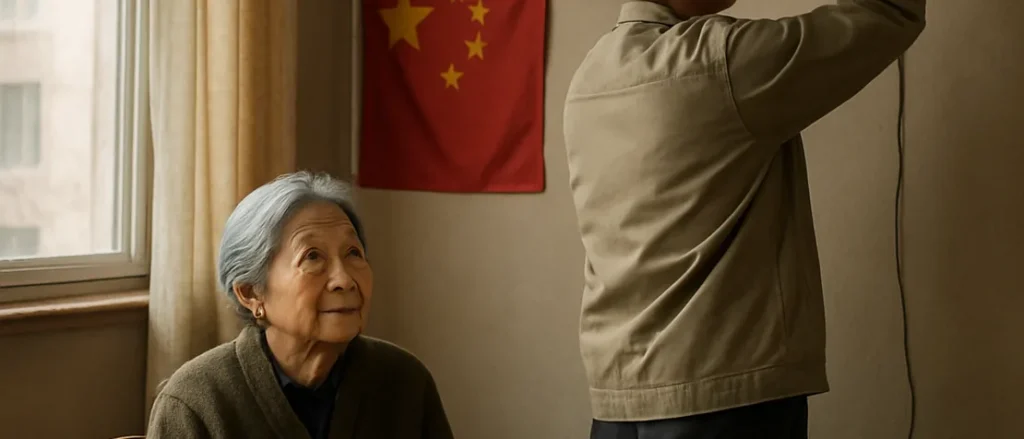
One of those helped is Yang, 91, who lives on the outskirts of Beijing. After her husband died she was so lonely that she sometimes talked to the television when she wanted company. Suffering from glaucoma and failing eyesight, she also found everyday tasks, such as adjusting the controls on her air conditioner, increasingly difficult to manage alone.
Home visits fill gaps left by family and failing health
Cases like Yang’s have become more common in Chinese cities. Teresa Kuan, an associate professor at the Chinese University of Hong Kong, said the problem is “exacerbated by the structure of society and the modes by which people interact”.
Isolation has several causes. Many rural migrants leave close-knit support networks to seek work in urban centres, where loneliness and uncertainty can be hard to overcome. Graduates also move far from home to chase jobs on the other side of the country.
A growing “loneliness industry” has emerged to fill these gaps. Yang says her life has changed since she began receiving help from Wang Yingwei and his electric scooter delivery team. They started visiting her twice a day with hot meals, but their help goes well beyond food.
Yingwei said his team sees itself as a kind of family for the elderly. He described fixing a cloudy, limescale-heavy tap water problem with a filtered water tank, and replacing a broken part so that a client could shower again. “Such a small thing can make them much happier,” he said.
He said the elderly treat his team like their children, and the team treats them like their own parents. Yingwei said his services cost less than half the price of hiring a caregiver.
The former mobile phone salesman said he started his business to help seniors stay in their own homes rather than move into retirement facilities. He was inspired after his father-in-law, who had Alzheimer’s disease, had to go into a nursing home. Yingwei said the conditions he saw there were so poor that he wanted to help others avoid institutions for as long as possible.
His company currently employs four people, and he said it could expand as demand grows. Data on the size of the sector remains scarce, although operators say it has expanded quickly.
Zheng Ruizhi, 75, is another of Yingwei’s clients. Her son lives two hours away, and she said that since retiring she has had few chances to spend time with others. She was also recovering from an injury that she said made everyday tasks harder, and she said Yingwei’s visits lifted her mood.
Medical escorts offer support in large city hospitals
Other services go beyond the home. Liu Yanyan, 23, works as a “medical escort”, accompanying clients to doctor appointments and collecting test results or medication from city hospitals, which she described as intimidatingly large and bureaucratic.
Liu said many of her clients are young people in their 20s who moved to Beijing for work and may have no friends there. Others feel awkward asking colleagues for help because of the importance of social reciprocity in Chinese culture. “If I accompanied you to a doctor’s appointment for free, you might feel obligated to buy me a meal or a movie ticket afterwards,” she said.
She added that many people in modern Chinese society tend to keep to themselves, so they hire someone to go with them. “If they had to go alone, they could feel scared or anxious,” she said.
Kuan said some people prefer to share their feelings with a paid companion rather than a close friend. She said a paid relationship is not equal, but it is predictable. “The thing about friendship is that it can be unpredictable,” she said. “In a service relationship, you have a better idea of what to expect.”
Mountain guides offer encouragement on Huangshan climbs
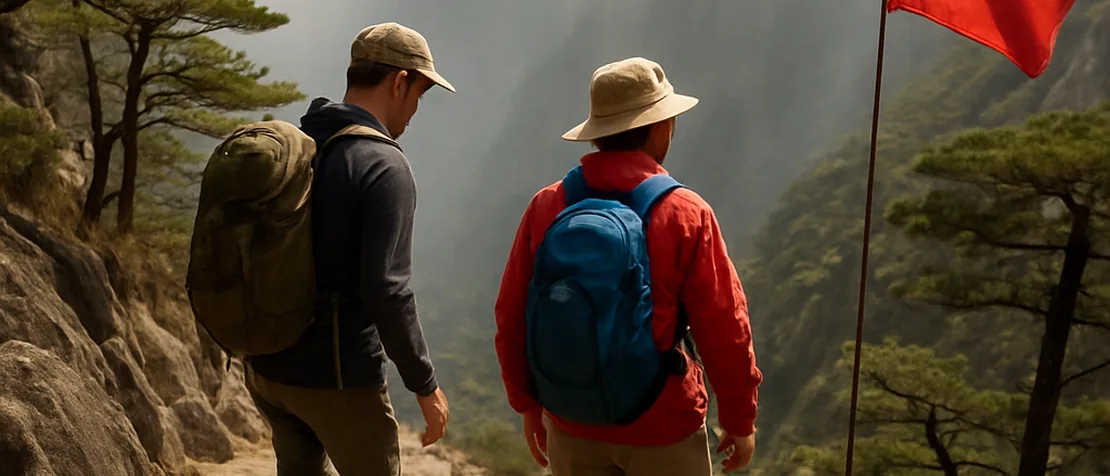
Wang Zhoutao runs a hiking business that helps people climb Huangshan, one of China’s best-known mountains, in Anhui Province. He said the service offers emotional support, such as encouragement, photographs and jokes, and is based on companionship.
A former soldier, Wang said he usually hikes the mountain with clients 10 to 15 days a month. When his bookings are full, he said, this can rise to as many as 30 days a month.
He recalled a young woman who felt ostracised at work and wanted to prove something to herself. Partway up the steep route, in hot weather, she wanted to give up, but he kept encouraging her. After they reached the top, he said, she sent him a long message describing her inner journey and thanking him.
Wang said the pace of modern life puts pressure on people through work, relationships and family expectations. He said most of his clients feel a gap in their relationships or have suffered a setback.
Human connection is a basic need, but in a society where loneliness affects people of all ages, it has also become something people pay for. For Yang, the change has been practical as well as emotional. Now that Yingwei has fixed her air conditioner, she says she feels more comfortable in her small Beijing flat.
“It’s good to have someone around when you need it, someone you can share your innermost thoughts with,” she said. “I did struggle with loneliness but that’s been resolved now. I’m quite happy.” She added: “I can’t lose Yingwei and the others. They’ve all got a good heart.”